
🛒 Best Price Today on Amazon
Prime members get fast, free shipping on everything above, plus member-only deals. New members get a 30-day free trial — cancel anytime.
A garage door opener seems trivial until an outage traps your car inside. Openers draw modest power, but their motors produce a brief startup surge, and many newer models have DC motors and electronics that prefer clean power. The good news is that you have more options than a generator, from a built-in battery backup to the manual release cord. This guide lays out the power numbers and matches a generator or battery to each opener type.
Opener power requirements
| Opener type | Horsepower class | Running watts (during travel) | Starting surge | Standby |
|---|---|---|---|---|
| Chain drive, AC motor | 1/2 HP | 350-550W | 700-1,200W | 3-8W |
| Chain / belt drive, AC motor | 3/4 HP | 500-750W | 1,000-1,500W | 3-8W |
| Belt drive, DC motor | 1/2 to 1-1/4 HP-equivalent | 200-450W | Modest (soft-start) | 2-6W |
| Wall-mount / jackshaft | Varies | 150-350W | Modest | 2-5W |
| Commercial 1 HP+ | 1 HP+ | 700-1,200W | 1,800W+ | – |
One door cycle takes only 10-15 seconds. That uses about 1-3Wh, so energy is never the issue. Only surge and power quality matter.
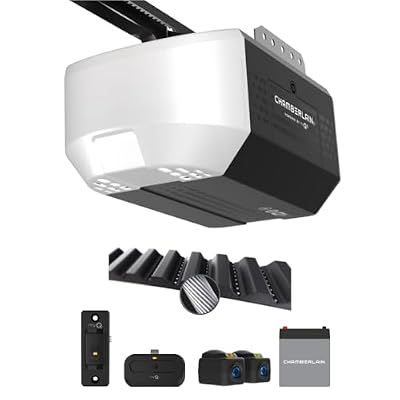
Chamberlain Belt Drive myQ Garage Door Opener, 1/2 HP w/Battery Backup
Included for 'Best Generator for Running a Garage Door Opener' because the listing specifies 1/2 HP w/Battery Backup, details this guide uses to compare options.
View on Amazon
Chamberlain Wall Mount myQ Garage Door Opener, Battery Backup
Included for 'Best Generator for Running a Garage Door Opener' because the listing specifies Battery Backup, details this guide uses to compare options.
View on Amazon
Genie Chain Drive 750 3/4 HPc Garage Door Opener w/Battery Backup - Heavy Duty - Operate your garage door when the primary power is out - Wireless Keypad Included, Model 7035-TKV,BLACK
Included for 'Best Generator for Running a Garage Door Opener' because the listing specifies Heavy Duty and Operate your garage door when the primary power is out, details this guide uses to compare options.
View on Amazon
Chamberlain 1 HP Belt Drive Smart Garage Door Opener with Built-in Camera, Single LED Lighting, Battery Backup, and myQ Connectivity
Included for 'Best Generator for Running a Garage Door Opener' because the listing specifies Single LED Lighting and Battery Backup, details this guide uses to compare options.
View on AmazonGenerator and battery picks
Best overall: 2,000-2,300W inverter
A 2,000W-class inverter starts any residential opener, including 3/4 HP AC motors, and provides clean power for the logic board, safety sensors, and Wi-Fi module. It can also run the refrigerator and lights while you’re at it. Inverters matter here, because opener control boards are small electronics that can glitch on high-distortion power.
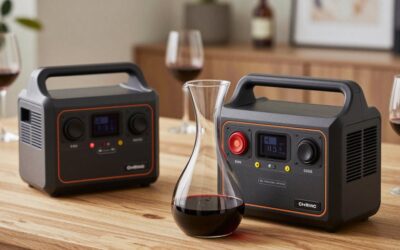
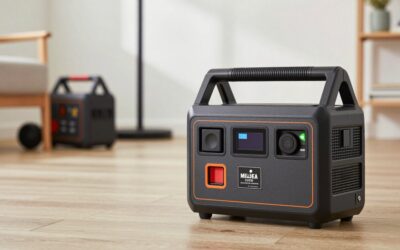
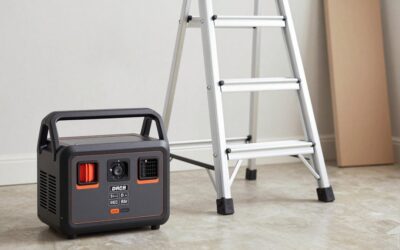
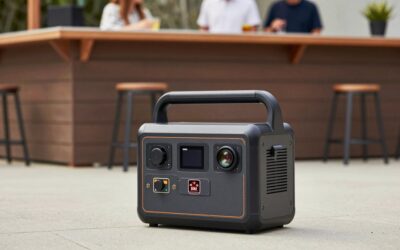
Best fuel-free pick: 300-500Wh power station
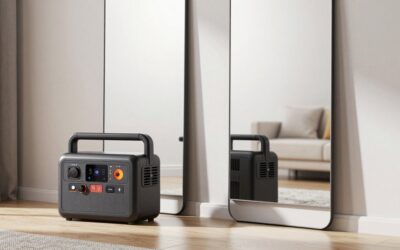
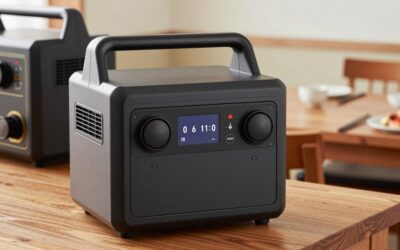
If all you need is to open and close the door a few times during an outage, a small power station is ideal. It needs a surge rating of at least 1,000-1,500W for an AC motor, which many 300-600W stations provide. A 300Wh battery can cycle a door dozens of times.
Best long-term fix: an opener with built-in battery backup
Many current DC belt-drive openers offer an integrated battery backup that runs roughly 20 cycles, or about 24 hours of standby, during an outage. California has required battery backup on newly installed residential openers since 2019. If you’re replacing an old opener, this may be the cheapest outage solution of all.
How to connect the opener
Most openers plug into a ceiling outlet in the garage, which makes the connection easy: unplug the opener and run a heavy extension cord to it from the generator outside. A 16-gauge cord is fine for this light, short-duration load if the run is under 50 feet. Plug back into the ceiling outlet when grid power returns. If the opener is hardwired, or you want it to work from house power normally, a licensed electrician can put that circuit on a transfer switch or interlock. Never backfeed the garage outlet with a double-male cord.
Don’t forget the manual release
Every residential opener has a red emergency release cord that disconnects the trolley so you can lift the door by hand. Learn it before you need it. Close the door first, pull the cord, lift, and reconnect afterward. Well-balanced doors lift with roughly 8-10 lb of effort. If yours takes much more, the springs need service, and you shouldn’t strain the opener motor on generator power either. Spring work is a job for a professional, because torsion springs hold dangerous tension.
The garage is the worst place for a generator
This is the article where the warning matters most. People open the garage door, park the generator just inside to keep it dry, and run the opener and the house from there. Carbon monoxide from even a small generator can reach deadly levels in an attached garage within minutes, and it flows into the living space through door gaps and ducts. The generator stays outside, at least 20 feet from the house, with the exhaust pointed away from the open garage door, windows, and vents. Battery CO alarms belong on every level of the home and near the garage entry door.
FAQ
Can a 1,000-watt generator run a garage door opener?
Usually yes for 1/2 HP and DC openers, since their surge typically falls within a 1,000W-class inverter’s peak rating. Some 3/4 HP AC openers may trip it, and a 2,000W unit handles them easily.
Is it OK to run the opener on a conventional generator?
The motor will run, but opener logic boards and safety sensors can malfunction on high-distortion power. An inverter or a low-THD generator is the safer choice.
Bottom line
A garage door opener needs little energy but a solid surge and clean power. A 2,000W-class inverter or a small power station with a 1,000W+ surge rating covers nearly every residential opener. Better still, choose an opener with built-in battery backup, and know how to use the manual release.

Write Your Review
No reviews yet. Be the first to share your experience!