
🛒 Best Price Today on Amazon
Prime members get fast, free shipping on everything above, plus member-only deals. New members get a 30-day free trial — cancel anytime.
The Kidde plug-in carbon monoxide detector with AA battery backup is the best overall pick for generator households. It runs from a wall outlet day to day, keeps sensing when the grid goes down because of its battery backup, and its alarm is rated at 85 decibels. Carbon monoxide (CO) is the odorless gas a gas-powered generator exhausts, which is why an alarm belongs inside every home that ever uses one. The other five picks cover gas-sensing combo units, battery-only models, compact travel-style alarms and a low-level digital display option, so you can match placement and power source to your layout. Whichever model you pick, read the label for its standard, edition and replacement date before it goes on the wall.
Quick List
- Kidde plug-in CO alarm with AA backup – best for bedroom hallways with a nearby outlet
- Kidde CO plus explosive gas alarm – best for homes with natural gas or propane appliances
- First Alert CO400 – best for a simple battery-only alarm on any wall or shelf
- Kidde COB AA battery alarm – best for a lightweight alarm that moves between rooms
- Kidde AA alarm with test-reset button – best for a plain, easy-to-service battery alarm
- Heiman mini digital display alarm – best for a compact alarm with a readout
Which One Is Right for You?
| If you… | Choose |
|---|---|
| Want an alarm that stays powered from an outlet but survives an outage | Kidde plug-in with AA backup |
| Run propane or natural gas appliances alongside a generator | Kidde CO plus explosive gas alarm |
| Prefer a no-outlet, no-frills battery alarm from a familiar brand | First Alert CO400 |
| Need an alarm to carry between a bedroom, cabin and camper-adjacent spaces | Kidde COB AA alarm |
| Want straightforward LEDs and a test-reset button | Kidde AA alarm with test-reset |
| Like seeing a numeric reading on a small unit | Heiman mini digital alarm |
Think about the failure you are trying to prevent. If the power is out and a generator is running, an outlet-only alarm is useless, so you need battery power or battery backup. If you want more than one level covered, buying several of the same model keeps testing and replacement simple. Whichever you choose, treat the alarm as a last line of defense: the generator still belongs outdoors, far from the house. Also consider who sleeps where. A bedroom at the far end of a hall may need its own alarm, and a finished basement used as a guest room deserves one too, even when it feels far from the garage or yard where the engine runs.

Kidde Carbon Monoxide Detector, Plug-in Carbon Monoxide Detector with AA Battery Backup, 85 dB Alarm, LED Status Light Indicators, 3rd Edition
Included for '6 Best Carbon Monoxide Detectors for Generator Use (October 2026) Complete Guide' because the listing specifies Plug-in Carbon Monoxide Detector with AA Battery Backup and 85 dB Alarm, details this guide uses to compare options.
View on Amazon
Kidde Carbon Monoxide + Explosive Gas, Natural Gas & Propane Alarm, Plug-in with 9V Battery Backup, Digital Display, 85 dB Alarm, LED Status Indicators, 3rd Edition
Included for '6 Best Carbon Monoxide Detectors for Generator Use (October 2026) Complete Guide' because the listing specifies Natural Gas & Propane Alarm and Plug-in with 9V Battery Backup, details this guide uses to compare options.
View on Amazon
First Alert Battery Carbon Monoxide Alarm | CO400
Included for '6 Best Carbon Monoxide Detectors for Generator Use (October 2026) Complete Guide' because the listing specifies CO400, details this guide uses to compare options.
View on Amazon
Kidde Carbon Monoxide Detector, AA Battery-Powered, COB | LED Status Lights, Loud 85 db Alarm, Lightweight and Portable for Travel or Home, 5th Edition
Included for '6 Best Carbon Monoxide Detectors for Generator Use (October 2026) Complete Guide' because the listing specifies AA Battery-Powered and COB, details this guide uses to compare options.
View on Amazon
Kidde Carbon Monoxide Detector, AA Battery Powered CO Alarm with LEDs, Test-Reset Button, Low Battery Indicator, Portable
Included for '6 Best Carbon Monoxide Detectors for Generator Use (October 2026) Complete Guide' because the listing specifies AA Battery Powered CO Alarm with LEDs and Test-Reset Button, details this guide uses to compare options.
View on Amazon
Heiman Carbon Monoxide Detectors, Low-Level Mini Digital Display CO Alarm | AA Battery Operated, UL 2034 Certified, Mini Small Compact for Home, Low PPM Detection, Early Warning, 735ESY
Included for '6 Best Carbon Monoxide Detectors for Generator Use (October 2026) Complete Guide' because the listing specifies Low-Level Mini Digital Display CO Alarm and AA Battery Operated, details this guide uses to compare options.
View on AmazonAll 6 Picks in Detail
1. Kidde Plug-In CO Alarm with AA Backup – Best for Outlet Power with Outage Protection
As an Amazon Associate we earn from qualifying purchases at no extra cost to you.

This alarm suits the hallway outside bedrooms, where a standard outlet is usually nearby and where an alarm matters most overnight. It plugs into a 120-volt outlet for constant power and uses AA batteries to keep sensing when the outlet goes dead, which is the exact situation in which a generator gets started. The listing names an 85 dB alarm, LED status lights and a 3rd Edition rating. Kidde documentation for this plug-in family also describes a test/hush button and a peak level memory feature on some versions, so confirm which functions this specific model carries. In practice this is the alarm most families will forget about, which is the point: it sits in a hallway outlet, runs from house power all year and quietly shifts to batteries when the lights go out. Pair it with a second battery-only alarm on a different level for layered coverage.
- Power: 120-volt plug-in with AA battery backup
- Alarm volume: 85 dB per the listing
- Indicators: LED status lights
- Standard edition: 3rd Edition, per the listing name
- Product life: confirm the end-of-life period on the listing
Pros:
- Constant power plus battery backup
- No wall screws or batteries to open for daily use
- Familiar brand with easy-to-find replacements
Cons:
- Needs an open outlet
- Loses its backup the day the batteries run down unnoticed
Compared with the battery-only Kidde COB, it trades portability for dependable mains power, so it is the better fixed alarm and the COB is the better movable one.
2. Kidde CO Plus Explosive Gas Alarm – Best for Homes with Natural Gas or Propane

This plug-in unit watches for two hazards: carbon monoxide and flammable natural gas or propane. That matters in a home that has a gas furnace, range or a propane tank alongside a standby generator, because generator work often involves refilling or moving fuel. The listing describes a 9V battery backup, a digital display and an 85 dB alarm. Kidde’s materials for the matching model family describe a display that reads CO levels or shows a gas warning. Do not treat it as a smoke alarm or as a substitute for a gas shutoff plan. Place it where the maker recommends: gas alarms are mounted at different heights than CO alarms depending on whether the gas is lighter or heavier than air, so read the manual instead of copying a placement from a different alarm. A numeric display is also handy for noticing a slow rise after a long generator run.
- Detects: carbon monoxide plus explosive gas (natural gas and propane)
- Power: plug-in with 9V battery backup
- Display: digital readout per the listing
- Alarm volume: 85 dB
- Product life: confirm the end-of-life period on the listing
Pros:
- Two hazards covered in one unit
- Readout lets you see a CO number
- Battery backup for outages
Cons:
- Larger than a plain CO alarm
- Shorter replacement cycle than some CO-only models, so confirm the date on the product page
Choose it over the simple plug-in Kidde in item one only if you actually have gas appliances near the install spot.
3. First Alert CO400 – Best for a Plain Battery Alarm

The CO400 is a basic, battery-operated CO alarm from a well-known safety brand. It needs no outlet and no installation beyond an optional wall mount, so it fits shelves, nightstands and workbenches where wiring is impractical. First Alert specifications for the model describe an electrochemical sensor, an 85 dB horn measured at 10 feet, a single test/silence button and low-battery and end-of-life warnings. Sources disagree on whether it uses a 9V or AA batteries and the manufacturer’s page marks the line as discontinued, so confirm the exact battery type and replacement date on the product page. For a household with a mix of rooms, this works well as the “extra” alarm for a basement landing or a first-floor family room, where an outlet may not be convenient and a wall mount is easy to add with two screws.
- Power: battery only; battery type varies by source
- Alarm: about 85 dB at 10 feet
- Sensor: electrochemical
- Controls: single test/silence button
- Service life: about five years per manufacturer information; confirm
Pros:
- Works anywhere, including during an outage
- Simple interface
- Includes an optional wall mount
Cons:
- No display
- Availability and battery type can vary
Compared with the Kidde AA test-reset alarm, it is similar in role, so pick whichever listing shows a current edition and a clearer battery description.
4. Kidde COB AA Battery Alarm – Best for Moving Between Rooms

The COB is a light, wire-free alarm the listing pitches for both home and travel. That makes it attractive for the detached garage workshop, a cabin, or a spare room where you run a generator for work and want a monitor inside the adjoining space. Kidde product information for the COB line describes two AA batteries, an electrochemical sensor, an 85 dB alarm, a Test/Hush button and a 10-year limited warranty. Pay attention to the use limits: Kidde states that the COB is not approved for RV or boat use and is meant for conditioned indoor spaces, so do not rely on it inside a trailer. Think of it as a spare that can follow the generator project: put it in the workshop doorway while you refuel, then return it to the guest room afterward. Reinstall fresh batteries whenever you move it for an extended period.
- Power: AA batteries
- Alarm volume: 85 dB per the listing
- Indicators: LED status lights
- Weight: lightweight and portable per the listing
- Placement: wall or tabletop use; indoor conditioned space only per Kidde guidance
Pros:
- No outlet required
- Easy to relocate
- Works through an outage
Cons:
- Not intended for RVs or boats
- Batteries need periodic replacement
Next to the plug-in Kidde in item one it is the more flexible choice, though the plug-in is easier to forget about in a hallway.
5. Kidde AA Alarm with Test-Reset Button – Best for a Plain, Serviceable Alarm
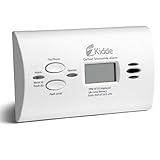
This AA-powered Kidde alarm keeps the feature list short: LED indicators, a test-reset button and a low-battery indicator. It is described as portable, which means it can go on a shelf or ride along to a second location. For a home with a generator the appeal is that nothing here depends on the grid. Because this listing is for an older model line and sellers sometimes mix editions, check the edition and the end-of-life date on the product page to be sure the unit is current before you rely on it. The strengths are the ones you want in a storm kit: it keeps working with no electricity, it is easy to test, and the low-battery indicator gives a heads-up before the sensor is left unpowered. Keep a spare set of AA batteries with your flashlights so the alarm never waits on a store run.
- Power: AA batteries
- Indicators: LEDs and a low-battery indicator
- Controls: test-reset button
- Form: portable battery alarm
- Edition: confirm on listing
Pros:
- Straightforward controls
- No outlet required
- Low-battery warning
Cons:
- No digital display
- Edition and date code can vary by seller
Next to the COB in item four it plays a similar role, so choose by the edition printed on the current listing.
6. Heiman Mini Digital Display Alarm – Best for a Small Unit with a Readout

The Heiman is a compact, AA-powered alarm that adds a digital display, a feature rarely found on small battery units. The listing calls it a low-level model and states UL 2034 certification. A small readout helps when you want to know whether the CO level is creeping up near a garage or utility room rather than waiting for an alarm. Retailer pages indicate a roughly 2.7 by 1.7 by 2.7 inch body, a test/silence button and an 85 dB horn for related Heiman models; confirm those details for this exact listing. Heiman is a less established name in the US than Kidde or First Alert, so read the manual and warranty carefully. It suits a person who wants a number to watch while running a generator for a long job, such as powering a well pump or refrigerator for several days. Treat the number as extra information, not a replacement for the alarm itself, and act on the alarm even if the display seems low.
- Power: AA batteries
- Display: digital, low-level readout per the listing
- Certification: UL 2034 per the listing name
- Size: mini, compact body
- Alarm volume: confirm on listing
Pros:
- Digital reading at a glance
- Small footprint
- Battery power for outages
Cons:
- Fewer service details are published for the brand
- A live numeric readout can be unsettling if you do not know what normal trace levels look like
Compared with the Kidde COB, you gain a number on the screen but lose a more familiar brand.
Specs Compared
| Product | Power source | Display | Gas detection | Alarm volume |
|---|---|---|---|---|
| Kidde plug-in with AA backup | 120V plug-in plus AA backup | LED indicators | CO only | 85 dB |
| Kidde CO plus explosive gas | 120V plug-in plus 9V backup | Digital display | CO plus natural gas and propane | 85 dB |
| First Alert CO400 | Battery only; confirm type | None listed | CO only | About 85 dB at 10 ft per manufacturer data |
| Kidde COB AA | AA batteries | LED indicators | CO only | 85 dB |
| Kidde AA test-reset | AA batteries | LED indicators | CO only | Confirm on listing |
| Heiman mini digital | AA batteries | Digital display | CO only | Confirm on listing |
How We Chose These
We worked from manufacturer information, retailer specification fields and U.S. safety guidance. We looked for a stated UL 2034 or equivalent listing, a battery or battery-backup power source that keeps working in an outage, an audible alarm near 85 decibels, and clear controls. We also considered whether each unit fits a fixed hallway location, a movable shelf or a gas-appliance home. Where a listing did not provide a detail such as alarm volume, edition or end-of-life date, we marked it as something to confirm. Final judgments are about fit for a generator household, not rankings of detection speed, and we encourage you to read the manual for any alarm you choose before installing it.
What to Look For
Power source: why battery or battery backup is non-negotiable
Generators run when the power is out. A plug-in alarm with no battery stops sensing in exactly that moment. The U.S. Consumer Product Safety Commission advises battery-operated alarms or plug-in alarms with battery backup, certified to the current standard, placed on every level of the home and outside sleeping areas. Check the batteries monthly with the test button and replace them on a schedule instead of waiting for a chirp.
Standards and alarm response
Look for UL 2034 in the listing name or manual; it is the standard for residential single and multiple-station CO alarms. Alarms built to it must respond within set time windows: for example, between 60 and 240 minutes at 70 ppm, between 10 and 50 minutes at 150 ppm, and between 4 and 15 minutes at 400 ppm. Newer editions add low-level behavior, so edition labels such as 3rd or 5th matter. A listing that says nothing about certification deserves a closer look before you buy.
Placement rules
Install a CO alarm outside each separate sleeping area and on every level, including the basement. Keep alarms away from fuel-burning appliances, bathrooms with steam and direct drafts that can cause nuisance alarms, and follow the maker’s guidance on height. Never put an alarm inside an attached garage as a replacement for keeping the generator outside. Alarms near a workshop or shed that houses a running generator are a bonus, not a license to run it nearby.
Building a layered plan
Alarms work best as part of a routine. Before an outage, replace batteries, press each test button and write the date on the alarm. During an outage, keep the generator outdoors and recheck the alarm if anyone feels unwell. After the storm, test again and note any alarm older than its end-of-life date. A small notebook or a phone reminder makes this easy to keep up, and it turns a one-time purchase into a habit that protects the whole household through repeated outages.
Lifespan and replacement
CO sensors wear out. Many alarms have a built-in end-of-life signal after about five to ten years; some battery models run shorter than plug-ins. Write the install date on the back, use the unit’s own end-of-life warning as the cue to replace it, and never reuse an alarm that is beyond its date. As a rule of thumb, buy at least one alarm per level then test them all each time you prepare for a storm.
Reading the display and understanding ppm
Parts per million (ppm) measures how much CO is in the air. Many alarms stay silent at very low trace levels, and a digital display can show those numbers earlier. A steady reading creeping upward after a generator starts, even if no alarm has sounded, means you should ventilate the room, check where the exhaust is going and move the generator farther away. Do not ignore a rising number just because the horn has not yet sounded. Display models also make it easier to verify that a new alarm is working properly after it settles in.
What an alarm cannot do
An alarm warns you after gas has built up; it does not prevent the buildup. The prevention rules are simple: run the generator outdoors, at least 20 feet from the house with the exhaust pointed away from windows, doors and vents, and never in a garage, shed or enclosed porch. If your alarm sounds, get everyone into fresh air first, then call emergency services.
Questions
Do I need a CO alarm if my generator stays outside?
Yes. Exhaust can drift through doors, windows and vents, and wind shifts change where it goes. A battery or battery-backup alarm inside is inexpensive protection against that risk.
Are plug-in alarms good enough for generator use?
Only if they include battery backup. A plug-in without a battery goes silent during an outage, so choose a model with AA or 9V backup.
How many alarms do I need?
Plan on one per level and one outside each sleeping area, then add more for any closed-off wing. A larger home may need several.
Can I use a travel CO alarm in an RV or camper?
Not unless the maker approves it. Kidde states that its COB line is not approved for RV or boat use, so look for an alarm specifically labeled for recreational vehicles.
What should I do if the alarm goes off?
Move everyone outside to fresh air, do not re-enter, and call 911 or your local emergency number. Do not go back inside to look for the source or to shut the generator off.
How often should I replace the alarm?
Follow the end-of-life date on the unit or manual, often five to ten years, and replace batteries before they run low. Date the alarm when you install it so nobody has to guess.
Update History
- October 20, 2026 – Initial publication; product set drawn from current catalog listings.
- Check the product page for current specifications and availability before buying.
Sources
- Manufacturer product and specification pages for Kidde, First Alert and Heiman
- Retailer listing titles and specification fields for each product
- U.S. Consumer Product Safety Commission guidance on generators and carbon monoxide alarms
- UL 2034 standard summaries for residential CO alarms



Write Your Review
No reviews yet. Be the first to share your experience!