
🛒 Best Price Today on Amazon
Prime members get fast, free shipping on everything above, plus member-only deals. New members get a 30-day free trial — cancel anytime.
The STA-BIL 16 oz storage fuel stabilizer is the best all-around choice for most generator owners. One bottle is listed to treat 40 gallons of gasoline and keep it fresh for up to 24 months, which covers a typical household’s gas cans and a generator tank for a full off-season without leaving half a bottle to go stale. A fuel stabilizer is an additive that slows the oxidation and gum formation that make stored gasoline hard to burn. Because every pick here is the same storage formula, the real decision is bottle size and pack count, and the other five picks scale from a pocket-size 4 oz to a gallon jug.
Quick List
- STA-BIL 16 oz – best for the typical homeowner with a few cans and one generator
- STA-BIL 32 oz – best for larger tanks or several machines
- STA-BIL 4 oz single bottle – best for a trial or a single small can
- STA-BIL 10 oz 12-pack – best for treating many cans on a repeating schedule
- STA-BIL 1 gallon 4-pack – best for farms, shops and fleets of equipment
- STA-BIL 4 oz 8-pack – best for grab-and-go bottles kept with each machine
Which One Is Right for You?
| If you… | Choose |
|---|---|
| Own one portable generator and store a couple of five-gallon cans | 16 oz bottle |
| Fill a large tank and several cans before storm season | 32 oz bottle |
| Just want to try a stabilizer on a small can | 4 oz single bottle |
| Rotate through many cans, mowers and tools through the year | 10 oz 12-pack |
| Manage equipment on a farm, property or contracting business | 1 gallon 4-pack |
| Want a dedicated bottle per machine, kept in each toolbox | 4 oz 8-pack |
All of these use the same dose: one ounce of stabilizer for every 2.5 gallons of gasoline. That means the simplest way to choose is to count the gallons you actually store in a year, divide by 2.5 to get ounces, and pick the size whose total fits with a little to spare. A single big bottle wastes nothing if you use it quickly, but small bottles stay fresher in a hot garage. Whatever you choose, read the label for the dosing chart, check that the cap seal is intact when it arrives and keep the bottle away from direct sun, because heat shortens the useful life of any additive once it is opened.

STA-BIL Storage Fuel Stabilizer, 16 oz | Treats 40 gallons. Keeps fuel fresh for up to 24 months during storage and helps protect against corrosion and ethanol damage
Included for '6 Best Fuel Stabilizers for Storing Generator Gas (October 2026) Honest Reviews' because the listing specifies 16 oz, details this guide uses to compare options.
View on Amazon
STA-BIL Storage Fuel Stabilizer, 32 oz | Treats 80 gallons. Keeps fuel fresh for up to 24 months during storage, helps protect against corrosion and ethanol damage
Included for '6 Best Fuel Stabilizers for Storing Generator Gas (October 2026) Honest Reviews' because the listing specifies 32 oz and helps protect against corrosion and ethanol damage, details this guide uses to compare options.
View on Amazon
STA-BIL FUEL STABILIZER (4 OZ), Manufacturer: GOLD EAGLE, Manufacturer Part Number: 22204-AD, Stock Photo - Actual parts
Included for '6 Best Fuel Stabilizers for Storing Generator Gas (October 2026) Honest Reviews' because the listing specifies Manufacturer: GOLD EAGLE and Manufacturer Part Number: 22204-AD, details this guide uses to compare options.
View on Amazon
STA-BIL Storage Fuel Stabilizer, 10 oz 12-Pack | Keeps fuel fresh for up to 24 months during storage and helps protect against corrosion and ethanol damage.
Included for '6 Best Fuel Stabilizers for Storing Generator Gas (October 2026) Honest Reviews' because the listing specifies 10 oz 12-Pack, details this guide uses to compare options.
View on Amazon
STA-BIL Storage Fuel Stabilizer, 1 Gallon, 4-Pack | Treats 320 gallons. Keeps fuel fresh up to 24 months and helps protect against corrosion.
Included for '6 Best Fuel Stabilizers for Storing Generator Gas (October 2026) Honest Reviews' because the listing specifies 1 Gallon and 4-Pack, details this guide uses to compare options.
View on Amazon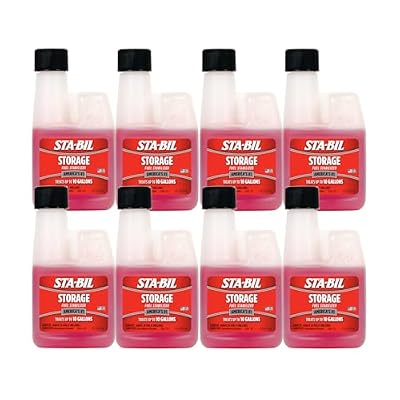
STA-BIL Storage Fuel Stabilizer, 4 oz, 8-Pack | Treats 10 gallons. Keeps fuel fresh up to 24 months and helps protect against corrosion.
Included for '6 Best Fuel Stabilizers for Storing Generator Gas (October 2026) Honest Reviews' because the listing specifies 4 oz and 8-Pack, details this guide uses to compare options.
View on AmazonAll 6 Picks in Detail
1. STA-BIL 16 oz – Best for the Typical Homeowner
As an Amazon Associate we earn from qualifying purchases at no extra cost to you.

The 16 oz bottle is the best match for a household with one portable generator and a couple of five-gallon gas cans. The listing says it treats 40 gallons and keeps fuel fresh for up to 24 months of storage while helping protect against corrosion. At the standard dose of 1 ounce per 2.5 gallons, a single bottle covers a 6-gallon generator tank and several full cans, with room left for lawn gear. It works in gasoline that contains ethanol and the maker states it contains no alcohol.
- Size: 16 fluid ounces
- Treats: 40 gallons, per the listing
- Storage claim: up to 24 months, a maximum that depends on fuel quality and storage conditions
- Fuel types: gasoline, including ethanol-blended fuel
- Use: storage of engines and fuel cans
Pros:
- Right-sized for many homes
- Easy-to-pour bottle
- Covers cans and tank in one go
Cons:
- Not economical for large fleets
- Needs measuring each time
Compared with the 32 oz size, it is the better pick unless you routinely treat more than 40 gallons before the next season.
A practical way to use it: treat both cans before storm season, label each with the treatment month and keep the leftover bottle sealed on a shelf away from heat. If you refill a can from the pump every couple of months, the same bottle will stretch through most of a year.
2. STA-BIL 32 oz – Best for Bigger Tanks and Multiple Machines

The 32 oz bottle doubles the volume of the 16 oz size and is listed to treat 80 gallons. It suits owners of a large portable generator with a tank in the 8 to 12 gallon range, a standby unit fed from a drum, or households that keep a generator, a pressure washer, a chainsaw fuel can and a lawn tractor in rotation. The formula claims are the same: up to 24 months of storage freshness, corrosion protection and compatibility with ethanol-blended fuel. The bigger bottle means fewer purchases and fewer half-empty containers in the garage.
- Size: 32 fluid ounces
- Treats: 80 gallons per the listing
- Storage claim: up to 24 months, depending on conditions
- Fuel types: gasoline, including ethanol blends
- Dose: 1 ounce per 2.5 gallons
Pros:
- Treats a big tank and extra cans
- Fewer refills of the bottle
- Same trusted formula
Cons:
- Larger bottle is easier to spill
- More than a light user can finish quickly
Next to the 1 gallon 4-pack, it is the practical step up when you need volume but do not want a farm-scale supply.
It also suits households that fill a larger transfer tank or a portable fuel caddy in the fall. One pour from this bottle covers a full season of cans for most families, and the cap helps keep the rest clean until you need it again. Write the opened date on the label so you know how long it has been in the garage.
3. STA-BIL 4 oz Single Bottle – Best for a Single Small Can

This listing is a single 4 oz bottle, which treats about 10 gallons at the standard dose. It is the right size for a first try, for one five-gallon can or a small generator, and for people who run the engine often enough that fuel rarely sits for months. The listing text also references a manufacturer name and part number and notes that the stock photo may differ from the actual part, so check the product page for the exact label and size before ordering. Think of it as a low-commitment way to learn the routine.
- Size: 4 fluid ounces
- Coverage: about 10 gallons at 1 ounce per 2.5 gallons
- Listing note: stock photo; actual parts may vary
- Pack: single bottle
- Use: small cans and small engines
Pros:
- Small purchase
- Fits in a toolbox
- Good for small cans
Cons:
- Runs out quickly
- Listing language leaves room for variation, so confirm what ships
Compared with the 4 oz 8-pack, it is the same size per bottle but with no spares for other machines.
If you buy this one first, note how the engine behaves after treated fuel has been in the tank for a month, and then decide whether to move up to a bigger bottle. It is a modest commitment while you learn how much fuel you really keep on hand.
4. STA-BIL 10 oz 12-Pack – Best for Repeated Can Treatment

A twelve-pack of 10 oz bottles suits anyone who treats gas in batches over the year, such as a landscaper who fills cans every few weeks or a household that keeps several cans on a rotating schedule. The listing says the formula keeps fuel fresh for up to 24 months and helps protect against corrosion. At the standard dose, a 10 oz bottle works out to roughly 25 gallons, so the pack handles a large volume of gasoline in manageable units. Check the listing for the exact coverage figure per bottle.
- Size: 10 fluid ounces per bottle, 12 bottles
- Coverage per bottle: about 25 gallons by the standard dose; confirm on listing
- Storage claim: up to 24 months
- Pack use: spread across cans and machines
- Fuel types: gasoline and ethanol blends
Pros:
- Portioned bottles stay fresh until opened
- Good volume for repeat use
- Easy to share or stash in multiple places
Cons:
- Too much for a single-generator household
- Takes storage space
Versus the gallon 4-pack, it is the better choice when you want to open one small bottle per batch rather than pour from a jug.
The individual bottles also make it simple to hand one to a neighbor or keep one in the truck. Because each bottle covers roughly 25 gallons by the dose math, it is easy to treat two cans at once: pour about 4 ounces into the first can and 4 ounces into the second, then top up with fuel.
5. STA-BIL 1 Gallon 4-Pack – Best for Farms, Shops and Fleets
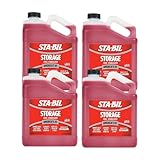
Four one-gallon jugs are listed to treat 320 gallons, which is the volume story here. A gallon is 128 ounces, and at 1 ounce per 2.5 gallons that is the same math. This pack is meant for farms, equipment rental yards, contractors, camps and anyone who keeps drums or multiple large tanks. For one generator it is far more than needed, but if you store fuel for tractors, generators, mowers and boats together, the cost per treated gallon trends down with size. The listing repeats the up-to-24-months storage claim and corrosion protection.
- Size: four 1-gallon containers
- Coverage: 320 gallons per the listing
- Storage claim: up to 24 months
- Pack use: bulk or drum treatment
- Fuel types: gasoline and ethanol blends
Pros:
- Highest volume in the group
- Efficient for drums and large cans
- Four containers can be shared
Cons:
- Heavy and bulky
- Needs a measuring cup or pump
Compared with the 32 oz bottle, it is the economical step when your annual fuel volume is well over 100 gallons.
Use a clean measuring cup that you keep only for fuel additives, and wipe the neck of the jug after each pour so residue does not attract dust. Store it upright, tightly capped, in a cool spot out of direct sun, and keep it away from children and pets.
6. STA-BIL 4 oz 8-Pack – Best for One Bottle per Machine

The 4 oz 8-pack gives you eight small bottles, each listed to treat 10 gallons. That works nicely when the goal is one bottle in the generator’s storage box, one in the mower shed, one with the snowblower and one in the truck, with a few more in reserve. A small bottle is also quick to pour into a single five-gallon can, leaving a leftover quantity for another small can. The listing repeats the storage freshness and corrosion claims.
- Size: 4 fluid ounces per bottle, 8 bottles
- Coverage per bottle: 10 gallons per the listing
- Storage claim: up to 24 months
- Pack use: multiple small cans and machines
- Fuel types: gasoline and ethanol blends
Pros:
- Handy single-use sizes
- Spread across several locations
- Lower risk of spills than big jugs
Cons:
- More packaging per gallon treated
- Not ideal for bulk fuel
Next to the 16 oz bottle, it gives flexibility at the cost of more bottles for the same total volume.
It is also an easy purchase to share with a neighborhood group that agrees to treat their cans before winter. Keep the spares in a closed bin so the caps do not get knocked loose and the contents do not evaporate.
Specs Compared
| Product | Bottle size | Pack | Gallons treated | Storage claim |
|---|---|---|---|---|
| STA-BIL 16 oz | 16 oz | 1 | 40 per listing | Up to 24 months |
| STA-BIL 32 oz | 32 oz | 1 | 80 per listing | Up to 24 months |
| STA-BIL 4 oz single | 4 oz | 1 | About 10 at standard dose; confirm on listing | Confirm on listing |
| STA-BIL 10 oz 12-pack | 10 oz | 12 | About 25 per bottle at standard dose; confirm on listing | Up to 24 months |
| STA-BIL 1 gallon 4-pack | 128 oz | 4 | 320 per listing | Up to 24 months |
| STA-BIL 4 oz 8-pack | 4 oz | 8 | 10 per bottle per listing | Up to 24 months |
How We Chose These
The six picks all come from one product line, so we compared them by bottle size, pack count and the gallons each listing says it treats. We checked the stated storage window, the ethanol compatibility statement and the standard dose of 1 ounce per 2.5 gallons against the manufacturer’s published guidance. We then matched each size to a likely buyer, from one generator and two cans up to farm equipment. Where the listing did not state a coverage number, we calculated it from the standard dose and flagged it to confirm. We did not assess fuel performance in any engine; this is a research-based comparison of formats.
What to Look For
Why gasoline goes bad
Gasoline starts to oxidize after a few weeks, forming gums and varnish that clog small carburetor jets. Ethanol-blended pump gas, which is most of what is sold in the U.S., can also pick up moisture from the air and separate over time. A storage stabilizer slows oxidation and helps protect metal parts; it does not restore fuel that has already turned stale or dark and sour-smelling. Add it to fresh fuel, not to old gas.
Dosing and the worked example
The label dose is 1 ounce per 2.5 gallons. For a 5-gallon can, you need 2 ounces. For a generator with a 6.8-gallon tank, that is about 2.7 ounces, so a little over 2 and a half ounces. Add the stabilizer first, then the fuel, so the gasoline mixes it in as it pours. After treating the tank, run the engine for about five minutes so the treated fuel reaches the carburetor and fuel lines. Keep cans and tanks around 95 percent full to leave little air space, because less air means less condensation.
Choosing a size that matches your annual fuel use
Add up the gallons you store in a year. A household with a generator and two five-gallon cans is dealing with about 15 gallons at a time, so a 16 oz bottle lasts for several fill-ups. A property owner who stores 100 gallons across vehicles and tools needs about 40 ounces, which makes the 32 oz bottle or a small pack more efficient. Stabilizers also age once opened, so a bottle you will finish within a season is wiser than a jug you will use over four years.
Ethanol, carburetor drains and storage habits
Stabilizer helps, but it is only one of three steps. Where possible use fresh ethanol-free or low-ethanol fuel for engines that sit, and consider running the carburetor dry or draining the bowl when the generator will rest for months. Store gasoline only in approved, labeled containers, away from heat, pilot lights and anything that can spark, and never fill a hot generator; let it cool before refueling. A common routine is to treat the fuel in the fall, run the engine, and start it briefly every few months.
Storing treated fuel safely
Use approved gasoline containers with tight caps, keep them out of living spaces and away from water heaters, furnaces and anything that can spark, and fill them outdoors on a flat surface. Do not fill a can in the bed of a truck or on a plastic liner, because static can build up. Store cans in a shaded, ventilated shed or garage, not in the house. Keep a fire extinguisher rated for flammable liquids within reach, and dispose of old fuel at a household hazardous waste site rather than pouring it on the ground.
A simple end-of-season routine for the generator
First, add stabilizer to a fresh tank of fuel and run the engine for about five minutes so treated gas reaches the carburetor. Second, either leave the tank nearly full or follow the manual’s instructions for draining it. Third, close the fuel valve if there is one and run the carburetor dry if the manual recommends it. Fourth, change the oil on schedule, check the spark plug and store the machine on a dry pad. Fifth, start it for a short period every couple of months, outdoors and with the exhaust pointed away from the house.
When stabilizer is not enough
If a generator will not start after long storage, stabilizer will not fix a varnished carburetor, a clogged fuel filter or a degraded fuel line. Signs include hard starting, surging, sputtering or a sour smell from the tank. Replace the old fuel, clean or replace the filter and have the carburetor serviced. The easiest repair is prevention: start the engine regularly and rotate fuel before it ages.
Reading the 24-month claim
“Up to 24 months” is a ceiling, not a guarantee. It depends on starting fuel quality, temperature swings and sealed containers. Treat it as a maximum, and rotate the oldest gas into vehicles or mowers before the season begins.
Questions
How much stabilizer do I add to a five-gallon can?
Use 2 ounces for 5 gallons, based on the standard 1 ounce per 2.5 gallons. If the can is only half full, use proportionally less. Always add the stabilizer to fresh gas.
Can I add stabilizer to gas that is already old?
It will not bring bad fuel back. Add it to fresh gasoline, and dispose of fuel that smells sour or looks dark according to local household hazardous waste rules.
Do I need to drain the generator if I use stabilizer?
Many owners treat the tank, run the engine for about five minutes and store it full. If you prefer, run the carburetor dry or drain the bowl as the owner’s manual suggests for long storage.
Does stabilizer work with ethanol-blended gas?
The manufacturer states the storage formula works in all gasoline, including ethanol blends. Ethanol can still draw in moisture, so keep containers sealed and nearly full.
How long does one bottle last once opened?
Keep the cap tight and store it away from heat. A bottle used within a couple of seasons is a reasonable plan, and the manufacturer’s label is the best guide for date coding.
Is a bigger bottle always better value?
Only if you will use it. Large containers help for farm-scale volumes, but a small household will likely waste a gallon jug. Match the size to your annual gallons.
Update History
- October 20, 2026 – Initial publication; product set drawn from current catalog listings.
- Check the product page for current specifications and availability before buying.
Sources
- Manufacturer product and usage information from Gold Eagle’s STA-BIL brand
- Retailer listing titles and specification fields for each product
- U.S. Consumer Product Safety Commission guidance on portable generator safety






Write Your Review
No reviews yet. Be the first to share your experience!