
🛒 Best Price Today on Amazon
Prime members get fast, free shipping on everything above, plus member-only deals. New members get a 30-day free trial — cancel anytime.
- Key takeaways
- Best Quiet Inverter Generators at a Glance
- How Loud Is Quiet? Decibels, Distance and Load
- 1. Honda EU2200i: Best Quietest Small Generator for Camping
- 2. Yamaha EF2200iS: Best Honda Alternative
- 3. Champion 2500-Watt Ultralight Inverter: Best Budget Small Generator
- 4. Honda EU3000iS: Best for Home Backup and Larger RVs
- 5. Westinghouse 4000 Peak Watt Super Quiet: Best Mid-Size Value
- 6. Champion 4500-Watt Dual Fuel: Best Dual-Fuel Home Backup
- 7. WEN 56360i: Best Light 3,000-Watt Class, Not the Quietest
- Also Consider
- Best Quiet Generators for Camping
- Best Quiet Generators for Home Use and Backup
- How to Make Any Generator Sound Quieter
- Quiet Generator or Portable Power Station?
- How We Chose
- Buying Guide: What to Check Before You Buy a Quiet Inverter Generator
- Frequently Asked Questions
- Which One Should You Buy?
The best quiet inverter generators for camping and home backup are the Honda EU2200i and Yamaha EF2200iS in the 2,000-watt class, the Honda EU3000iS when you need about 3,000 watts, and the Westinghouse 4,000-peak-watt inverter or Champion 4,500-watt dual fuel when you need more power and can accept a heavier unit. Noise figures are the trap: makers quote decibels at different loads and distances, so a “52” and a “57” on two spec sheets are often not comparable. This guide ranks seven models, shows how decibels fall with distance, and matches each to a camping or home-backup load. We did not personally use these generators; picks come from maker specifications, listings and published spec summaries.
Key takeaways
- Compare dBA at the same load and distance. Honda quotes 48 to 57 dBA for the EU2200i depending on load, measured at 23 feet; a “52 dBA” claim at light load is not the same as 57 dBA at rated load.
- Every doubling of distance lowers sound by about 6 dB in open air: 57 dBA at 23 feet is roughly 51 dBA at 46 feet and 45 dBA at 92 feet.
- 2,000 to 2,200-watt units run a fridge, lights, phone chargers and a CPAP; 3,000 to 4,500 watts adds a furnace fan, microwave or an RV air conditioner.
- Run any generator outdoors, well away from windows and doors, and use a carbon monoxide alarm indoors.
- Eco mode lowers noise and fuel use at light load; it also raises the risk of a stall when a big load kicks in.
Best Quiet Inverter Generators at a Glance
| Pick | Running / peak watts | Maker noise figure | Weight | Best for | Price tier |
|---|---|---|---|---|---|
| Honda EU2200i | 1,800 / 2,200 | 48 to 57 dBA by load, at 23 ft | About 47 lb | Quietest small unit | Premium |
| Yamaha EF2200iS | 1,800 / 2,200 | 57 dBA (confirm load and distance) | About 50 to 55 lb | Honda alternative | Premium |
| Champion 2500-Watt Ultralight | Check label / about 2,500 peak | Check maker page | Light, per listing | Budget small unit, parallel-ready | Mid |
| Honda EU3000iS | 2,800 / 3,000 | 49 to 58 dBA by load | About 131 lb | Home backup and RV | Premium |
| Westinghouse 4000 Peak Watt Super Quiet | 3,300 / 4,000 | As low as 52 dBA at light load | About 59 to 63 lb | Mid-size, remote start | Mid to upper |
| Champion 4500-Watt Dual Fuel | 3,500 / 4,500 on gas | 61 dBA at 23 ft | About 99 to 104 lb | Dual-fuel home backup | Upper |
| WEN 56360i | 2,900 / 3,600 | About 65 dBA at 25% load per reviews | About 46 lb | Light 3,000-watt class | Mid |
How Loud Is Quiet? Decibels, Distance and Load
A decibel figure only means something when you know two details: how far away the microphone was and how hard the generator was working. Honda’s EU2200i is a good example. Spec summaries give 48 dBA at a quarter load and 57 dBA at rated load, both at 23 feet, and the EU3000iS is 49 to 58 dBA over the same range. The Yamaha’s 57 dBA is likely a different measurement point from the 48 dBA people quote for the Honda, so do not read a gap between the two into those numbers alone.

Genkins 8000W Portable Quiet Inverter Generator for Home, Electric Start | Long runtime, Ultra-Quiet <62 dBA, Clean Power <3% THD, Parallel Ready, Generator for Camping or Home Backup Power Supply
Included for 'Best Quiet Inverter Generators for Camping and Home Backup' because the listing specifies Electric Start and Long runtime, details this guide uses to compare options.
View on Amazon
Oxseryn Power Equipment 4400 Watts Inverter Generator Gas Powered, Portable Open Frame Generator, Low Noise with ECO Mode, RV Ready, Emergency Home Backup
Included for 'Best Quiet Inverter Generators for Camping and Home Backup' because the listing specifies Portable Open Frame Generator and Low Noise with ECO Mode, details this guide uses to compare options.
View on Amazon
PowerSmart 3800 Watt Portable Inverter Generator for Home Use | Super Quiet <59dBA, Long Runtime, Eco Mode, <3% THD Clean Power
Included for 'Best Quiet Inverter Generators for Camping and Home Backup' because the listing specifies Super Quiet <59dBA and Long Runtime, details this guide uses to compare options.
View on Amazon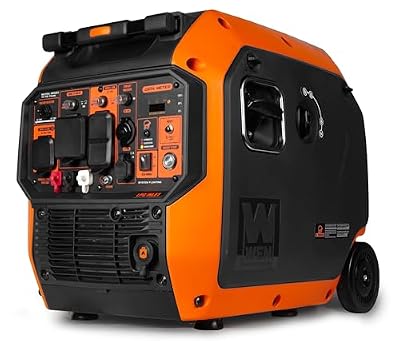
WEN 6800-Watt Dual Fuel RV-Ready Electric Start Portable Inverter Generator with Fuel Shut Off and CO Watchdog for Electric Vehicle Backup (DF680iX)
Included for 'Best Quiet Inverter Generators for Camping and Home Backup' as a relevant option in this category; details come from the product listing.
View on Amazon| Distance | Approx. sound level | Comparable to |
|---|---|---|
| 23 feet | 57 dBA | Normal conversation level |
| 46 feet | 51 dBA | Quiet office |
| 92 feet | 45 dBA | Quiet residential street |
| 184 feet | 39 dBA | Quiet rural background |
Real campgrounds and yards add trees, buildings, hills and wind that change these numbers, but the rule of thumb works for planning. Two identical generators run together add about 3 dB to one, which is why parallel pairs of small units are quieter than a single large open-frame generator, though not silent. For close neighbors, distance and placement matter as much as the dB rating.
1. Honda EU2200i: Best Quietest Small Generator for Camping
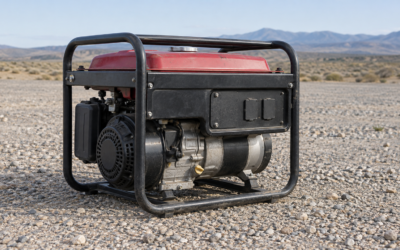
- 1,800 running watts · 2,200 peak watts · 120 V
- 48 to 57 dBA depending on load, measured at 23 feet
- About 47 pounds · fits in a trunk and carries with one hand
- Companion and parallel-capable versions are sold
Best for: tent and trailer campers who need quiet more than they need power. Skip if: you want to run a 15,000 BTU RV air conditioner or a heavy tool.
Pros: lowest noise figure in its class; strong dealer and parts network; stable clean power for phones and laptops. Cons: premium tier; the 1,800 running watts limit what you can add; a quarter-load noise figure is not what you will hear at full load.
2. Yamaha EF2200iS: Best Honda Alternative
- 1,800 running watts · 2,200 peak watts · 79 cc engine
- 57 dBA per summaries (confirm the load and distance with the maker)
- About 50 to 55 pounds, depending on the source
Best for: buyers who want a name-brand 2,200-watt inverter and prefer Yamaha’s dealer network. Skip if: you want the lowest published noise figure, which is Honda’s.
Pros: the same power class as the Honda; a reputation for reliable starting; a closed-cabinet design aimed at low noise. Cons: premium tier; slightly heavier; published dB numbers are not directly comparable to Honda’s.
3. Champion 2500-Watt Ultralight Inverter: Best Budget Small Generator
- About 2,500 peak watts · gas · recoil start
- Parallel ready · lightweight · quiet technology per the listing
- Check the label for running watts and noise rating
Best for: campers who want a lighter, lower-priced generator in the 2,000-watt class and may add a second unit later. Skip if: noise is your top priority; the maker’s number should be compared against Honda’s at the same load.
Pros: lower price tier than Honda and Yamaha; parallel capability; light for carrying. Cons: less proven long-term than Honda or Yamaha; confirm the noise rating at the load you will run.
4. Honda EU3000iS: Best for Home Backup and Larger RVs
- 2,800 running watts · 3,000 peak watts · 120 V · electric start
- 49 to 58 dBA depending on load (summaries); some reviewers read 54 to 58 dB on a meter
- About 131 pounds with wheels
Best for: home backup of a refrigerator, lights, furnace fan and electronics; larger trailers. Skip if: you need to lift the unit into a car trunk often; it is far heavier than the 2,200-watt units.
Pros: quiet for its power; electric start; strong parts network. Cons: premium tier and heavy; 3,000 watts will not run a central air conditioner.
5. Westinghouse 4000 Peak Watt Super Quiet: Best Mid-Size Value
- 3,300 running watts · 4,000 peak watts · remote electric start in the listing
- Noise rating as low as 52 dBA at light load; an owner report puts it near 61 dBA at 25 feet
- RV-ready 30 A outlet · about 59 to 63 pounds, by variant
Best for: RVers and homeowners who want 3,000-plus running watts without Honda money. Skip if: you need the lowest possible noise; the light-load rating is not a rated-load number.
Pros: strong power-to-weight ratio; remote start; the 30 A outlet suits trailers. Cons: noise at full load is higher than the headline number; confirm the model and fuel type before ordering.
6. Champion 4500-Watt Dual Fuel: Best Dual-Fuel Home Backup
- 4,500 starting watts · 3,500 running watts on gasoline · gas and propane
- 61 dBA measured at 23 feet · about 99 to 104 pounds
- Electric start versions available; CO shield on some models
Best for: home backup with a propane option, so you can store fuel for years without stabilizer. Skip if: weight and portability matter more than power.
Pros: propane capability; a measured noise figure with a stated distance; enough power for a furnace blower and fridge together. Cons: heavy; propane produces fewer running watts than gasoline; louder than the Honda 2,200.
7. WEN 56360i: Best Light 3,000-Watt Class, Not the Quietest
- 2,900 running watts · 3,600 surge watts · 149 cc engine · RV-ready
- About 46 pounds · noise reported around 65 dBA at 25 percent load in reviews, with listings giving different numbers
Best for: shoppers who need nearly 3,000 running watts in a light package for a tailgate or trailer. Skip if: you camp in a quiet-hours campground and are aiming for a 55 dBA or lower sound level.
Pros: light for its power; a mid price tier; RV-ready outlet. Cons: louder than the Honda and Westinghouse; sources disagree on the noise figure, which tells you to compare at the same load before you buy.
Also Consider
- Generac 3,800 Watt Dual-Fuel Inverter Generator: a 3,000 running-watt dual-fuel model with electric start and a CO detector.
- PowerSmart 3800 Watt Inverter Generator: the listing claims under 59 dBA, with parallel capability and clean power under 3 percent THD.
- AIVOLT 1750W Inverter Generator: a 26.5 pound one-hand carry for small loads, per the listing.
- Westinghouse 2550 Peak Watt Inverter Generator: a compact RV-ready model with a CO sensor.
Best Quiet Generators for Camping
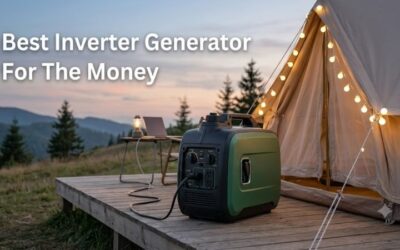
For camping, weight and noise matter more than total power. A 1,800 to 2,200-watt unit covers lights, a fan, phone and laptop chargers, a small cooler and, in many cases, a coffee maker. Choose the Honda EU2200i or Yamaha EF2200iS for the quietest approach, or the Champion 2,500-watt model if you want a lighter price tier. Park the generator downwind and as far from your tent as the cord allows, put it on a flat surface, and point the exhaust away from sleeping areas. Many campgrounds publish quiet hours and sometimes dB or distance rules, so ask before you run.
Best Quiet Generators for Home Use and Backup
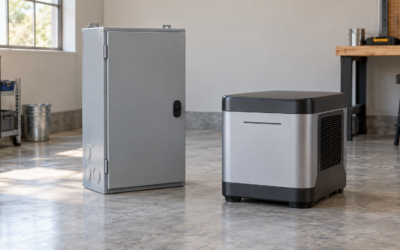
For home backup, running watts and fuel flexibility matter. A refrigerator, a few lights, a router and phone chargers fit under 1,500 running watts; add a furnace blower and you are at 2,000 to 2,500; a well pump or window air conditioner pushes the need to 3,000 watts or more. The Honda EU3000iS, Westinghouse 4000 and Champion 4500 dual fuel cover that range. For safety, run the generator outdoors at least 20 feet from the house, away from windows, doors and vents, and put battery-powered carbon monoxide alarms inside. If you want to power household circuits, have an electrician install an inlet and interlock or a transfer switch; never plug a generator into a wall outlet.
What Each Class Can Run
| Load | Typical running watts | Start-up surge | Fits in the class |
|---|---|---|---|
| LED lights, phone and laptop chargers | 20 to 150 total | None | All |
| CPAP machine | 30 to 60 | Low | All |
| Refrigerator (household) | 150 to 300 | Often 2 to 3 times | All above 1,800 W |
| Coffee maker or toaster | 800 to 1,500 | None | 2,000 W and up, one at a time |
| Furnace blower | 300 to 800 | Often 2 to 3 times | 3,000 W class |
| Microwave | 1,000 to 1,500 | Low | 2,000 to 3,000 W class |
| RV or window air conditioner | 1,000 to 1,800 | Often 2 to 3 times | 3,500 W class and up |
These are typical ranges, not guarantees. Check the nameplate on your appliance for running and starting watts, and add up only what you will run at the same time.
Worked Example: Fridge, Furnace Blower and Lights
- Refrigerator at 250 running watts, with a start-up surge of about 750 watts.
- Furnace blower at 500 running watts, with a surge of about 1,000 watts.
- Six LED bulbs at 10 watts each: 60 watts. Phone and router: 40 watts.
- Total running load: 250 + 500 + 60 + 40 = 850 watts. Largest surge: the blower’s 1,000 watts on top of other loads, about 1,350 watts at the moment of start.
- Result: a 1,800 running-watt, 2,200-watt peak unit, such as the Honda EU2200i, covers this load with room to spare; add a microwave and the 3,000-watt class becomes the better fit.
How to Make Any Generator Sound Quieter
The rating on the box is only a starting point. Placement and setup change what you and your neighbors actually hear, and they cost little.
- Add distance first. Each doubling of distance cuts roughly 6 dB in open air, so moving a generator from 25 to 50 feet does more than switching brands.
- Aim the exhaust and the open side away from people. Most noise leaves from the muffler and the cooling-air openings, so point them toward open ground or a fence line, never toward a tent, window or neighbor.
- Use soft ground. Grass and dirt absorb sound better than concrete or a metal truck bed, which can ring like a drum. A rubber mat under the feet reduces vibration noise.
- Use a longer extension cord instead of a closer generator. Pick a heavy-duty outdoor cord with the gauge the generator maker or cord label recommends for the length and load.
- Keep the load light. Engine speed follows load in eco mode, so staggering a microwave and a coffee maker keeps the engine slower and quieter than running both at once.
- Never box in a running generator. A homemade enclosure without proper airflow traps heat and carbon monoxide. If you want a baffle, use a free-standing barrier that does not enclose the unit, and keep the exhaust clear.
- Keep the muffler and air filter clean. A damaged muffler or a loose panel adds rattle and noise that the spec sheet never promised.
Quiet Generator or Portable Power Station?
If your loads are small, such as phones, laptops, lights and a CPAP, a portable power station is silent and has no fumes, and it can be recharged by solar panels or a wall outlet. The limits are capacity and recharge time: a power station holds a fixed number of watt-hours, while a generator makes power for as long as you can feed it fuel. For a weekend of camping with modest loads, a power station can be the quietest answer. For a multi-day outage with a refrigerator and a furnace blower, or an RV air conditioner, an inverter generator supplies far more energy per day. Many households keep both: a power station for night loads and a generator for daytime heavy loads.
How We Chose
We did not personally use these generators. We looked at published maker specifications, retailer listings and spec summaries, then chose models that cover the loads campers and homeowners actually run, from 1,800 to 3,500 running watts. We favored maker-stated noise figures with a load and distance and flagged those that lack one. Where sources disagree, as with the WEN and Westinghouse ratings, we gave the range and said which number to verify. Always check the maker’s page for the exact model and variant you buy.
Buying Guide: What to Check Before You Buy a Quiet Inverter Generator
Rated Watts vs Peak Watts
Running (rated) watts are what the generator can supply continuously; peak or starting watts are a short burst for motors. Size by running watts and check that the peak covers your biggest surge. A 2,200-watt peak unit sustains 1,800 watts, not 2,200.
Noise Ratings
Look for dBA at a stated distance (usually 23 feet or 7 meters) and a stated load (quarter, half or rated). A rating at quarter load will be lower than the sound you hear when you run a coffee maker. If a spec sheet gives no load or distance, treat the number as a marketing figure.
Eco Mode
Eco mode lets the engine slow when the load is light, which cuts noise and fuel use. It is helpful for overnight fridge and CPAP loads and can lag when a heavy load starts, so switch it off for tools.
Clean Power
Inverter generators produce a stable sine wave. Total harmonic distortion under about 3 percent is considered suitable for laptops and electronics. Check the spec sheet if you plan to run sensitive electronics.
Fuel Type
Gasoline is the standard; dual-fuel models accept propane, which stores well and burns cleaner, but give up some running watts on propane. Use fresh fuel and stabilizer, and run the carburetor dry before long storage if the manual advises.
Weight and Carry
Under about 50 pounds is a one-person lift. Above 90 pounds, plan on wheels and a ramp. The 2,200-watt units are for camping; 3,000 watts and up are for home and trailers.
Parallel Capability
Two matching small units run together can double the output and share the load, which means two 1,800-watt units can act as a 3,600-watt supply. Check that both are rated for parallel use and have the maker’s parallel cable.
Safety Features
Look for a low-oil shutdown, overload protection, and a carbon monoxide shutoff or sensor where offered. A CO sensor is not a substitute for placing the generator outdoors and for working CO alarms indoors.
Maintenance
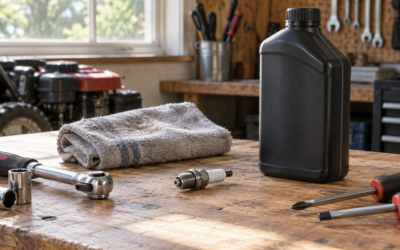
Change oil at the intervals in the manual, check the air filter and spark plug, and run the generator for a few minutes each month. Store with fresh or stabilized fuel and keep the unit dry.
Frequently Asked Questions
What is the quietest inverter generator?
The Honda EU2200i is generally listed as the quietest in the 2,000-watt class, at 48 to 57 dBA depending on load. Always compare dBA at the same load and distance, because makers use different test points.
What are the best quiet generators for camping?
The Honda EU2200i, Yamaha EF2200iS and Champion 2,500-watt ultralight are good starting points. They are light, quiet and run small camp loads. Pick the lightest unit that covers your running watts.
What are the best quiet generators for home use?
The Honda EU3000iS, Westinghouse 4000 peak watt inverter and Champion 4500 dual fuel cover most home backup needs, with enough watts for a fridge, furnace blower and lights. Place them outdoors, away from the house.
How quiet is 57 dBA?
About the level of a normal conversation at close range. At 46 feet it falls to about 51 dBA in open air, and at 92 feet to about 45 dBA.
Can I run a refrigerator on a 2,200-watt inverter generator?
Yes, a typical household fridge draws 150 to 300 running watts, with a start-up surge two to three times higher. A 1,800 running-watt unit handles that along with lights and chargers.
Is a dual-fuel generator quieter?
Not by itself. Noise depends on the engine, muffler and enclosure. Dual-fuel models are valued for propane storage and cleaner burn, not for lower noise.
Where should I put a generator at home?
Outdoors, at least 20 feet from the house, with the exhaust pointed away from windows, doors and vents, on a level surface under a dry cover that allows ventilation. Put battery-powered CO alarms inside.
Which One Should You Buy?
For camping, buy the Honda EU2200i if budget allows, the Yamaha EF2200iS as an alternative, or the Champion 2,500-watt model for a lower price tier. For home backup, choose the Honda EU3000iS for quiet and brand support, the Westinghouse 4000 for value, or the Champion 4500 dual fuel if you want propane. The WEN 56360i is an option if you want light weight and accept a louder noise level.
Sources: Honda, Yamaha, Champion, Westinghouse and WEN product pages and specification sheets; retailer listings; published generator spec summaries; general guidance on generator placement and carbon monoxide safety from safety agencies.
Last updated: November 2026
Write Your Review
No reviews yet. Be the first to share your experience!