
🛒 Best Price Today on Amazon
Prime members get fast, free shipping on everything above, plus member-only deals. New members get a 30-day free trial — cancel anytime.
- Decide These 3 Things First
- 1. Size: Match Running and Starting Watts
- 2. Material: Look for a Durable Tank and Protected Controls
- 3. Construction: Enclosed Quiet Designs Versus Open Frames
- 4. Comfort and Performance: Noise, Runtime, and Controls
- 5. Price Tiers: Pay for Capacity and Convenience
- 6. Warranty and Service Support
- 7. Delivery and Assembly
- Spec Checklist
- Red Flags
- FAQ
- Top Pick: SIOKIUU 2500W Portable Generator Super Quiet Inverter Generator Ultra Lightweight for Home Backup Outdoor Camping, CO Sensor Protect, EPA, ECO Mode
- Best Value: PowerSmart 3800 Watt Dual Fuel Inverter Generator for Camping or Home Use
- Premium Choice: WEN 6800-Watt Dual Fuel RV-Ready Electric Start Portable Inverter Generator with Fuel Shut Off and CO Watchdog for Electric Vehicle Backup (DF680iX)
Shopping for a portable generator can look simple until you compare starting watts, running watts, fuel types, noise ratings, outlet layouts, and carbon monoxide protections. The most common mistake is buying the largest wattage available without checking whether the unit can start a refrigerator, sump pump, well pump, or air conditioner. Another is treating an advertised wattage as continuous output, overlooking the weight, or assuming every “RV-ready” generator has the same connection.
This guide explains what to look for in inverter generator models before you buy. The goal is not simply to find the highest number on the box, but to match capacity, construction, safety features, and ownership costs to the way you will actually use the machine.
As an Amazon Associate we earn from qualifying purchases at no extra cost to you.


Decide These 3 Things First
- What will you power? Make a list of the appliances you need during an outage or trip. Add their running watts, then account for startup surges from motors and compressors.
- How portable must it be? A 2,500-watt enclosed inverter may weigh 40 to 55 pounds, while a 6,800-watt dual-fuel model can exceed 200 pounds. Decide whether one person must lift it.
- What fuel and connection do you prefer? Gasoline is widely available and usually provides the rated output. Propane stores longer and burns more cleanly, but output may be lower. A 30-amp RV outlet is useful only if it matches your RV cord or transfer equipment.
1. Size: Match Running and Starting Watts
Generator size should be based on continuous, or running, watts first. Add the startup requirement of the appliance with the highest surge, rather than adding every appliance’s maximum surge together. A refrigerator may run on roughly 100 to 800 watts but briefly require substantially more when its compressor starts. A sump pump, furnace blower, or portable air conditioner can create a similar spike.
For light camping, charging electronics, and a small refrigerator, a 2,000- to 2,500-watt inverter is often a practical range. A 3,000- to 4,000-watt model is more suitable for a refrigerator, freezer, lights, television, and selected kitchen appliances. Whole-home essentials, larger pumps, or an RV air conditioner may call for 5,000 to 7,000 running watts, depending on the equipment.
Do not confuse “peak,” “surge,” or “starting” watts with the continuous rating. For example, a generator advertised at 3,800 watts may provide a lower running rating. Read the specification label and manual before comparing models.
2. Material: Look for a Durable Tank and Protected Controls
Most portable generators use a steel or molded plastic fuel tank, an aluminum engine housing, and a steel frame or molded enclosure. Plastic tanks resist rust and keep weight down, while steel can feel more rugged but adds weight and may eventually corrode if scratched or stored damp.
Pay attention to more than the tank material. Hinged service panels, rubber outlet covers, metal control guards, and a protected fuel valve can improve long-term durability. The frame should not flex when you lift one side. Wheels and handles should attach securely without excessive play.
Inverter electronics are sensitive to moisture and impact. Even a weather-resistant design should operate under a canopy or other ventilated cover, never in rain or inside a garage. Look for clear labeling around the fuel shutoff, grounding point, circuit breakers, and parallel ports.
3. Construction: Enclosed Quiet Designs Versus Open Frames
Enclosed inverter generators generally offer better sound control and protection for the engine and electronics. They are often the better choice for campgrounds, neighborhoods, and nighttime use. A claimed noise level in the high 50s to low 60s decibels at a stated distance is common, but ratings are not always measured under identical loads. Treat the number as a comparison point, not a guarantee of silence.
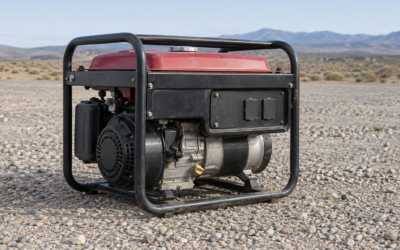
Open-frame inverter generators typically provide easier access for maintenance and more room for cooling. They can deliver substantial output at a lower price, but they are often louder and bulkier. A 4,400-watt open-frame unit may cost around $275 to $450, while an enclosed dual-fuel model with similar or greater capacity may cost $400 to $800.
Check the frame design for lifting points and wheel clearance. A compact generator measuring approximately 20 by 12 by 18 inches may fit in a vehicle trunk, while a high-output model around 32 by 29 by 30 inches needs a truck bed, trailer, or storage area with a clear path.
4. Comfort and Performance: Noise, Runtime, and Controls
Inverter technology produces cleaner, more stable power than many conventional portable generators, making it a strong choice for laptops, televisions, chargers, and other sensitive electronics. It also allows the engine to slow down under light loads, reducing fuel use and noise. An economy mode is useful, but it may respond more slowly to sudden motor loads, so follow the manufacturer’s guidance for pumps and compressors.
Runtime depends on tank size, load, fuel, and economy settings. A small 2,500-watt unit with a roughly 1.1- to 1.5-gallon tank may run about 5 to 10 hours at a partial load. Larger models with 3- to 6-gallon tanks may run 8 to 14 hours under comparable conditions. These are useful planning ranges, not guaranteed results.
Helpful controls include an electric start, recoil backup, fuel gauge, hour meter, low-oil shutdown, overload reset, and a clear display for voltage and frequency. A CO sensor with automatic shutdown is an important safety feature, but it does not make indoor operation safe. Never run a generator in a home, garage, basement, shed, or near an open window.
5. Price Tiers: Pay for Capacity and Convenience
Budget: $250 to $450. Expect 2,000 to 4,400 watts, gasoline operation, recoil starting, basic outlets, and fewer premium controls. Examples in this range include lightweight 2,500-watt models near $270 and open-frame 4,400-watt models around $300. Verify the continuous rating, noise level, and safety equipment carefully because specifications vary widely.
Midrange: $450 to $800. This tier commonly adds dual-fuel operation, electric start, a 30-amp RV outlet, larger fuel capacity, wheels, and stronger enclosures. A dual-fuel inverter around 3,800 watts may sell for approximately $400 to $550. A 6,800-watt model with electric start and RV capability may be near $800.
Premium: $800 to $1,500 or more. Higher prices can buy greater continuous output, better controls, improved service support, remote starting, longer warranties, and more refined noise management. Do not pay for features you will not use. A premium generator still requires safe placement, regular maintenance, and proper load management.
6. Warranty and Service Support
Look for at least a two-year limited warranty for residential use, with separate terms for commercial or rental use. Some brands offer three years or more, but the coverage may differ between the engine, inverter module, and accessories. Read whether labor, shipping, diagnostic fees, and replacement parts are included.
Service availability matters more than a long warranty on paper. Before buying, confirm that the brand lists replacement air filters, spark plugs, fuel caps, carburetor parts, batteries, and control components. A local repair network can be especially valuable for a heavy generator that is difficult to ship.
7. Delivery and Assembly
Small generators may arrive nearly ready to run, requiring only oil, fuel, and handle or wheel installation. Larger units can require 30 to 60 minutes of assembly for wheels, feet, handles, battery cables, and accessory brackets. Check the package weight: a 50-pound generator can be carried by two adults, while a 150- to 220-pound model may need a ramp, hand truck, or several people.
Inspect the carton before accepting delivery and photograph damage. Confirm that the manual, oil funnel, tool kit, wheel kit, propane hose, remote, and charging cables are included if listed. Use the specified oil grade, complete the break-in procedure, and test the generator outdoors before an emergency occurs.
Spec Checklist
| Spec | Budget | Mid | Premium |
|---|---|---|---|
| Continuous output | 1,800-3,500 watts | 3,000-5,000 watts | 5,000-7,000+ watts |
| Starting output | 2,000-4,400 watts | 3,500-6,000 watts | 6,000-8,500+ watts |
| Fuel | Gasoline | Gasoline or dual fuel | Dual fuel or gasoline |
| Typical weight | 40-100 pounds | 75-150 pounds | 140-250 pounds |
| Tank capacity | 1.0-2.5 gallons | 2.0-4.0 gallons | 3.0-6.0 gallons |
| Useful features | CO sensor, eco mode, USB ports | Electric start, 30-amp outlet, wheels | Remote start, display, advanced fuel controls |
| Typical price | $250-$450 | $450-$800 | $800-$1,500+ |
Red Flags
- No continuous-watt rating: A peak-watt number alone prevents a meaningful comparison.
- Unclear CO protection: Look for a named CO sensor and automatic shutdown, not vague safety language.
- Overly precise noise claims: If the test distance, load, or measurement conditions are missing, compare cautiously.
- Too few outlets for your plan: Confirm 120-volt outlets, USB ports, a 30-amp receptacle, and circuit-breaker protection.
- Unclear dual-fuel output: Propane often produces less power than gasoline. Check both ratings.
- Weak support information: Missing manuals, parts diagrams, warranty terms, or service contacts are warning signs.
- Indoor-use suggestions: Any product or seller implying that a generator is safe inside a home, garage, or enclosed porch should be avoided.
FAQ
How many watts should a home backup generator have?
For essential circuits such as a refrigerator, freezer, lights, internet equipment, and a furnace blower, 3,000 to 5,000 running watts may be enough. Add a well pump, sump pump, large air conditioner, or electric water heater and you may need 6,000 watts or more. Have an electrician install a properly rated transfer switch instead of plugging a generator into a wall outlet.
Is an inverter generator better than a standard generator?
For camping and electronics, usually yes: inverter models are generally quieter and produce regulated power. Standard generators can provide high output at a lower cost, but they are often louder and less compact. Choose based on your noise tolerance, load, and budget rather than the technology name alone.
Is dual fuel worth the extra cost?
Dual fuel is useful when you want gasoline for maximum output and propane for longer storage or backup flexibility. It typically adds roughly $75 to $250 compared with a similar gasoline-only model. Confirm the output on each fuel and store propane cylinders upright, outdoors, and according to local rules.
What is the most important safety feature?
Safe placement and ventilation come first. A carbon monoxide sensor with automatic shutdown is an important secondary safeguard. Operate the generator outdoors, at least 20 feet from buildings and away from doors, windows, and vents, while following the manual and local fire guidance.
Top picks from this guide
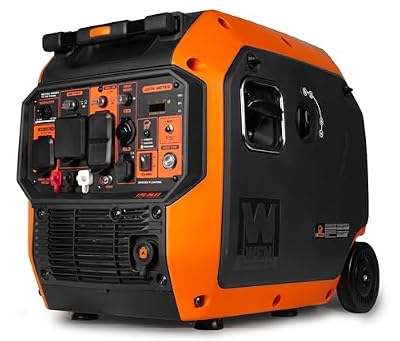 WENWEN 6800-Watt Dual Fuel RV-Ready Electric Start Portable Inverter Generator…$798 \xc2\xb7 99/100
 OxserynOxseryn 4400-Watts Inverter Generator, Open Frame Generator Gas Powered, Emergency…$255 \xc2\xb7 99/100
 PowerSmartPowerSmart 3800 Watt Dual Fuel Inverter Generator for Camping or…$460 \xc2\xb7 98/100
 SIOKIUUSIOKIUU 2500W Portable Generator Super Quiet Inverter Generator Ultra Lightweight…$313 \xc2\xb7 98/100
Write Your Review
No reviews yet. Be the first to share your experience!