
🛒 Best Price Today on Amazon
Prime members get fast, free shipping on everything above, plus member-only deals. New members get a 30-day free trial — cancel anytime.
Learning how to break in an inverter generator is mostly a matter of controlled, varied use—not running it hard for hours on end. A careful break-in helps piston rings seat, circulates oil through the engine, and gives you a chance to identify leaks, unusual noises, or shutdown problems before an emergency.
Done badly, break-in can cause premature wear. Overloading a new engine, running it with too little oil, letting it sit at no load for hours, or changing oil too late can leave behind metal particles and increase heat and friction. Always treat your owner’s manual as the final authority: some newer generators call for a specific first oil change, while others say no special break-in is required.
As an Amazon Associate we earn from qualifying purchases at no extra cost to you.


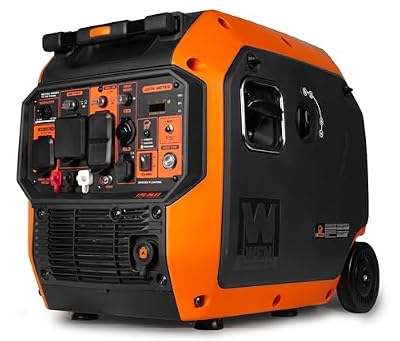
The instructions below fit many portable gasoline inverter generators, including models in the roughly 3,000- to 7,000-watt range. For example, a compact 4,000-watt unit may weigh about 70 to 100 pounds, while a dual-fuel inverter generator rated around 6,800 watts can weigh 130 to 150 pounds. Get help moving larger units.
What You Need
| Item | Why | Optional? |
|---|---|---|
| Owner’s manual | Confirms oil type, capacity, fuel requirements, break-in instructions, and service intervals. | No |
| Manufacturer-specified engine oil | Provides correct lubrication during the first hours. Many portable engines use SAE 10W-30, but verify yours. | No |
| Fresh gasoline | Fresh, clean fuel reduces starting and carburetor problems. Use the octane and ethanol limits in the manual. | No, unless using propane on a dual-fuel model |
| Approved fuel container | Allows safe filling away from heat and ignition sources. | No |
| Basic load, such as a lamp or small fan | Lets you apply a modest, changing electrical load instead of idling continuously. | No |
| Watt meter or plug-in power monitor | Helps keep total demand below the generator’s running and starting limits. | Optional |
| Funnel, rags, and gloves | Make oil filling and spill cleanup easier. | Optional |
Before buying or breaking in a generator, check its dimensions, weight, fuel type, and outlet arrangement. A portable inverter generator priced around $400 may suit basic refrigerator, lighting, and charging needs. A larger dual-fuel, RV-ready model with electric start and carbon-monoxide monitoring may cost around $750 to $850, but its maximum output does not mean every circuit can be connected at once.
Step-by-Step
1. Read the manual and inspect the generator (10 to 15 minutes)
Set the generator outdoors on a firm, level, dry surface. Keep it at least 20 feet from the house, garage, doors, and windows, with the exhaust pointed away from occupied areas. Never run it in a garage, shed, crawl space, basement, or partially enclosed porch. Carbon monoxide can build up quickly, even when doors are open.
Remove shipping materials and inspect the frame, wheels, control panel, fuel lines, ground connection, and oil drain area. Confirm that the voltage selector, if equipped, is set correctly. Do not connect the generator to household wiring unless you have a properly installed transfer switch and a qualified electrician.
2. Add the correct oil before starting (5 to 10 minutes)
Place the machine level and add only the oil specified by the manufacturer. The capacity is commonly about 0.5 to 1.5 quarts, but do not estimate—use the dipstick, sight window, or stated fill level. Overfilling can be as harmful as running low.
Check the level with the generator off and positioned as it will be during operation. Wipe away spilled oil. If an oil-level sensor prevents starting, do not bypass it. A new generator that will not start may simply need oil, the correct engine switch position, or a properly connected battery.
3. Add a small amount of fresh fuel (5 minutes)
With the engine cool and switched off, add enough fresh gasoline for the first session without filling to the very top. Leave room for expansion. Never refuel while the engine is running or hot, and do not smoke nearby.
Use fuel within the storage period recommended in the manual. If the generator is dual fuel, follow the manufacturer’s instructions for gasoline or propane; do not improvise adapters or use an unapproved hose. Keep the fuel container several feet away while starting if practical.
4. Start and check for problems at no load (10 to 15 minutes)
Start the generator according to the manual. Let it stabilize at no electrical load for about five minutes. Listen for knocking, scraping, surging, repeated hunting, or unusually loud vibration. Look for fuel, oil, or exhaust leaks and verify that warning lights are off.
A brief change in engine speed during warm-up can be normal. Persistent surging, a strong fuel smell, smoke that does not clear, or an oil-pressure warning is not normal. Shut the generator down and consult the manual before continuing.
5. Run a light, changing load (1 to 2 hours)
Connect a simple load such as a 60- to 150-watt lamp, fan, battery charger, or similar device. Keep the load well below the generator’s rated running wattage. For a 4,000-watt generator, a first load of roughly 400 to 1,200 watts is conservative. Avoid refrigerators, pumps, compressors, heaters, and power tools during the first session because their startup demands can be several times their running wattage.
If the unit has an economy or smart-throttle mode, follow the manual’s recommendation. Vary the load every 15 to 30 minutes rather than holding one exact output. For example, run a lamp, then add a fan or charger, then remove one item. The goal is gentle, changing operation—not maximum output.
6. Cool down and perform the first oil service (20 to 40 minutes)
After the first operating period, remove the electrical load and let the generator run without a load for about three to five minutes, if the manual permits. Turn it off and let it cool enough to handle safely.
Many manufacturers call for the first oil change after 5 to 20 operating hours. If the manual gives a shorter interval, follow it. Drain the warm oil into a suitable container, replace the drain plug or washer if required, and refill to the specified level. Dispose of used oil at an approved collection site; never pour it on the ground or down a drain.
7. Complete the remaining break-in hours (3 to 10 additional hours)
Run the generator for the balance of the manufacturer’s stated break-in period with mixed, moderate loads. A practical target is usually 25% to 50% of rated running wattage, with occasional brief operation at a higher—but not overloaded—level once the engine is warm.
Do not run continuously without checking fuel, oil, temperature, and connections. Record operating hours. After the break-in oil change, inspect the oil level before every use and follow the regular maintenance schedule for air filters, spark plugs, fuel treatment, and oil.
Mistakes to Avoid
- Ignoring the manual: Oil capacity, fuel type, break-in duration, and first-service intervals vary by engine.
- Running indoors: Carbon monoxide is odorless and can be fatal. Outdoor placement is mandatory.
- Overloading a new engine: Do not connect a 3,000-watt load to a generator rated for 2,000 running watts, even briefly.
- Using old or contaminated fuel: Water and stale gasoline can cause hard starts, surging, and carburetor damage.
- Idling for the entire break-in: A small, varied electrical load is generally more useful than extended no-load running.
- Changing oil too late: Follow the first-service interval, commonly 5 to 20 hours.
- Backfeeding a home outlet: This can injure utility workers and damage equipment. Use a transfer switch installed by a professional.
- Moving it while hot: Shut down, allow cooling, close the fuel valve if applicable, and use two people for heavy models.
How Often
Break-in is normally a one-time process. You do not need to repeat it after every oil change or after a generator sits for a few weeks. Before each use, however, inspect the oil level, fuel, air intake, exhaust area, cords, and signs of leakage.
For regular use, change oil according to the manual—often every 50 to 100 hours, with earlier service for dusty conditions or heavy loads. If the generator is used only for emergencies, run it under a moderate load for about 20 to 30 minutes every month or as the manual recommends. Stabilize fuel before storage and drain the carburetor when specified.
When to Call a Pro or Replace
Stop using the generator and seek qualified service if it has persistent oil or fuel leaks, repeated low-oil shutdowns, severe vibration, electrical burning smells, damaged outlets, exposed wiring, heavy smoke, or knocking and grinding noises. A technician should also evaluate a unit that cannot maintain voltage or frequency, repeatedly trips its overload protection under a normal load, or will not start after basic fuel, oil, and spark checks.
Replacement may make more sense when repair costs approach the price of a comparable new unit, the alternator or inverter module has failed, the fuel tank is badly corroded, or the frame and wiring have suffered heat or impact damage. Do not defeat carbon-monoxide sensors or other safety shutdowns.
FAQ
How long should I break in an inverter generator?
Follow the manual, but many portable engines use a first period of about 5 to 20 operating hours. Use light-to-moderate, changing loads and complete the first oil change at the specified hour mark. Some models require little or no special break-in.
Should I run an inverter generator at full load during break-in?
No. Start with roughly 10% to 30% of rated running wattage, then use moderate loads after the engine warms. Occasional higher output may be acceptable later, but never exceed the running or surge ratings.
Can I break in a dual-fuel generator using propane?
Usually, if the manufacturer permits it. Propane can be convenient for storage, but follow the exact connection and starting procedure. If the manual specifies gasoline for initial operation, use gasoline first.
When should I change the oil for the first time?
Common recommendations range from 5 to 20 hours, but the manual controls. Change it sooner if the oil appears contaminated, the engine ran unusually hot, or the manufacturer provides a shorter initial interval.






Write Your Review
No reviews yet. Be the first to share your experience!