
🛒 Best Price Today on Amazon
Prime members get fast, free shipping on everything above, plus member-only deals. New members get a 30-day free trial — cancel anytime.
Backup planning for the rainy season is mostly a timing decision. A running cover bought in a panic, halfway through the first big storm, tends to be whatever is available rather than whatever fits, and a poor fit only shows itself once the generator is already working in the rain. Choosing early means you can match the cover to your generator’s frame style, test-fit it on a dry weekend, and start the wet season knowing the machine can run outdoors through hours of rain without you improvising shelter over a hot engine.


This guide is written for households that treat the wet season as a known appointment: families whose open frame generator backs up the whole home, and inverter owners who plan quieter, smaller-scale cover for essentials. The five picks were selected from the titles and specifications on their Amazon pages, looking at stated waterproofing, the frame type or wattage range each cover is listed for, how it mounts, and anything the maker says about harsh-weather materials.
Quick Picks
As an Amazon Associate we earn from qualifying purchases.
| Product | Best for | Key spec from title |
|---|---|---|
| GenTent Open Frame Kit (Original Standard, Tan) | Planning an open frame generator for a long wet season | Waterproof and NFPA flame retardant, universal clamp system |
| IGAN Pro-Max (Grey) | A mid-to-large backup generator that runs through storm after storm | Covers most 3500W to 12000W generators, windproof kit, waterproof |
| GenTent XL Inverter (Extreme, Black) | A larger inverter generator facing cold, wet months | NFPA flame retardant vinyl, cold crack tough, waterproof |
| GenTent Universal Kit (Standard, Black) | A straightforward cover for a standard open frame machine | Universal kit for open frame generators |
| GenTent Inverter Kit (Standard, Grey) | A fully encased inverter kept ready for rainy season outages | Running cover kit for fully encased inverter generators |
How to Choose
Put Waterproofing and Water Shedding First
For rainy season planning, the headline question is how the cover handles hours of steady rain, not a brief shower. Three of the picks here state waterproofing directly in their listings: the GenTent Open Frame Kit, the IGAN Pro-Max and the GenTent XL Inverter. Just as important is shape: a running cover tents over the generator so water runs off instead of pooling, which is why these kits stand above the machine rather than wrapping it like a storage cover. When you compare listings, look for the word waterproof in the title or specifications rather than assuming every running cover sheds water equally well.
Fit the Cover to the Generator You Already Own
A backup plan starts from the machine in your garage, so sort the range by fit before anything else. Open frame generators take frame-mounted kits such as the GenTent Universal Kit or the clamp-on Open Frame Kit. Fully encased inverter generators need shell-shaped kits like the GenTent Inverter Kit, or the XL version for bigger bodies. The IGAN Pro-Max sorts by wattage instead, listing most generators from 3500W to 12000W. Write down your generator’s type and size now, while the weather is fine, and shop against those numbers.
Plan How Outlets, Cords and Exhaust Stay Dry
A good rainy season setup thinks past the cover itself. The generator’s outlets sit under the cover’s shelter, but the cords leaving it cross wet ground, so plan the run: keep connections raised off puddles where you can, route cords so they are not sitting in the path of water running off the cover, and position the generator so its exhaust points away from the house and away from where rain drips heaviest. None of this needs extra purchases to think through; it needs a dry run in daylight before the season’s first outage makes the decisions for you.
Safety: A Running Cover Never Moves the Generator Indoors
Planning ahead includes planning the safe spot, and that spot is always outdoors. Generator exhaust carries carbon monoxide, so the machine must stay outside and away from windows, doors and vents, covered or not, and a running cover is weather protection only, never permission to run in a garage or under a sealed porch. Use only a cover designed for a running engine, keep the fabric clear of the exhaust and the air intake, and let the generator cool completely before refuelling or before a storage cover goes on for the off-season.
The 5 Best Options
GenTent Open Frame Kit (Original Standard, Tan)
If your rainy season plan is built around an open frame generator, this original GenTent kit is the one that reads like it was specified with a wet climate in mind. Its listing title states the material is waterproof and NFPA flame retardant, and it mounts with a universal clamp system that fixes the cover to the frame itself, a reassuring detail when the same storm brings wind with the rain. In tan and in the line’s Original Standard version, it is a deliberate, buy-it-before-the-season choice rather than an emergency improvisation.
Specs
- Kit type: Running cover kit, Original Standard version
- Fits: Open frame generators
- Mounting: Universal clamp system
- Material: Waterproof and NFPA flame retardant, per the listing title
- Colour: Tan
Best for: Open frame generators that form the core of a household’s rainy season backup plan.
Watch out for: The clamps need exposed frame rails to grip, so an enclosed inverter generator is the wrong partner for this kit.
ASIN: B0088EVIR4
IGAN Pro-Max (Grey)
The Pro-Max suits planners whose generator is a larger portable machine, because its listing sorts buyers by wattage: it covers most generators from 3500W to 12000W. It is described as a windproof kit and a waterproof cover for running generators, in grey, which speaks to the reality of a rainy season where storms repeat for weeks and the cover goes on and off many times. For a household that has already sized its backup generator to the home, checking that one wattage line in the listing is a quick way to confirm this cover belongs in the plan.
Specs
- Kit type: Running cover with windproof kit
- Fits: Most generators from 3500W to 12000W, per the listing
- Weather protection: Waterproof
- Colour: Grey
- Brand: IGAN
Best for: Mid-size and larger backup generators that will run repeatedly through a stormy season.
Watch out for: Confirm your generator’s wattage falls inside the stated range, and remember smaller inverter models sit below it.
ASIN: B08R7J4YQM
GenTent XL Inverter (Extreme, Black)

Some rainy seasons are cold as well as wet, and that is the corner of the range this Extreme kit occupies. Made for larger fully encased inverter generators, it uses an NFPA flame retardant vinyl that the listing describes as cold crack tough and waterproof, in black. For an inverter owner whose wet season runs into late autumn, when overnight temperatures drop and cheaper materials stiffen, that cold-weather wording is the detail to plan around. It is the largest inverter option here, so it also suits owners who chose a bigger enclosed machine for longer runtimes.
Specs
- Kit type: Running cover kit, Extreme version, XL size
- Fits: Larger fully encased inverter generators
- Material: NFPA flame retardant vinyl, cold crack tough, waterproof, per the listing
- Colour: Black
- Brand: GenTent
Best for: Larger inverter generators backing up a home through a cold, wet season.
Watch out for: XL proportions are meant for big enclosed bodies, so owners of compact inverters should look at the Standard inverter kit instead.
ASIN: B0FJGKCMSL
GenTent Universal Kit (Standard, Black)
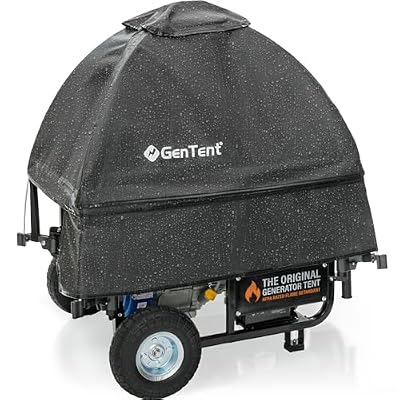
Not every plan needs the heaviest specification. This Standard GenTent kit in black is the universal option for open frame generators, a running cover kit designed to stay on the machine while it works, without the clamp system of the Original kit or a wattage band to check like the IGAN. For a household buying its first running cover ahead of the season, that simplicity is a virtue: confirm the open frame fit, test it once at home, and the job is done before the first forecast turns.
Specs
- Kit type: Running cover kit, Standard version
- Fits: Open frame generators
- Colour: Black
- Brand: GenTent
Best for: First-time running cover buyers with a standard open frame generator to get ready for the wet season.
Watch out for: Universal does not mean unlimited, so compare your frame’s measurements with the listing’s fit information before the season starts.
ASIN: B0B8K46YMJ
GenTent Inverter Kit (Standard, Grey)
Inverter owners planning for rainy season outages need a cover shaped for a shell, not a frame, and this Standard GenTent kit in grey is the one listed for fully encased inverter generators. As a running cover kit it is built to remain fitted while the inverter operates, keeping rain off a machine that may run quietly for many hours to protect a fridge and a few lights. It is the natural counterpart to the XL kit: same enclosed-body idea, sized for the standard inverter bodies most households actually own.
Specs
- Kit type: Running cover kit, Standard version
- Fits: Fully encased inverter generators
- Colour: Grey
- Brand: GenTent
Best for: Standard-size fully encased inverter generators kept ready for rainy season power cuts.
Watch out for: Check your inverter’s dimensions first, because enclosed models that run large for their class may fit the XL kit better.
ASIN: B016MZ3VH0
Which One Fits Your Situation
Your Rainy Season Lasts for Months, Not Weekends
Where wet weather settles in for a whole season, prioritise the covers whose listings state waterproofing outright. Open frame owners should take the GenTent Open Frame Kit, with its clamp mounting for repeated use; owners of larger machines in the listed wattage band should take the IGAN Pro-Max. Both are specified for running in rain rather than merely surviving storage outdoors.
You Run an Inverter and Your Wet Season Is Cold
If your backup is a larger fully encased inverter and your rainy months come with cold snaps, the GenTent XL Inverter kit is the match: its vinyl is described as cold crack tough as well as waterproof and NFPA flame retardant. Standard-size inverter owners in milder climates can choose the GenTent Inverter Kit instead and give up nothing they will actually miss.
You Store the Generator Away Between Storms
A cover that only comes out for outages still has to be ready each time, so pick the simplest fit for your machine: the GenTent Universal Kit for a standard open frame generator, or the GenTent Inverter Kit for an enclosed one. Store the running cover clean and dry, indoors with the generator’s other kit, and remember it does not replace the storage cover that protects the machine itself between uses.
You Are Building a Backup Plan for the First Time
Start by writing down your generator’s frame type and, if the listing route suits you, its wattage. Open frame owners choose between the two GenTent open frame kits; larger machines can use the IGAN Pro-Max if they fall inside its 3500W to 12000W span; inverter owners choose between the Standard and XL GenTent inverter kits. Buy once, test-fit in dry weather, and the plan is finished.
Common Mistakes
- Leaving the purchase until the first storm is forecast, then discovering the cover that fits your generator is not the one you grabbed.
- Buying a storage cover for rainy season duty, even though it has to come off before the generator can run at all.
- Skipping the test fit, so the first attempt at mounting happens beside a running generator in the rain.
- Storing the running cover damp and folded after the season, which shortens the life of any outdoor fabric.
- Planning the cover but not the generator’s position, and ending up with the machine too close to a window or door when the outage comes.
Frequently Asked Questions
How far ahead of the rainy season should I buy a running cover?
Early enough to test-fit it in dry weather and correct a sizing mistake if you made one. The practical deadline is the first storm that could cut your power, not the middle of the season. Buying ahead also means the cover, the generator and your cord layout get planned together as one setup instead of three separate surprises.
Can I test a running cover before the season starts?
Yes, and you should. Fit the cover to the cold generator at home, check that the mounting sits securely, that the exhaust and air intake stay clear of fabric, and that you can reach the controls and outlets you rely on. A short practice run on a dry day shows you exactly how the setup behaves before rain makes everything slower.
How should I store the running cover between seasons?
Let it dry fully after its last use, brush off dirt, and store it indoors, loosely folded or hung, away from sharp tools that could tear the fabric. Storing it alongside the generator’s storage cover and cords keeps the whole backup kit in one place. Check it over when the next season approaches, before the first storm is due.
Does a running cover replace a storage cover?
No, they do different jobs. The running cover protects the generator while it operates in rain; the storage cover protects a parked machine from dust and damp in the garage or shed. A complete rainy season plan uses both, with the generator cooled down fully before the storage cover goes on after an outage.
Write Your Review
No reviews yet. Be the first to share your experience!