
⚡ Key Takeaways
- Running Watts vs. Starting Watts: The Core Concept
- Typical Appliance Wattage Reference
- Sizing by Home Size and Need
- How to Add It Up: A Worked Example
- Don’t Forget the Big Surge Items
- Fuel Type Affects Your Real-World Output
- Quick Sizing by Home Square Footage
- Match the Generator Type to Your Size Tier
- Critical Safety Warning
- Related Guides
- Frequently Asked Questions
- The Bottom Line
- Related Articles
- Related Guides

Prime
Best Seller
Westinghouse 12500 Watt Dual Fuel Home Backup Portable Generator, Remote Electric Start, Transfer Switch Ready, Gas and Propane Powered


As an Amazon Associate we earn from qualifying purchases at no extra cost to you.







Get instant results in seconds — no signup.
- Running watts (also called rated watts) is the steady power it draws once it's operating.
- Check the nameplate on your own appliances for exact figures, since efficiency varies widely.
- A 3,500–5,000W portable inverter generator handles this comfortably and sips fuel.
- The number one sizing mistake is forgetting that one motor-driven appliance dictates your minimum size.
Choosing the right generator starts with one honest question: what size generator for a house do you actually need? Buy too small and you’ll trip the unit every time the refrigerator and microwave run together. Buy too large and you’ve wasted hundreds of dollars and you’ll burn extra fuel idling under a light load. The answer comes down to math you can do at your kitchen table in about 15 minutes, plus a clear understanding of the difference between running watts and starting (surge) watts. This guide walks you through it with real wattage numbers, a sizing table by appliance and home size, and the safety rules that matter most.
Related: best quiet portable generators.
🛒 Best Price Today on Amazon
Prime members get fast, free shipping on everything above, plus member-only deals. New members get a 30-day free trial — cancel anytime.
Running Watts vs. Starting Watts: The Core Concept
Every appliance has two power figures. Running watts (also called rated watts) is the steady power it draws once it’s operating. Starting watts (surge watts) is the brief spike needed to get motors spinning at the instant they switch on. Anything with a compressor or electric motor — refrigerators, well pumps, air conditioners, furnaces — can demand two to three times its running wattage for a fraction of a second.
Generators are rated both ways. A “7500-watt” portable generator typically means 7500 running watts and maybe 9500 starting watts. When you size a generator, you add up the running watts of everything you want on at once, then add the single largest starting-watt surge on top of that total. That sum is your minimum required starting capacity.
Typical Appliance Wattage Reference
These are representative numbers for common 120V household items. Check the nameplate on your own appliances for exact figures, since efficiency varies widely.
| Appliance | Running Watts | Starting Watts |
|---|---|---|
| Refrigerator / freezer | 700 | 2,200 |
| Sump pump (1/2 HP) | 1,050 | 2,150 |
| Well pump (1 HP) | 2,000 | 4,000 |
| Window AC (10,000 BTU) | 1,200 | 1,800 |
| Central AC (3 ton) | 3,500 | 5,000 |
| Furnace blower (gas) | 800 | 2,350 |
| Microwave | 1,000 | 1,000 |
| Electric water heater | 4,000 | 4,000 |
| Lights (10 LED bulbs) | 100 | 100 |
| TV + internet router | 250 | 250 |
| Space heater | 1,500 | 1,500 |
Sizing by Home Size and Need
There’s no single “right” generator — it depends on whether you want bare-bones essentials or near-normal living. Here’s how the three common tiers break down.
Essentials Only (3,000–5,000 watts)
This keeps a refrigerator, some lights, a furnace blower, phone chargers, and a TV running. It’s ideal for a small home or apartment during a short outage. A 3,500–5,000W portable inverter generator handles this comfortably and sips fuel.
Most of a Mid-Size Home (7,000–10,000 watts)
Now you can add a well pump, a window air conditioner or the furnace, kitchen appliances, and run multiple rooms at once. A 7,500–9,000W generator is the sweet spot for most three-bedroom homes that don’t want to choose between coffee and air conditioning.
Whole-House Comfort (12,000–22,000 watts)
To run central air, an electric range, an electric water heater, and everything else simultaneously, you’re looking at a large standby unit. These connect permanently and switch on automatically. If you’re weighing the investment, see our breakdown of standby versus portable options below.
How to Add It Up: A Worked Example
- List every device you want running during an outage.
- Add their running watts. Say: refrigerator (700) + furnace blower (800) + 10 lights (100) + TV/router (250) + microwave (1,000) = 2,850 running watts.
- Find the single biggest starting surge in your list. The furnace blower surges to 2,350, an extra 1,550 over its running figure.
- Add that surge gap to your running total: 2,850 + 1,550 = 4,400 starting watts required.
- Add a 20% safety margin so you’re never maxed out. Target roughly 5,300 starting watts — a 5,000-running-watt generator with ~6,250 starting watts fits well.
If you’d rather not do this by hand, our guide to interlock kits covers how a properly wired panel lets you manage loads safely, and you can also use a step-by-step extension cord setup for smaller portable installs.
Don’t Forget the Big Surge Items
The number one sizing mistake is forgetting that one motor-driven appliance dictates your minimum size. A 1 HP well pump surges to 4,000 watts on startup. If your generator can only deliver 4,000 starting watts total and the pump kicks on while the fridge is already running, the breaker trips. Always size around your largest single surge, not just the running total.
Air conditioners are the other trap. Central AC needs both high running and high starting watts, which is why air conditioning is what pushes most homeowners from a 5,000W portable into the 8,000W-plus range or a standby unit.
Fuel Type Affects Your Real-World Output
Generators often produce slightly less power on propane than on gasoline — typically about 10% less. If you plan to run a dual-fuel generator on propane for cleaner storage and longer shelf life, size up one tier to compensate for that derate. Altitude matters too: engines lose roughly 3.5% of output for every 1,000 feet above sea level.
Quick Sizing by Home Square Footage
While appliances matter more than square footage, home size is a useful sanity check once you’ve done your wattage math. As a rough guide, a small home or apartment under 1,000 square feet can usually cover essentials with 3,000–5,000 watts. A typical 1,500–2,500-square-foot home wanting comfort items lands around 7,500–10,000 watts. Larger homes over 2,500 square feet with central air and electric appliances generally need 12,000 watts or more, which means a standby unit. Treat these as starting points, then confirm with the appliance tally — two homes of identical size can have very different power needs depending on whether they heat with gas or electricity and whether they run a well pump.
Match the Generator Type to Your Size Tier
Size and generator type go hand in hand. In the essentials range, a quiet inverter generator is ideal — efficient, electronics-safe, and easy to move. In the 7,000–10,000-watt range, a conventional portable or a large inverter both work, often connected through an interlock or transfer switch. Above 12,000 watts, you’re almost always looking at a permanently installed standby unit with an automatic transfer switch. Knowing your tier early helps you shop the right category instead of being overwhelmed by every generator on the market.
Critical Safety Warning
Never run any generator inside a garage, basement, or enclosed space, even with the door open. Generators emit carbon monoxide, an invisible, odorless gas that kills. Always operate at least 20 feet from the house with the exhaust pointed away from doors, windows, and vents. Install battery-powered CO alarms inside your home. And never “backfeed” power by plugging a generator into a wall outlet — it can electrocute utility workers and damage your home. Use a proper transfer switch or interlock kit instead.
Frequently Asked Questions
What size generator do I need to run a whole house?
Most homes need a 12,000–22,000-watt standby generator to run everything at once, including central air and electric appliances. A 7,500–10,000-watt portable can cover the essentials plus some comfort items if you manage loads.
Will a 7500-watt generator run a house?
It will run most of a typical home’s critical loads — refrigerator, furnace, well pump, lights, and electronics — as long as you don’t run a large central AC and an electric range at the same time. It’s one of the most popular sizes for that reason.
How many watts does a refrigerator use?
A modern refrigerator runs at roughly 600–800 watts but surges to around 2,000–2,200 watts when the compressor starts. Always size for that startup surge.
Is it bad to run a generator at full capacity?
Running continuously at 100% load stresses the engine and shortens its life. Aim to keep your peak load at 75–80% of the generator’s rated capacity, which is why we recommend a 20% safety margin when sizing.
Can I run my central air conditioner on a portable generator?
Yes, if the generator is large enough. A 3-ton central AC needs about 3,500 running and 5,000 starting watts, so you’d want at least an 8,000-watt generator to run it alongside other loads.
The Bottom Line
Sizing a generator is simple arithmetic once you separate running watts from starting watts: add your running loads, add your single biggest surge, then pad it by 20%. For most homes that lands somewhere between 5,000 and 10,000 watts for essentials-plus-comfort, or 12,000-plus for true whole-house coverage. Measure your real appliances, respect the carbon-monoxide rules, and you’ll end up with a generator that’s neither underpowered nor overkill.
Top picks from this guide
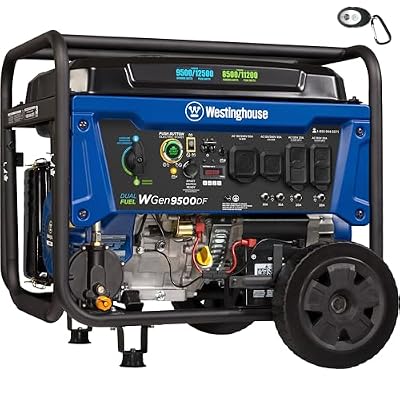 WestinghouseWestinghouse 12500 Watt Dual Fuel Home Backup Portable Generator, Remote…$999 \xc2\xb7 99/100
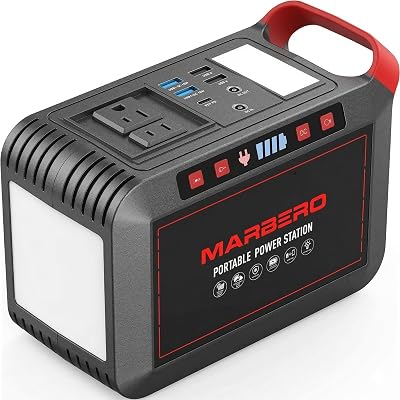
 MARBEROPortable Power Station 300W MARBERO 237Wh Camping Solar Generator Backup…$123 \xc2\xb7 99/100
 JackeryJackery Explorer 500 v2 Power Station, 512Wh/500W, AC Cable Included…$359 \xc2\xb7 97/100MARBEROMARBERO 111Wh Solar Generator with Panels Included Solar Panel Kit…$95 \xc2\xb7 96/100








Write Your Review
No reviews yet. Be the first to share your experience!