
⚡ Key Takeaways
- How Each Type Works
- Head-to-Head Comparison
- Power Quality: Why It Matters for Electronics
- Noise: The Difference You’ll Actually Notice
- Fuel Efficiency and Runtime
- Where Conventional Generators Still Win
- Closing the Gap: Parallel Inverters
- Weight, Size, and Portability
- Maintenance and Longevity
- Which Should You Choose?
- Safety Applies to Both
- Related Guides
- Frequently Asked Questions
- The Bottom Line
- Related Articles

Prime
Best Seller
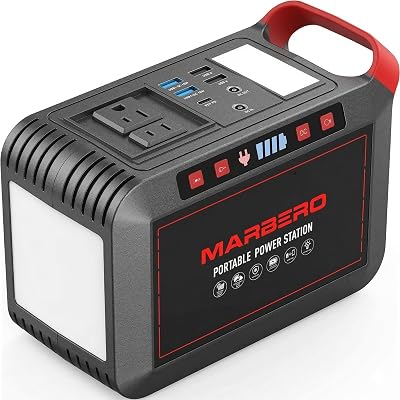
Westinghouse 12500 Watt Dual Fuel Home Backup Portable Generator, Remote Electric Start, Transfer Switch Ready, Gas and Propane Powered



- A conventional generator runs its engine at a constant 3,600 RPM to produce 120V at 60Hz directly from the alternator.
- The headline advantage of inverter generators is clean power.
- Decibels are logarithmic, so the gap is bigger than the numbers suggest.
- Because an inverter throttles its engine to match demand, it burns far less fuel under light loads.
When shopping for backup power, the inverter vs conventional generator debate is the first real fork in the road. Both burn fuel to make electricity, but they do it in fundamentally different ways, and that difference shapes everything from how much you’ll pay to whether you can safely charge a laptop. Conventional generators are the loud, powerful workhorses you picture at a construction site. Inverter generators are the quiet, efficient, electronics-friendly units that have taken over the portable market. This comparison breaks down how each works and which one fits your needs.
As an Amazon Associate we earn from qualifying purchases at no extra cost to you.



Related: best quiet portable generators.
🛒 Best Price Today on Amazon
Prime members get fast, free shipping on everything above, plus member-only deals. New members get a 30-day free trial — cancel anytime.
How Each Type Works
A conventional generator runs its engine at a constant 3,600 RPM to produce 120V at 60Hz directly from the alternator. The engine speed never changes, no matter how little power you’re drawing, so it’s always working hard.
An inverter generator produces raw AC power, converts it to DC, then electronically inverts it back into clean, stable AC. Because of this electronic stage, the engine can throttle up and down to match the actual load — idling quietly when you’re only charging a phone and revving only when demand rises. That throttling is the source of nearly every advantage inverters have.
Head-to-Head Comparison
| Factor | Inverter Generator | Conventional Generator |
|---|---|---|
| Power quality (THD) | Clean (<3% THD) | Higher distortion (often >5%) |
| Noise | Quiet (48–60 dB) | Loud (64–76 dB) |
| Fuel efficiency | High (throttles to load) | Lower (constant RPM) |
| Weight | Light and compact | Heavier for same watts |
| Max power available | Usually under 7,500W | Up to 15,000W+ |
| Price per watt | Higher | Lower |
| Parallel capable | Often yes | Rarely |
| Best for | Electronics, camping, RVs, home essentials | Job sites, big loads, budget |
Power Quality: Why It Matters for Electronics
The headline advantage of inverter generators is clean power. Total harmonic distortion (THD) measures how closely the electricity matches a smooth sine wave. Inverters deliver under 3% THD, comparable to grid power. Conventional generators often exceed 5% and can spike higher under changing loads.
Sensitive electronics — laptops, phones, TVs, modern appliances with circuit boards, and medical devices like CPAP machines — can be damaged or behave erratically on dirty power. If you plan to run anything with a microprocessor, an inverter is the safer choice. For pumps, power tools, and resistive loads like heaters, conventional dirty power is usually fine.
Noise: The Difference You’ll Actually Notice
Decibels are logarithmic, so the gap is bigger than the numbers suggest. A 58 dB inverter sounds like normal conversation; a 72 dB conventional generator is closer to a vacuum cleaner running nonstop. For camping, tailgating, RV use, or any situation with neighbors nearby, the quiet operation of an inverter is often worth the price premium on its own. Many campgrounds and events actually require inverter-level noise limits.
Fuel Efficiency and Runtime
Because an inverter throttles its engine to match demand, it burns far less fuel under light loads. On a half tank charging phones and running a few lights, an inverter can run for many more hours than a conventional unit that’s revving at full speed the entire time. Over a multi-day outage, that efficiency saves real money and means fewer trips to refuel. If you want to maximize unattended runtime, see our guide on portable power stations and solar generators, which take efficiency even further with battery storage.
Where Conventional Generators Still Win
Inverters aren’t the answer for everything. Conventional generators dominate when you need raw, affordable power:
- High wattage: Most inverters top out around 7,500 watts. For whole-house portable power or big surge loads, conventional units scale to 15,000 watts and beyond at a lower cost.
- Price: Dollar for watt, conventional generators are significantly cheaper. On a tight budget, you get more capacity for your money.
- Rugged duty: For job sites, farms, and dirty environments where noise and clean power don’t matter, the simpler, tougher conventional design is the practical pick.
Closing the Gap: Parallel Inverters
One way to get inverter benefits at higher wattage is to run two inverter generators in parallel. A parallel kit links two compatible units so they share the load and deliver combined output — for instance, two 2,000W inverters acting as a 4,000W source. This gives you flexibility: run one for small loads, both for big ones, and carry each separately. Our parallel kit comparison covers compatible models and how to set them up.
Weight, Size, and Portability
For the same wattage, inverter generators are notably lighter and more compact than conventional units, partly because they run smaller, higher-efficiency engines and partly because of their enclosed design. A 2,000-watt inverter often weighs under 50 pounds and has a built-in handle, making it easy for one person to carry to a campsite or lift into a truck. A conventional generator of similar output is bulkier and usually rides on a wheeled frame. If you’ll move the unit frequently — between home, RV, and outdoor events — the inverter’s portability is a real day-to-day advantage. If it lives in one spot and only comes out during outages, weight matters far less.
Maintenance and Longevity
Both types share the same core maintenance needs: regular oil changes, a clean air filter, fresh fuel, and an occasional spark plug. Conventional generators are mechanically simpler, so some owners find them easier to service and repair themselves. Inverters add an electronic inverter module, which is highly reliable but more specialized if it ever fails. In practice, both will last many years with routine care. Because inverters often run at lower average RPM thanks to load-based throttling, their engines may see less cumulative wear over a long service life under light, intermittent use.
Which Should You Choose?
Match the generator to your dominant use case. If you mostly run electronics, want quiet operation, value fuel savings, and carry the unit around, the inverter is clearly worth its premium. If you need maximum wattage at the lowest price for rugged, motor-driven loads where noise and power purity are irrelevant, the conventional generator is the smarter buy. And if you want clean, quiet power but occasionally need more wattage, paralleling two inverters bridges the gap neatly.
Safety Applies to Both
Regardless of type, every fuel-burning generator emits carbon monoxide and must run outdoors, at least 20 feet from the house, with exhaust aimed away from doors and windows. Never run either type in a garage or enclosed space. Use battery-powered CO alarms inside, and let the engine cool before refueling to avoid igniting spilled fuel.
Frequently Asked Questions
Is an inverter generator worth the extra money?
For running sensitive electronics, camping, RV use, or home backup where noise matters, yes — the clean power, quiet operation, and fuel savings justify the premium. For high-wattage job-site work on a budget, a conventional generator is the better value.
Can a conventional generator damage electronics?
It can. The higher total harmonic distortion of conventional power may damage or cause malfunctions in laptops, phones, TVs, and devices with sensitive circuit boards. Inverter generators avoid this with clean sine-wave output.
Are inverter generators quieter?
Yes, significantly. Inverters typically run at 48–60 decibels versus 64–76 for conventional units, and because decibels are logarithmic, that difference is very noticeable in person.
Can you run an inverter generator for a whole house?
For essentials, yes — many homes can cover the basics with a 4,000–7,500W inverter or two paralleled units. For running central air and large appliances simultaneously, a high-wattage conventional or standby generator is usually needed.
Do inverter generators use less fuel?
Yes. Because the engine throttles down to match the load instead of running at full speed constantly, inverters burn noticeably less fuel under light and moderate loads, extending runtime per tank.
The Bottom Line
Choose an inverter generator if you value clean power for electronics, quiet operation, fuel efficiency, and portability — the typical needs of home backup, camping, and RV owners. Choose a conventional generator if you need maximum wattage at the lowest cost and you’re powering rugged, motor-driven loads where noise and power purity don’t matter. For many homeowners, the ideal middle ground is two paralleled inverters: quiet, clean power that scales up when you need it.
Top picks from this guide
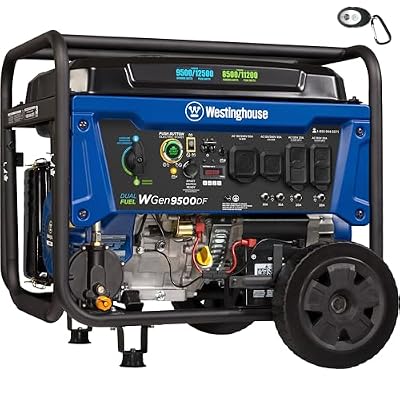 WestinghouseWestinghouse 12500 Watt Dual Fuel Home Backup Portable Generator, Remote…$999 \xc2\xb7 99/100
 OxserynOxseryn 4400-Watts Inverter Generator, Open Frame Generator Gas Powered, Emergency…$330 \xc2\xb7 99/100
 AIVOLTAIVOLT 1600W Super Quiet Inverter Generator 28lbs Portable for Camping…$254 \xc2\xb7 98/100
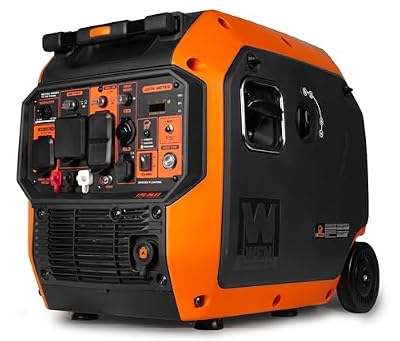 WENWEN 6800-Watt Dual Fuel RV-Ready Electric Start Portable Inverter Generator…$798 \xc2\xb7 98/100








Write Your Review
No reviews yet. Be the first to share your experience!