
- Top Pick: Champion Power Equipment 4000-Watt RV Ready Portable Inverter Generator with Quiet Technology and Free 3-Year Warranty
- Best Value: Champion Power Equipment 2500-Watt Ultralight Portable Inverter Generator with Quiet Technology and Free 3-Year Warranty
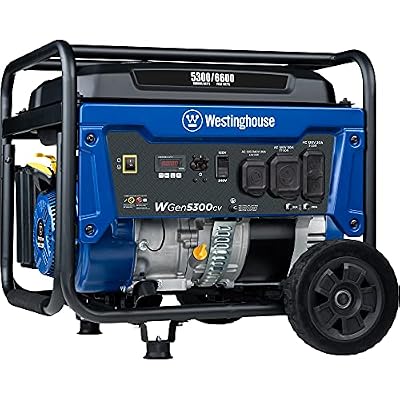
- Premium Choice: Westinghouse 6600 Peak Watt Home Backup Portable Generator, Transfer Switch Ready 30A Outlet, RV Ready 30A Outlet, Gas Powered, CO Sensor
For anyone who depends on a CPAP, oxygen concentrator, home dialysis machine, powered wheelchair, or refrigerated medication, a power outage is not an inconvenience, it is a medical risk. Choosing the right backup generator becomes a health decision, and the priorities shift from raw wattage to power quality, reliability, and runtime you can count on when it matters most.
This guide explains exactly what to look for in a generator that will safely power medical equipment in 2026, and why clean inverter output is non-negotiable. We reference dependable options along the way, from the ultralight Champion 2500-Watt Inverter for a single device to the whole-home Westinghouse 12000 Peak Watt Dual Fuel unit, so you can match a solution to your specific needs. Always confirm requirements with your equipment manufacturer and physician.
As an Amazon Associate we earn from qualifying purchases at no extra cost to you.


⚡ Save on Your Next PC — Amazon Prime
Prime members get fast free shipping on the systems above, plus early access to Prime Day & Black Friday PC deals. New members get a 30-day free trial.
Watch: What to Look for in a Generator for Powering Medical Equipment — Video Review
Clean Power Is the First Requirement
Medical devices contain sensitive electronics that demand a clean sine wave, the same smooth power your wall outlet provides. This means an inverter generator with total harmonic distortion (THD) under 3%. A conventional generator’s rough, distorted output can cause a CPAP to malfunction, damage an oxygen concentrator’s circuitry, or trip its safety shutoff. Never power medical equipment from a non-inverter generator. Units like the Champion 2500-Watt Ultralight and Champion 4000-Watt RV Ready Inverter are built around this clean-power design.
Sizing for Your Devices
- List every device you must run and note both its running watts and its higher startup surge. A home oxygen concentrator draws roughly 300 to 600 watts, a CPAP 30 to 90 watts, and a compact fridge for medication 100 to 200 watts.
- Add the running watts together, then ensure the generator’s rated (continuous) wattage exceeds that total by at least 20%.
- If you also want lights and a full-size refrigerator, step up to a 4000-watt-plus unit like the Champion 4000-Watt or the Westinghouse 6600 Peak Watt Home Backup generator.
Runtime and Fuel Strategy
Medical needs are continuous, so runtime per tank and refueling flexibility are critical. Dual-fuel generators such as the Westinghouse 12000 Peak Watt Dual Fuel let you run on propane, which stores indefinitely without going stale, a major advantage when you cannot predict outage length. Calculate how many hours you need between refuels, especially overnight for CPAP users, and choose a unit with an eco mode to stretch fuel while loads are light.
Reliability and Safety Features
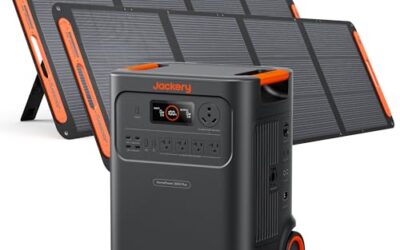
When lives depend on it, dependability outranks price. Look for electric or remote start so the generator fires up quickly and easily, automatic low-oil shutoff to protect the engine, and clearly labeled outlets. The Champion 10,000-Watt Wireless Remote Start unit lets you start backup power from indoors without going outside in bad weather. Always pair any gas generator with a battery-powered carbon monoxide alarm, and consider a small battery power station as an instant-on bridge for the seconds it takes a generator to start.
Tips
- Keep a fully charged battery backup for critical devices to cover the gap between an outage and the generator starting.
- Test the generator monthly under a real load so you are never troubleshooting during an emergency.
- Store stabilized fuel or propane and rotate it; never store gasoline for more than a few months without a stabilizer.
- Post your device wattages and refueling schedule near the generator so any family member can operate it.
Frequently Asked Questions
Can I run a CPAP or oxygen concentrator on any generator?
No. Only an inverter generator with clean, low-THD output is safe for these devices. Conventional generators produce distorted power that can damage or disrupt them.
How many watts do I need for medical equipment?
It depends on your devices, but a single CPAP needs under 100 watts while an oxygen concentrator may need 300 to 600. A 2500-watt inverter covers one or two small devices; add a fridge and lights and you want 4000 watts or more.
Is propane or gasoline better for medical backup?
Propane stores indefinitely and burns cleaner, making dual-fuel generators ideal for unpredictable outages. Gasoline is convenient but degrades in months and should be stabilized and rotated.
Should I have a battery backup too?
Yes. A battery power station provides instant, silent power for critical devices the moment the grid fails, bridging the short gap until your generator is running. It is an essential complement, not a replacement.
Conclusion
Powering medical equipment safely comes down to three essentials: clean inverter power under 3% THD, enough rated wattage with headroom, and dependable runtime with a flexible fuel plan. Start with a proven inverter like the Champion 2500-Watt for a single device or scale to a Westinghouse 6600 or 12000 for a home full of essentials, and always keep a battery backup on hand. Confirm your exact requirements with your equipment maker and doctor, then test your setup before you ever need it.
Top picks from this guide
 Champion Power EquipmentChampion 1500-Watt Portable Generator$305 \xc2\xb7 99/100
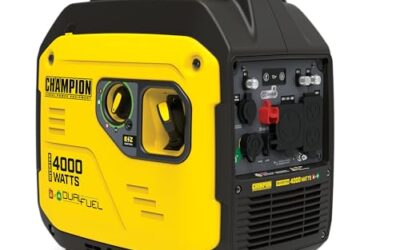
 Champion Power EquipmentChampion 4000-Watt RV Ready Portable Inverter Generator$640 \xc2\xb7 95/100
 Champion Power EquipmentChampion 2500-Watt Ultralight Portable Inverter Generator | Gas Powered, Recoil…$487 \xc2\xb7 95/100
 WestinghouseWestinghouse 6600 Peak Watt Home Backup Portable Generator, Transfer Switch…$529 \xc2\xb7 95/100

Write Your Review
No reviews yet. Be the first to share your experience!