
Our Short List of 3
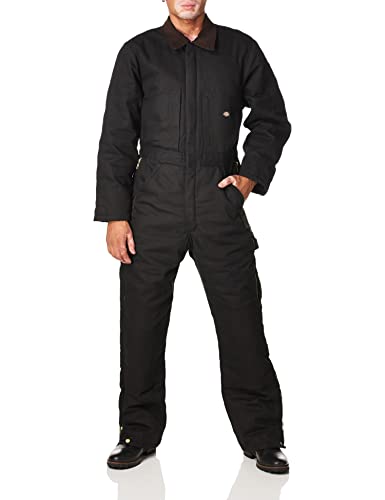
- Shell: 10 oz cotton duck, water-repellent finish
- Lining: quilted nylon with polyester insulation
- Closure: two-way front zipper, zip-to-waist design
- Leg zippers past the knee; knit storm cuffs

- Shell: 6.5 oz 500-denier Cordura nylon, water-repellent finish
- Insulation: 150 g synthetic fill, quilted lining
- Closure: two-way front zipper with storm flap
- Leg zippers from ankle to thigh, with storm flaps and snaps

- Fabric: poly-cotton twill with stain-release finish
- Closure: two-way front zipper under a protective flap
- Action back; elastic waist section
- Multiple pockets: chest, front, back, and leg
All 4 Picks at a Glance
| Product | Specs | Action |
|---|---|---|
| Dickies Premium Insulated Duck Coverall |
| Check price on Amazon |
| Carhartt Yukon Extremes Loose Fit Insulated Coverall |
| Check price on Amazon |
| CQR Zip-Front Coverall |
| Check price on Amazon |
 Propper 27/P Flyers Coverall |
| Check price on Amazon |
🛒 Best Price Today on Amazon
Prime members get fast, free shipping on everything above, plus member-only deals. New members get a 30-day free trial — cancel anytime.
A good coverall turns a filthy job into a simple change of clothes: the grime lands on the suit, not on you. The five below split into two camps — insulated suits for winter work outdoors, and light uninsulated shells for year-round garage and shop use.
As an Amazon Associate, we earn from qualifying purchases.
Quick answer
For cold outdoor work, the Dickies Premium Insulated Duck Coverall is the classic pick. For deeper cold and wind, the Carhartt Yukon Extremes Insulated Coverall adds a Cordura nylon shell and heavier fill. For year-round garage use, the Red Kap Twill Action Back Coverall is the mechanic’s standard, the CQR Zip-Front Coverall is the lighter, easier-care option, and the Propper 27/P Flyers Coverall suits warm weather best.
Dickies Premium Insulated Duck Coverall
- Shell: 10 oz cotton duck, water-repellent finish
- Lining: quilted nylon with polyester insulation
- Closure: two-way front zipper, zip-to-waist design
- Leg zippers past the knee; knit storm cuffs
This is the suit most people picture as a winter coverall: a 10-ounce cotton duck shell with a water-repellent finish over a quilted lining with polyester fill. It shrugs off brush, gravel, and cold concrete, and comes in short, regular, and tall lengths. The two-way front zip and zip-to-waist design let the top half be tied off when you warm up, leg zippers run past the knee so the suit goes on over muddy boots, and knit storm cuffs plus double knees suit long spells on frozen ground.
Cotton duck has one honest weakness: it drinks oil. A soaked sleeve keeps a dark stain for the life of the garment, so choose a dark color and accept the patina.
Carhartt Yukon Extremes Loose Fit Insulated Coverall
- Shell: 6.5 oz 500-denier Cordura nylon, water-repellent finish
- Insulation: 150 g synthetic fill, quilted lining
- Closure: two-way front zipper with storm flap
- Leg zippers from ankle to thigh, with storm flaps and snaps
Where the Dickies uses canvas, this suit uses a 6.5-ounce, 500-denier Cordura nylon shell over 150 grams of synthetic insulation. Nylon blocks wind better than duck and wipes cleaner: oil sits on the surface longer and washes out more fully. It is built for standing in a January gale while a transfer switch gets wired.
The two-way front zipper is backed by a storm flap, leg zippers run from ankle to thigh with snap closures, and an elastic back waist keeps the loose fit from feeling like a sail. Double-layer knees accept slide-in pads and reflective taping helps after dark. The trade-off is bulk — in a heated garage you will cook in it.
Red Kap Twill Action Back Coverall
Red Kap has dressed working mechanics for a century. The 7.5-ounce poly-cotton twill resists fading and wrinkles and releases oil in the wash far better than pure cotton. It is an uninsulated shell: cool in summer, easy to layer in winter, tough enough for daily industrial laundry.
Pleats in the back — the action back — let you reach across an engine bay without the shoulders binding, and elastic waist inserts keep the fit close without a belt. The two-way brass zipper and the snaps at neck and waist are all covered, so no bare metal drags across a fender. Side pass-through openings reach your trouser pockets without unzipping, and six pockets cover chest, front, back, and a leg rule pocket.
Specs
- Fabric: 7.5 oz twill, 65% polyester / 35% cotton
- Closure: two-way brass zipper with concealed snaps
- Action back pleats; elastic waist inserts
- Pass-through side openings to reach trouser pockets
- Six pockets, including chest pockets and a leg rule pocket
- Uninsulated; sized by chest, regular and tall lengths
CQR Zip-Front Coverall
- Fabric: poly-cotton twill with stain-release finish
- Closure: two-way front zipper under a protective flap
- Action back; elastic waist section
- Multiple pockets: chest, front, back, and leg
CQR builds this suit as the easy-care alternative to the shop standards. The poly-cotton twill is lighter than the Red Kap fabric and carries a stain-release, wrinkle-resistant finish, so fresh oil wipes away more easily and the suit leaves the dryer ready to wear.
The cut follows the classic pattern: a two-way front zipper under a flap, an action back for reaching and bending, an elastic waist section, snap cuffs, and pockets across chest, hips, back, and leg. Lengths run short, regular, and long. Be honest about the limits: light twill will not outlast heavy duck against sharp sheet metal, and the suit is uninsulated. For warm-season, light-duty garage work that washes easily, it earns its place.
Propper 27/P Flyers Coverall
- Fabric: 5.2 oz twill, 65% polyester / 35% cotton
- Pattern: flight-suit cut, pleated bi-swing back
- Closure: two-way front zipper with wind flap
- Zippered leg openings for wear over boots
Propper patterns this suit on air-crew flight suits, and it shows in the pocket count and the light fabric. The 5.2-ounce poly-cotton twill is the lightest shell here, making this the warm-weather pick for indoor and summer work. It resists fading and dries quickly after washing.
A pleated bi-swing back gives your shoulders full reach, adjustable waist tabs fine-tune the fit, and the two-way front zipper is backed by a wind flap. Zippered leg openings let the suit go on over boots, and the pockets follow flight-suit logic — chest, thigh, and calf pockets plus a sleeve pencil pocket, all flat and zipped shut so nothing dangles near belts or fans. One point of honesty: this twill suit is not flame resistant, and Propper says so plainly.
How to choose
Insulated or shell? For outdoor winter work — refueling a standby generator in the snow — buy insulation: the Dickies for general cold, the Carhartt for wind and deeper cold. For indoor or mild-weather work, a shell over your own layers is more flexible and easier to wash.
Fabric and oil. Cotton duck is the toughest shell here but absorbs oil and keeps stains. Poly-cotton twill releases oil in the wash and fades less. Cordura nylon wipes cleanest and blocks most wind.
Zippers and pockets. A two-way front zipper is close to mandatory: it opens from the bottom for venting and relief breaks. Leg zippers decide whether the suit goes on over boots. Pass-through pockets sound minor until you need your keys.
Size honestly. Measure your chest at the fullest point and use that number, not your jacket size, then match height to length: short, regular, or tall. Torso length is the trap — a suit too short there pulls at your shoulders when you bend. Wearing it over layers? Go one size up.
Know what a coverall is not. These suits protect your clothes, not your body. None is chemical PPE and none is flame resistant. FR coveralls are a separate purchase with their own care rules, and chemical work calls for purpose-built coated suits.
Wash care for oily suits. Pre-treat oil spots with dish soap or a laundry degreaser before washing. Wash coveralls alone, never with household laundry, in the warmest water the label allows. Hang insulated suits to dry, and never put a fuel-soaked garment in a dryer — air it outdoors first.
FAQ
Should I size up if I wear layers underneath?
Yes. Measure your chest over the thickest layer you plan to wear; between sizes, take the larger one.
Insulated coveralls or a shell plus layers for an unheated garage?
For long hours in deep cold, an insulated suit is warmer and simpler. For a garage that warms up as you work, a shell over sheddable layers is better.
Can I machine wash an oil-covered coverall at home?
Yes, with prep: pre-treat the oil, wash the suit alone on a heavy cycle, and run an empty rinse afterward if the drum smells of oil.
Do any of these coveralls count as safety gear?
No. They are work clothing, with no flame, chemical, or arc certification. Jobs with those hazards need garments built for them.
Verdict
Most buyers should land on one of two suits. The Red Kap Twill Action Back is the year-round garage standard: honest twill, a covered zipper, and pass-through pockets you will use daily. Add the Dickies Premium Insulated Duck for winter and you are covered in every sense. Step up to the Carhartt Yukon Extremes for windy, severe winters, pick the CQR for easy care and light duty, and choose the Propper when heat is your working condition.

Write Your Review
No reviews yet. Be the first to share your experience!