
🛒 Best Price Today on Amazon
Prime members get fast, free shipping on everything above, plus member-only deals. New members get a 30-day free trial — cancel anytime.
- Top Picks at a Glance
- Portable vs Inverter vs Standby: What Each Type Does
- Quick Comparison of the Seven Main Picks
- 1. WEN 3600-Watt Dual Fuel Inverter: Best Overall for Quiet, Flexible Power
- 2. PowerSmart 3800-Watt Inverter: Best Value Compact Inverter
- 3. Westinghouse 6500-Watt Dual Fuel: Best Budget Whole-Panel Starter
- 4. WEN 8000-Watt Dual Fuel: Best for Bigger 240V Loads
- 5. Westinghouse 12000 Peak Watt Dual Fuel Inverter: Best Premium Portable
- 6. Generac Guardian 10kW: Best Standby for Most Homes
- 7. Generac 14kW Whole Home Generator: Best Standby for Larger Houses
- Also Consider
- Which Generator Types Fit Which Search
- How We Chose
- Buying Guide
- Common Mistakes
- Frequently Asked Questions
- Which One Should You Buy?
- Sources
The best portable standby and inverter generators depend on one decision you make before you compare brands: do you need quiet, clean power for a few circuits, a big open-frame unit for a whole panel, or a permanently installed standby system that starts itself? For most households the WEN 3600-watt dual fuel inverter is the best overall starting point for quiet, flexible power, and the Generac Guardian 10kW is the runner-up for anyone who wants backup that starts without anyone going outside. The rest of this guide sorts seven main picks and four alternatives by generator type so you can match the machine to the job instead of chasing a bigger number.
This is a research-based guide. We did not personally use these products. Specs come from the manufacturers’ listings and spec sheets as we read them; anything we could not confirm is marked “not listed”. Prices are shown as tiers only because they move often.

Westinghouse 14500 Peak Watt Tri-Fuel Home Backup Portable Generator, Remote Electric Start, Transfer Switch Ready, Gas, Propane, and Natural Gas Powered
Included for 'Portable, Inverter or Standby: Picking the Right Home Generator' because the listing specifies Remote Electric Start and Transfer Switch Ready, details this guide uses to compare options.
View on Amazon
Westinghouse 28000 Peak Watt Tri-Fuel Home Backup Portable Generator, Remote Electric Start, Transfer Switch Ready, Gas, Propane, and Natural Gas Powered
Included for 'Portable, Inverter or Standby: Picking the Right Home Generator' because the listing specifies Remote Electric Start and Transfer Switch Ready, details this guide uses to compare options.
View on Amazon
Westinghouse 13500 Peak Watt Tri-Fuel Home Backup Portable Generator, Remote Electric Start, Transfer Switch Ready, Gas, Propane, and Natural Gas Powered
Included for 'Portable, Inverter or Standby: Picking the Right Home Generator' because the listing specifies Remote Electric Start and Transfer Switch Ready, details this guide uses to compare options.
View on Amazon
Oxseryn Power Equipment 4400 Watts Inverter Generator Gas Powered, Portable Open Frame Generator, Low Noise with ECO Mode, RV Ready, Emergency Home Backup
Included for 'Portable, Inverter or Standby: Picking the Right Home Generator' because the listing specifies Portable Open Frame Generator and Low Noise with ECO Mode, details this guide uses to compare options.
View on AmazonTop Picks at a Glance
- Best Overall: WEN 3600-Watt Dual Fuel Inverter Generator, for quiet, RV-ready power that runs on gasoline or propane.
- Best Value: PowerSmart 3800-Watt Inverter Generator, for a lower-cost inverter with a quiet-running claim.
- Best Budget Whole-Panel Option: Westinghouse 6500-Watt Dual Fuel Portable Generator, for transfer-switch-ready home backup.
- Best for Big Loads: WEN 8000-Watt Dual Fuel Portable Generator, for 120V/240V loads when you need more headroom.
- Best Premium Portable: Westinghouse 12000 Peak Watt Dual Fuel Inverter Generator, for large-capacity inverter output with remote start.
- Best Standby (Mid-size): Generac Guardian 10kW Home Generator, for automatic backup on natural gas or propane.
- Best Standby (Larger Homes): Generac 14kW Whole Home Generator, for bigger houses with more hardwired loads.
Portable vs Inverter vs Standby: What Each Type Does
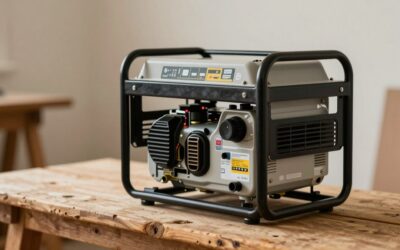
A portable generator is any engine-driven unit you can move. The word covers two very different designs. An open-frame conventional unit spins its alternator at a fixed engine speed, which is simple, rugged and usually cheaper per watt but louder. An inverter generator produces power, converts it electronically and adjusts engine speed to the load, which is why inverter models are normally the quieter ones and why their output is considered cleaner for electronics. A standby generator is bolted to a pad outside, wired into the home through an automatic transfer switch and fed by your natural gas line or a propane tank, so it starts when utility power drops.
| Type | Best for | Strength | Trade-off |
|---|---|---|---|
| Open-frame portable | Whole-panel backup on a budget | More watts for the money | Louder, you handle fuel and setup |
| Inverter portable | Camping, RVs, quiet neighbourhoods, electronics | Lower noise, clean power, fuel economy at light load | Costs more per watt |
| Home standby | Frequent or long outages, medical needs, travel | Starts automatically, no refuelling from cans | Highest cost, professional install and permits |
| Battery power station | Light loads, indoor-adjacent use, no exhaust | No fumes, silent | Limited capacity, needs recharging |
Quick Comparison of the Seven Main Picks
| Product | Type | Best for | Key specs (from listing) | Watch for | Price tier |
|---|---|---|---|---|---|
| WEN 3600-Watt Dual Fuel Inverter | Inverter | RVs, camping, quiet backup | 3,600 W, dual fuel, RV-ready, fuel shut-off, CO Watchdog | Runtime figures not listed here | Mid-range |
| PowerSmart 3800-Watt Inverter | Inverter | Home use on a tighter budget | 3,800 W, quiet claim under 59 dBA, eco mode, low-distortion output | Fuel type options: check the listing | Budget |
| Westinghouse 6500-Watt Dual Fuel | Open frame | Starter whole-panel backup | 6,500 W, dual fuel, transfer-switch-ready 30A outlet, RV-ready 30A outlet | Louder than inverters | Mid-range |
| WEN 8000-Watt Dual Fuel | Open frame | Larger 120V/240V loads | 8,000 W, 120V/240V, dual fuel, electric start, 340cc, CO Watchdog | Heavy; plan for wheels and storage | Mid-range |
| Westinghouse 12000 Peak Watt Dual Fuel Inverter | Inverter | High-capacity quiet-ish backup | 12,000 peak W, dual fuel, remote electric start, transfer-switch-ready | Peak vs running watts differ | Premium |
| Generac Guardian 10kW | Standby | Automatic backup for many homes | 10 kW, natural gas or propane, transfer switch, WiFi monitoring | Installation and permits | Premium |
| Generac 14kW Whole Home | Standby | Larger houses | 14 kW, transfer switch, cellular capability, 200 amp automatic switch | Fuel supply and pad size | Premium |
1. WEN 3600-Watt Dual Fuel Inverter: Best Overall for Quiet, Flexible Power
- 3,600 watts, inverter design
- Runs on gasoline or propane (dual fuel)
- RV-ready outlet, per the listing
- Fuel shut-off and a CO Watchdog carbon monoxide feature
- Weight, runtime and decibel figures: not listed in the title, check the spec sheet
Best for: camping, tailgating, RV trips and quiet backup for essentials such as a refrigerator, lights, a router and a few small appliances. Skip if: you want to power a central air conditioner, an electric range or a whole panel.
A 3,600-watt inverter sits in the sweet spot for most outage plans. It will not run everything in a house, but a well-chosen list of essentials is a different question from a whole-house list, and most households do far better by running the refrigerator, furnace fan, lights and phone chargers than by owning an oversized unit that sits unused. The dual fuel feature matters more than it sounds. Propane stores for years without the varnish problems gasoline can cause, so a small propane cylinder gives you a dependable fallback during a storm when fuel stations may be closed.
The CO shut-off feature is a real selling point, but treat it as a backup and not as permission to run the machine close to the house. The unit still belongs outdoors and well away from windows and doors.
Pros: dual fuel flexibility; inverter design for sensitive electronics; RV-ready outlet; CO shut-off feature; fuel shut-off for storage. Cons: not enough for a whole panel; spec details such as runtime are not in the listing title; propane output is usually lower than gasoline output, so check the manual.
2. PowerSmart 3800-Watt Inverter: Best Value Compact Inverter
- 3,800-watt portable inverter generator
- Quiet-running claim of under 59 dBA (manufacturer figure, measured at conditions not listed)
- Eco mode for lighter loads
- Clean-power claim of under 3% total harmonic distortion
- Fuel and weight details: not listed in the title
Best for: homeowners who want a quieter generator for a small list of circuits without paying premium inverter prices. Skip if: you want a documented dual fuel setup or a high-output 240V connection.
This is the pick for readers searching for the quietest portable generators on a budget, with one honest caveat: manufacturer noise numbers are taken at stated loads and distances that rarely match your driveway. A decibel figure at a quarter load will rise when you run a furnace blower and a freezer together. Eco mode, which lets the engine slow down when the load is light, usually helps both noise and fuel use, so run it that way whenever your equipment allows.
Low total harmonic distortion matters if you plan to power laptops, modern furnace boards and TVs. Even so, check the owner’s manual for what the maker says about sensitive electronics, and use a surge protector.
Pros: low price tier among inverters; quiet-running claim; eco mode; clean-power claim. Cons: fewer documented features than the WEN; brand has a shorter track record than long-established engine makers; fuel options need checking.
3. Westinghouse 6500-Watt Dual Fuel: Best Budget Whole-Panel Starter
- 6,500 watts
- Dual fuel: gasoline and propane
- Transfer-switch-ready 30A outlet
- RV-ready 30A outlet
- Home backup design, open frame
Best for: a home with a manual transfer switch or interlock installed by an electrician, covering a refrigerator, a sump pump, lights, a furnace and a few extras. Skip if: noise at the property line is a concern or you only camp.
The advantage of the 30A transfer-switch-ready outlet is that it can connect to a transfer switch designed for it, which lets you power hardwired circuits without a web of extension cords. That is a convenience and a safety upgrade only when the switch or interlock is installed correctly; never back-feed a house with a homemade cable. If you do not have a switch yet, add one to the budget.
Compared with an inverter of similar price, an open-frame unit like this gives you more watts. In exchange you accept more noise and fixed-speed running, so it burns fuel at a steady pace even when the load is light.
Pros: more watts per dollar tier; dual fuel; both 30A outlets for house and RV; familiar open-frame design. Cons: louder; heavier to move; not a refined power source for the most sensitive electronics.
4. WEN 8000-Watt Dual Fuel: Best for Bigger 240V Loads
- 8,000 watts, 120V/240V output
- Dual fuel, electric start
- 340cc engine
- Transfer-switch and RV-ready, with a CO Watchdog feature
Best for: homes with a well pump, a larger refrigerator and freezer set, or a window air conditioner on the backup list. Skip if: you want something to carry to a campsite.
When readers search for the best and biggest portable generators, the real question is how many watts they truly need. Add the running watts of everything you plan to power at once, then add headroom for the starting surge of motors, which can be several times the running figure. A well pump or a compressor-driven appliance is where an 8,000-watt unit earns its keep. Electric start is a practical feature during a cold, wet outage, when you do not want to fight a recoil cord.
Size also brings handling. Plan where the generator will live, how you will roll it out, and how you will keep it dry while running, using only a manufacturer-approved cover or canopy.
Pros: large capacity at a mid-range tier; 240V output; electric start; dual fuel. Cons: heavy; bigger fuel appetite; louder than inverters.
5. Westinghouse 12000 Peak Watt Dual Fuel Inverter: Best Premium Portable
- 12,000 peak watts (running watts: check the manual)
- Inverter design, dual fuel (gas and propane)
- Remote electric start
- Transfer-switch-ready
Best for: households that want a high-capacity portable with inverter-style output and remote start from inside the house. Skip if: you are comparing on running watts alone, since peak numbers look larger than what the unit sustains.
Peak watts describe a short surge. Running, or rated, watts are what the unit can supply continuously, and they are the number to size against. Always find the running figure in the manual before you decide this unit is large enough for your list.
This is the pick for readers looking for the best backup generators on the market without going to a permanent installation. It costs more than open-frame units of similar size, and the premium buys cleaner output and the convenience of remote start.
Pros: large-capacity inverter category; remote electric start; dual fuel; transfer-switch-ready. Cons: premium price tier; peak rating can mislead; size and weight not listed in the title.
6. Generac Guardian 10kW: Best Standby for Most Homes
- 10 kW air-cooled home standby, per the listing
- Natural gas or propane
- Transfer switch included in this configuration
- WiFi monitoring
Best for: frequent outages, work-from-home setups, medically important equipment and anyone who will not be home to start a portable unit. Skip if: you rent, move often or have no gas service or room for a pad.
Standby is a different purchase. The generator has to be placed according to local clearance rules, connected to fuel by a licensed professional and wired to a transfer switch by a licensed electrician, and many areas require permits and inspections. That cost often equals or exceeds the machine itself. What you get in return is automatic start, no refuelling from cans in bad weather and, with a natural gas line, a long run without hauling fuel. Ask your installer how the unit is sized: a standby generator should be sized to the circuits it will carry, with a load calculation.
Pros: automatic operation; WiFi status alerts; fuel on tap with natural gas; no extension cords. Cons: premium cost; professional installation; fixed in place; ongoing maintenance schedule.
7. Generac 14kW Whole Home Generator: Best Standby for Larger Houses
- 14 kW home standby
- Cellular capability
- Automatic transfer switch listed as a 200 amp unit in this configuration
- Fuel type: check the exact listing, as configurations vary
Best for: larger homes with more circuits, a well pump and multiple heating or cooling loads. Skip if: 10 kW already covers your load calculation.
More kilowatts do not automatically mean a better system. The right capacity comes from a load calculation done with your installer, accounting for your largest motor starts and which circuits you want live. If the quote is for a bigger unit than your calculation supports, ask why. Cellular monitoring can be useful in a house you do not occupy full time, but it needs a service plan, so check what the maker includes.
Pros: room for central air or multiple loads; cellular monitoring; automatic transfer. Cons: high price tier; bigger pad and fuel supply; installation complexity.
Also Consider
- DuroMax XP13000HX: a 13,000-watt dual fuel portable (gas and propane) with electric start for large open-frame backup. Heavy and loud, so plan placement carefully.
- Jackery Explorer 300 Portable Power Station: a 292Wh battery unit. The answer for readers searching for battery operated generators for phones, CPAP-type devices (ask your doctor and device maker about runtime) and lights. It has no exhaust, but its capacity is small compared with any gas unit.
- Oxseryn 2800W Portable Inverter Generator: a compact, lower-cost gas inverter marketed for camping, RVs and light backup. Check noise and runtime on the maker’s page before buying.
- Westinghouse 14500 Peak Watt Tri-Fuel: an open-frame option that adds natural gas to gas and propane, for readers who want a natural gas hookup without a permanent install.
Which Generator Types Fit Which Search
People type many variations of the same need, so here is how the common ones map to a type. The quietest portable generators are inverter models, so start with the WEN or PowerSmart. The most compact generators for travel are small inverters or battery stations. The biggest portables are open-frame dual or tri-fuel units. Alternative generators, meaning anything that is not a gasoline open-frame unit, include propane, dual fuel, natural gas, solar and battery models. Commercial generators are a separate market: job sites and businesses use larger diesel, towable or three-phase units that need a professional to size and install, so this guide covers residential choices only.
If you saw “American made generators” in your search, the honest answer is that many engines and components are sourced globally and “assembled in” and “made in” are different claims. Ask the maker for country-of-origin details for the specific model rather than trusting a headline.
Some searches for generators mean something else entirely: ozone generators for air treatment, chlorine generators for pools, code generators for software and careers in power generation are unrelated to the household power equipment covered here.
How We Chose
We started from the product listings in the site’s store, then grouped candidates by generator type: inverter, open-frame portable and home standby. For each we read the maker’s listing details and spec sheets, checked capacity, fuel options and built-in safety features, and limited each brand to two main picks. Where outside guidance exists, we followed it, including consumer safety agency advice on carbon monoxide and placement. This guide is research-based. We did not personally use these products, we do not quote runtime or noise measurements of our own, and anything the listing does not state is marked as not listed.
Buying Guide
Start With a Watt List, Not a Brand
Write down every item you want running at the same time and note its running watts and starting watts, both on the label or in the manual. Add the running watts, then add the largest single starting surge. A refrigerator, a few lights and a router may total well under 2,000 running watts, while a well pump plus a freezer and furnace blower can approach 4,000 or more. Choose a generator whose rated, not peak, output clears that total with at least 20 percent headroom. Avoid running a generator near its limit for hours.
Decide Between Inverter and Open Frame
Choose inverter if neighbours are close, you camp, or you power electronics. Choose open frame when you need maximum watts for the price and run mostly resistive and motor loads. If a unit is both, such as a large inverter, expect a premium.
Pick Fuel for How You Store It
Gasoline is easy to find until stations lose power; it also degrades in storage, so treat it with a stabilizer and rotate it. Propane keeps for years and burns cleaner, with some output loss compared with gasoline on many models. Natural gas offers unlimited runtime if your service stays up but needs a plumbing connection. Dual and tri-fuel models give you options.
Check Safety Features
Look for a CO shut-off sensor, a fuel shut-off, an overload breaker and clear outlet labelling. Run any portable unit outdoors only, well away from the house, with the exhaust pointed away from windows, doors and vents. The US Consumer Product Safety Commission advises keeping portable generators at least 20 feet from the home and installing battery-powered CO alarms on every level. Never run a generator in a garage or enclosed space, even with the door open.
Plan the Connection
Extension cords work for a few items if they are heavy-duty and rated for the load. For a panel connection, hire a licensed electrician to install a transfer switch or interlock. Never plug a generator into a wall outlet. This can energize utility lines and endanger line workers.
Common Mistakes
- Sizing by peak watts instead of running watts.
- Buying fuel for a storm instead of storing it ahead of time.
- Running a generator under a covered porch or carport.
- Skipping the first-run oil check and the monthly test run.
- Ignoring the manual’s warning about weather protection while the unit runs.
Frequently Asked Questions
What is the difference between an inverter generator and a standby generator?
An inverter generator is a portable engine unit that produces clean, regulated power and adjusts speed to the load, while a standby generator is permanently installed and starts automatically through a transfer switch. Standby is for convenience and long outages; inverter is for flexibility and quiet.
Which is the quietest type of portable generator?
Inverter models are generally the quietest, because the engine slows at light loads. Manufacturers publish decibel figures, but conditions differ, so compare the stated load and distance, not just the number.
How many watts do I need for home backup?
Add the running watts of what you plan to power together and include the largest starting surge, then add headroom. Many essentials-only lists fit in the range of a mid-size inverter, while well pumps and air conditioners push you to larger units. Your electrician can help with a formal load calculation.
Can a battery-operated generator replace a gas one?
For small loads such as phones, lights and a router, yes. For refrigerators over several days, or heating and cooling equipment, a battery station is usually too small unless you pair it with solar recharging. Check the capacity in watt-hours against your daily use.
Is it safe to run a portable generator in a garage with the door open?
No. Safety agencies advise running portable generators only outdoors, at least 20 feet from the home with the exhaust directed away. Carbon monoxide can build up quickly and may cause serious harm before people notice symptoms.
Do I need a transfer switch?
If you want to power hardwired circuits from a portable generator, yes. A licensed electrician should install a transfer switch or interlock. It prevents back-feeding the grid and removes the need for a tangle of cords.
Are there American-made generators?
Some makers assemble models in the United States, often with imported components. The claim varies by model and year, so check the maker’s country-of-origin statement for the exact unit.
Which One Should You Buy?
Choose the WEN 3600-watt inverter if you want quiet, flexible power for essentials, camping and an RV. Choose the PowerSmart 3800 if the budget is tight. If you want a whole-panel setup with a transfer switch, the Westinghouse 6500 or the WEN 8000 gives you the most capacity per tier, and the Westinghouse 12000 inverter is the upgrade if you want remote start and cleaner output. If outages are frequent, or no one is home to start a portable unit, the Generac Guardian 10kW is the straightforward standby choice, with the 14kW for larger homes. In every case, size by running watts, run outdoors only and install transfer equipment through a licensed electrician.
Sources
- US Consumer Product Safety Commission: portable generator and carbon monoxide safety guidance
- WEN manufacturer product pages for the 3600-watt and 8000-watt generators
- Westinghouse Outdoor Power Equipment product specification pages
- Generac Power Systems home standby product pages
- PowerSmart manufacturer product page
- Consumer Reports: generator safety and transfer switch guidance
Last updated: October 2026



Write Your Review
No reviews yet. Be the first to share your experience!