
Our Short List of 3

- Bar height: 48 in
- Construction: all-cast iron
- Rated load: 4,660 lb (tested to 7,000 lb)
- Winching capacity: 5,000 lb

- Bar height: 60 in
- Construction: all-cast iron
- Rated load: 4,660 lb (2,660 lb on upper 12 in)
- Max lift at nose: 49.75 in

- Bar height: 48 in
- Construction: all-cast iron, gold zinc-plated hardware
- Rated load: 4,660 lb (tested to 7,000 lb)
- Winch, clamp and spread capacity: 5,000 lb
All 4 Picks at a Glance
| Product | Specs | Action |
|---|---|---|
| Hi-Lift HL-485 48-Inch All-Cast Jack |
| Check price on Amazon |
| Hi-Lift HL-605 60-Inch All-Cast Jack |
| Check price on Amazon |
| Hi-Lift XT-485 48-Inch X-TREME Jack |
| Check price on Amazon |
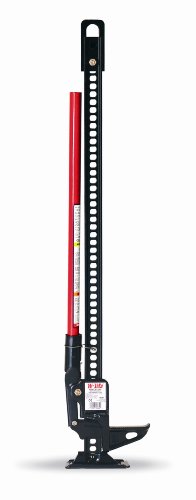 Hi-Lift HL-484 48-Inch Cast and Steel Jack |
| Check price on Amazon |
🛒 Best Price Today on Amazon
Prime members get fast, free shipping on everything above, plus member-only deals. New members get a 30-day free trial — cancel anytime.
A farm jack is a tall steel bar, a climbing mechanism, and a long handle — no hydraulics, no motor, nothing to leak. That simplicity is why it belongs on a generator site. It lifts a trailer tongue or frame corner high enough to block up and level, pulls fence posts and ground anchors out of the soil, and drags a stuck mower or portable generator sideways. Around standby units it raises one corner to slip in a pad shim or free equipment sunk into soft ground.
The same tool demands respect. It holds a load on two small climbing pins, and it can kick out sideways or slam its handle upward if the base shifts or the mechanism is dirty. The picks below differ in bar height, construction, and how honestly the maker states capacity.
As an Amazon Associate, we earn from qualifying purchases.
Quick answer
Buy the Hi-Lift HL-485 for the proven all-cast 48-inch jack for general lifting and pulling. Choose the HL-605 when lifted trucks or tall trailers eat up a 48-inch bar. The XT-485 adds a heavy-duty winch-clamp-spreader top for recovery work. The HL-484 pairs cast parts with stamped steel for occasional duty, and the BIG RED Torin TR6501B is an all-steel 3-ton alternative.
Hi-Lift HL-485 48-Inch All-Cast Jack
- Bar height: 48 in
- Construction: all-cast iron
- Rated load: 4,660 lb (tested to 7,000 lb)
- Winching capacity: 5,000 lb
The HL-485 is the benchmark farm jack: every major component is cast iron, built to survive decades of farm and trail use. Cast parts wear slowly where the climbing pins engage, so the mechanism stays tight far longer than softer builds. The 48-inch bar lifts the nose to about 38.6 inches.
Read capacity as Hi-Lift prints it: 4,660 pounds is the rated working load; 7,000 pounds is a tested figure with margin built in, so plan around the smaller number. With chain through the top clamp it winches 5,000 pounds and clamps at 750 — ideal for lifting a trailer-mounted generator.
Hi-Lift HL-605 60-Inch All-Cast Jack
- Bar height: 60 in
- Construction: all-cast iron
- Rated load: 4,660 lb (2,660 lb on upper 12 in)
- Max lift at nose: 49.75 in
The HL-605 stretches the same all-cast design to a 60-inch bar, lifting the nose to about 49.75 inches. That extra height matters on lifted trucks, tall trailers, and lifts where soft ground or big tires eat travel before the load moves. Mechanism, handle, and top clamp match the HL-485.
The honest catch sits at the top of the bar: on the upper 12 inches the rated load drops to 2,660 pounds, because a tall, loaded bar flexes and leans more. Treat that section as light-duty territory, not heavy corners. At 31.3 pounds it is clumsier to store — a fair trade when 48 inches runs out.
Hi-Lift XT-485 48-Inch X-TREME Jack
- Bar height: 48 in
- Construction: all-cast iron, gold zinc-plated hardware
- Rated load: 4,660 lb (tested to 7,000 lb)
- Winch, clamp and spread capacity: 5,000 lb
The XT-485 keeps the 48-inch all-cast bar and swaps the standard top clamp for the X-TREME winch-clamp-spreader, a chunkier fitting with shackle holes that grabs chain securely. That change makes it a far better pulling tool: winching, clamping, and spreading are all rated to 5,000 pounds, against 750 pounds of clamping on the standard clamp.
Hardware gets gold zinc plating for slower rust in outdoor storage — handy for a jack living on a trailer or in an open shed. Lifting figures match the HL-485, so pick it when recovery matters as much as lifting, like dragging a bogged generator trailer to firm ground.
Hi-Lift HL-484 48-Inch Cast and Steel Jack
- Bar height: 48 in
- Construction: cast iron with stamped steel components
- Rated load: 4,660 lb (tested to 7,000 lb)
- Winching capacity: 5,000 lb
The HL-484 blends cast iron in the mechanism with four high-strength stamped steel components. It lifts, pulls, and clamps to the same published figures as the all-cast line — 4,660 pounds rated, 5,000 winching, 750 clamping — and layout is identical, so accessories swap freely.
The trade-off is wear. Stamped steel is softer than cast iron, so the mechanism develops play sooner under heavy use, and worn pins make lowering less predictable. For a jack used a few times a year — a trailer lift, a post pull, shifting a portable generator — that hardly matters. For weekly work, buy the HL-485.
BIG RED Torin TR6501B 48-Inch Farm Jack
The TR6501B is the all-steel entry, a ratcheting jack from Torin’s BIG RED line with a powder-coated finish and zinc-plated hardware. Its headline figure is 3 tons — 6,000 pounds — stated as one capacity number rather than a rated and tested pair, so compare it with the working loads above, not the tested ones. The nose travels from about 5.1 to 40 inches, the widest window here.
An adjustable top clamp clevis lets it winch and clamp, and the mechanism works vertically or horizontally — handy for spreading a bent trailer frame member. It suits tire swaps on the tow trailer, mower deck lifts, and short chain pulls.
Specs
- Bar height: 48 in
- Construction: all-steel, powder-coated finish
- Capacity: 6,000 lb (3 tons)
- Lift range: 5.1 to 40 in
- Top fitting: adjustable clamp clevis for winching and clamping
- Use positions: vertical or horizontal
How to choose
Bar height first. A 48-inch bar covers most trailer, truck, and generator lifting; go 60-inch only if tall suspension or deep ruts use up the travel, and remember the reduced limit at its top. Construction second: all-cast mechanisms wear slowest, cast-and-steel blends suit occasional use, and all-steel imports vary most, so inspect welds and pin fit. Third, read capacity like an engineer — the rated load is the working limit, the tested load is a proof figure, and headline tonnage on some listings mixes the two. Add a wide off-road base for soft soil.
Safety and care
A farm jack can kick out under load if the base sinks, the load shifts, or the nose slips off its point. Set the base on firm, level ground or a wide base plate, chock the wheels that stay down, and keep the bar vertical as the load rises. Keep your head and hands out of the handle’s swing path — a loaded handle can fly upward when a pin slips. Never crawl under anything held only by the jack: lift, block with timbers or stands, then work. For care, brush dirt from the bar and oil the climbing pins lightly; a gritty mechanism is the main cause of jerky lowering.
FAQ
Can a farm jack lift a standby generator?
It can lift one corner or one end of a modest unit within the rated load — enough to level a pad, slip in shims, or change a mounting foot. Whole standby sets are heavy, so lift a little, block securely, and work in stages. For a full move, use proper lifting gear.
What is the difference between rated and tested capacity?
The rated load — 4,660 pounds on the Hi-Lift line — is the most the jack is meant to lift in service. The tested load of 7,000 pounds is a proof figure showing the margin before failure; a safety bolt in the handle socket shears near that point. Plan every lift around the rated number.
Can I use a farm jack as a winch?
Yes, with chain rigged between the top clamp and a solid anchor or the load. Pulls are short — a couple of feet before you must re-rig — and capacities run to 5,000 pounds on the Hi-Lift models here. Slow work, but it functions anywhere.
Why does the handle kick, and how do I lower a load safely?
The handle kicks when a climbing pin fails to seat cleanly, usually because the mechanism is dirty, dry, or worn. Clean and oil the pins, keep a firm two-handed grip, stand to one side of the handle path, and lower in small steps with the reversing latch fully engaged.
Verdict
For most generator sites, the HL-485 is the farm jack to own: all-cast, honestly rated, and sized for nearly every lift or pull. Step up to the HL-605 for tall rigs, pick the XT-485 when winching and clamping are the main jobs, and consider the HL-484 or Torin TR6501B for occasional duty. Block every load and keep the mechanism oiled.
Write Your Review
No reviews yet. Be the first to share your experience!