
- Top Pick: DuroStar DS13000MX 13,000-Watt 500cc Dual Fuel Portable Generator – Gas and Propane, Remote Electric Start, Whole Home Power Backup, Transfer Switch Ready, RV & Emergency Ready
- Best Value: Westinghouse 4650 Peak Watt Dual Fuel Portable Generator, RV Ready 30A Outlet, Gas & Propane Powered, CO Sensor
- Premium Choice: DuroMax XP5500HX 5,500-Watt Dual Fuel Portable Generator – Gas & Propane, Electric Start, RV & Emergency Ready
When an emergency knocks out the grid, having options matters — and that is exactly what dual-fuel generators provide. By running on either gasoline or propane, they keep you powered even when one fuel source runs dry, making them a cornerstone of any serious preparedness plan.
- Watch: Best Dual Fuel Generators for Emergency Preparedness — Video Review
- How to Choose
- The Best Picks Reviewed
- What to Look For in an Emergency Dual Fuel Generator
- Building a Fuel Plan
- Which One Should You Buy?
- Common Mistakes When Buying for Emergency Preparedness
- A Monthly Readiness Habit
- An Essentials Ladder for Sizing
- Placement and Operating Safety
- Frequently Asked Questions
- Final Thoughts
- Related Articles
- Related Guides
This roundup gathers the best dual-fuel generators for emergency use in 2026, weighing output, runtime, and reliability from proven names like DuroMax, Westinghouse, and WEN. Whether you are protecting a whole home or just the essentials, these picks give you fuel flexibility when it counts most.
As an Amazon Associate we earn from qualifying purchases at no extra cost to you.




⚡ Save on Your Next PC — Amazon Prime
Prime members get fast free shipping on the systems above, plus early access to Prime Day & Black Friday PC deals. New members get a 30-day free trial.
Watch: Best Dual Fuel Generators for Emergency Preparedness — Video Review
How to Choose
- Total wattage: Size for your critical loads plus a safety margin; whole-home backup often needs 10,000 watts or more, while essentials-only fits in the 5,000 watt range.
- Fuel storage: Propane stores for years without degrading, so a dual-fuel unit lets you stockpile fuel safely for long-term readiness.
- Start system: Electric start and remote start make cold-weather emergencies far easier than wrestling a pull cord.
- Transfer-switch readiness: A 30A outlet or larger lets you connect to your home’s panel through a proper transfer switch.
- Runtime: Look at fuel-tank runtime at half load; longer runtime means fewer refuels during multi-day outages.
The Best Picks Reviewed
DuroMax XP13000HX 13,000-Watt Dual Fuel Portable Generator
The XP13000HX is a powerhouse built for whole-home backup, with electric start, a CO shutoff sensor, and enough output to run a central AC, refrigerator, and multiple circuits at once. For serious preparedness, it is the top heavy-duty pick.
DuroStar DS13000MX 13,000-Watt Dual Fuel Portable Generator
The DuroStar DS13000MX delivers similar big-watt output with remote start and a rugged frame designed for demanding use. Its 500cc engine and dual-fuel flexibility make it a dependable anchor for extended outages.
Westinghouse 6500 Watt Dual Fuel Home Backup Generator
Transfer-switch ready with a 30A outlet, the Westinghouse 6500W is the sweet spot for powering home essentials without the bulk of a 13kW unit. It balances capacity, portability, and Westinghouse reliability for most families.
DuroMax XP5500HX 5,500-Watt Dual Fuel Portable Generator
Compact and capable, the XP5500HX covers a refrigerator, lights, sump pump, and small appliances with electric start and CO protection. It is the right size for apartments, small homes, or anyone focused on essentials.
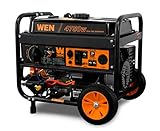
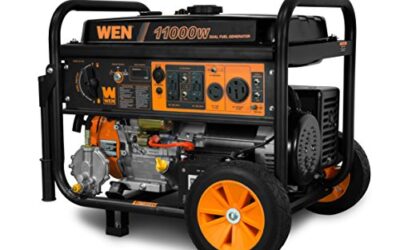
WEN 4,750-Watt Dual Fuel Portable Generator
The WEN 4750W is the budget-friendly entry, offering 120V/240V output, a wheel kit, and electric start at an approachable price. For basic emergency coverage without a big investment, it gets the job done.
What to Look For in an Emergency Dual Fuel Generator
Preparedness changes the shopping criteria. Peak output matters less than whether the machine will start after sitting idle, run on whatever fuel you have stored, and connect safely to the home.
Running Watts on Propane
Dual fuel generators generally publish a lower rating on propane, commonly about 10 percent below gasoline. If propane is your storage fuel of choice, size the household load against that number. For the 13,000-watt class, the difference can amount to well over a thousand watts, which is the size of an extra appliance.
Starting System and Battery Care
Emergency use implies long idle periods. Electric start is convenient, but a neglected battery will leave you pulling a cord, so a unit that includes a recoil backup or a battery maintenance plan is the safer pick. A trickle charger or a periodic run every month or two keeps the battery in shape.
Transfer Switch and Outlet Compatibility
Large units commonly provide a 120/240-volt locking outlet, often rated 50 amps on the biggest models and 30 amps on mid-size ones. A properly installed transfer switch or interlock, wired by a licensed electrician, is the safe way to feed a home panel. Never plug a generator into a wall outlet using a double-ended cord, because the energized prongs and the backfeed to utility lines can injure line workers and anyone who touches them.
Safety Features and Run Time
Low-oil shutdown is standard on most units and prevents engine damage. Look at the fuel tank size and the manufacturer’s runtime at half load; long overnight run time reduces refueling trips in bad weather. Many emergency users prefer a hose connection to a large propane tank where permitted, which avoids frequent cylinder swaps.
Building a Fuel Plan
A generator is only as good as the fuel behind it. A short plan removes most surprises.
| Fuel | Storage guidance | Planning note |
|---|---|---|
| Gasoline | Approved containers, stabilizer added, kept outside living spaces | Untreated gasoline can degrade within months, so rotate stock into a vehicle on a schedule |
| Propane | Upright cylinders stored outdoors, never in a basement or garage | Propane itself does not spoil; cylinders have a certification date, with a first expiry about 12 years after manufacture |
Many households keep propane as the first-choice emergency fuel and gasoline as the backup. A 20-pound cylinder holds about 4 to 5 gallons, and one gallon of propane contains less energy than a gallon of gasoline, so expect more cylinders than you might guess for a multi-day outage. Check local rules on how much fuel can be stored at home.
Which One Should You Buy?
| If you… | Choose… |
|---|---|
| Need a large home with central air, a well pump, and an electric range on a transfer switch | DuroMax XP13000HX 13,000-Watt Dual Fuel Portable Generator or DuroStar DS13000MX 13,000-Watt Dual Fuel Portable Generator |
| Want to cover a typical home’s essential circuits with a well-known brand name | Westinghouse 6500 Watt Dual Fuel Home Backup Generator |
| Need a mid-size unit for refrigerator, furnace, lights, and a sump pump | DuroMax XP5500HX 5,500-Watt Dual Fuel Portable Generator |
| Have modest needs and want the smallest, most portable option listed here | WEN 4,750-Watt Dual Fuel Portable Generator |
| Want redundancy against a single machine failing | Two of the smaller units rather than one large unit, if budget and space allow |
Confirm each unit’s outlet layout and propane rating on the listing before deciding, since specifications vary across models and production runs.
Common Mistakes When Buying for Emergency Preparedness
- Buying the biggest unit by default. Larger engines burn more fuel and shorten the time your stored fuel lasts.
- Counting only the gasoline rating. The propane rating determines what you can run on stored cylinders.
- Never starting it before the emergency. A first-ever start in the dark is when problems appear; run the unit under load periodically.
- Improvising the home connection. Use a transfer switch or interlock installed to local code.
- Storing fuel indoors. Gasoline and propane belong outdoors in approved containers.
- Forgetting carbon monoxide alarms. Battery-backed alarms inside the home are a basic safeguard whenever a generator runs outside.
A Monthly Readiness Habit
A short routine keeps the machine ready. Once a month or two, check the oil, start the unit, run it with a modest load for about 20 minutes, and make sure outlets and breakers work. Rotate gasoline as needed, inspect the propane hose for cracks, and keep the manual, a spare spark plug, and a funnel together in a labeled container. These small steps determine whether the generator works when it is needed.
An Essentials Ladder for Sizing
Decide what the household must run first, then match a size class. The tiers below use rounded running watts for typical equipment, so substitute your own nameplate numbers.
| Tier | What it covers | Approximate running watts |
|---|---|---|
| 1. Basics | Refrigerator, lights, router, phone chargers | 500 to 800 |
| 2. Comfort | Tier 1 plus furnace blower and sump pump | 2,000 to 3,000 |
| 3. Water and cooling | Tier 2 plus a well pump and a window air conditioner | 4,000 to 5,500 |
| 4. Large home | Tier 3 plus central air or an electric range, started in turn | 7,000 or more |
The smaller units in this roundup, the WEN 4,750-Watt and the DuroMax XP5500HX, line up with tiers 2 and, with careful load rotation, 3. The Westinghouse 6500 Watt unit has more room in tier 3, and the 13,000-watt class from DuroMax and DuroStar suits tier 4 when the loads are staggered. Motor startup surges, especially from well pumps and air conditioners, add to those figures, and propane ratings run lower than gasoline ratings, so leave margin.
Placement and Operating Safety
- Run the generator outdoors only, on level ground, at least 20 feet from the house with the exhaust facing away from openings.
- Keep it under a ventilated generator-rated canopy or a three-sided shelter with open ends when it rains, never in a garage.
- Let it cool before refueling, and keep fuel containers away from the exhaust.
- Rotate heavy loads: start the largest motor first, then add smaller loads one at a time.
- Check your carbon monoxide alarms every month during storm season.
Follow these habits and the generator becomes a predictable tool rather than a risk. The manual for each model lists additional warnings that apply to its design.
Frequently Asked Questions
Why is dual fuel better for emergencies?
Because you are not dependent on a single fuel source. If gas stations lose power, you can switch to stored propane, which keeps for years without going stale.
How big a generator do I need for my whole house?
Powering an entire home, including central AC, typically requires 10,000 watts or more. For essentials only, a 5,000 to 6,500 watt unit is usually sufficient.
Can I connect a dual-fuel generator to my home panel?
Yes, through a properly installed transfer switch or interlock by a licensed electrician. This is the only safe way to power household circuits.
How long can I store propane for backup?
Propane does not degrade like gasoline and can be safely stored for many years, making it ideal for long-term emergency preparedness.
Final Thoughts
A dual-fuel generator is one of the smartest preparedness buys because it never leaves you stranded by a single fuel shortage. For whole-home power, the DuroMax XP13000HX and DuroStar DS13000MX lead; for balanced essentials backup, the Westinghouse 6500W shines; and for budget coverage, the WEN 4750W delivers. Size it to your needs, keep propane on hand, and you will be ready for the next outage.


Write Your Review
No reviews yet. Be the first to share your experience!