
Our Short List of 3

- Best for: Owners whose generator draws starting current from a battery bank and who want that heavy run carrying a stated, replaceable guard before the season turns.
- Brand: Renogy, as named in the listing
- Type: ANL fuse, per the listing name
- Stated rating class: 20A, per the listing name
- Role in this set: The guard post — a stated, sacrificial guard in bolt-down form on the main battery cable run

- Best for: Owners who do their own oil, filter and connection checks and want the bits for that work living in the generator corner instead of a distant toolbox.
- Brand: toolant, as named in the listing
- Type: Bit set, per the listing name
- Role in this set: The tool post — panels, housings and terminal hardware opened and closed where the machine stands
- Stated bit types, piece count, shank and driver compatibility: Confirm on the listing

- Best for: Owners whose machine stands on a pad or bay floor that gathers grit and leaves, and who sweep it clear with a shop vac before kneeling down to work.
- Brand: ALYYDBG, as named in the listing
- Type: Shop vacuum bags, per the listing name
- Stated fit: Type A, per the listing name
- Stated format: 5 pack, per the listing name
All 5 Picks at a Glance
| Product | Specs | Action |
|---|---|---|
| Renogy ANL Fuse |
| Check price on Amazon |
| toolant Bit Set |
| Check price on Amazon |
| ALYYDBG Shop Vac Bags 5 Pack Type A |
| Check price on Amazon |
 Frienda Battery Lugs |
| Check price on Amazon |
 Dr. Frederick’s Trigger Finger Splint |
| Check price on Amazon |
🛒 Best Price Today on Amazon
Prime members get fast, free shipping on everything above, plus member-only deals. New members get a 30-day free trial — cancel anytime.
Every start a generator makes travels through two small pieces of metal that almost nobody inspects: the lugs crimped onto the ends of the battery cables. Fuses get bought, panels get opened, pads get swept — and the terminals quietly fur over with corrosion until a healthy bank delivers a weak crank. This refresh re-grades the corner joint by joint, and its one change lands exactly there: the reading post steps down, and the connection post finally gets staffed.
The round is built for owners who run the machine off a battery bank, for households that keep their own cables and terminals in order, and for anyone who would rather renew the corner on a dry afternoon than troubleshoot it by torchlight. The five picks come from their listing names: an ANL fuse on the main run, a bit set for the panels, vacuum bags for the standing ground, battery lugs for the cable ends, and a single-finger splint for the hand on the wrench.
Quick Picks
As an Amazon Associate we earn from qualifying purchases
Belimbing arrives at the yard as a shared local name, not a botanical certificate. Under it sits a light hardwood — heartwood running pale yellow-brown to light brown, texture medium, grain mostly straight — that is light and soft on the scale, very easy to work, and not naturally durable. The trade posts it indoors accordingly: plywood, boxes, crates, interior joinery. Nothing in this set is cut from it. The set takes the yard’s discipline instead: several yards sell under one name, so the name settles nothing, and every board is judged by the species and use its own tag states.
| Product | Best for | Key spec from title |
|---|---|---|
| Renogy ANL Fuse | The main battery run, guarded in bolt-down form at its stated rating | ANL fuse, stated 20A class in the listing name |
| toolant Bit Set | Panel screws, housing bolts and terminal hardware at the machine | Bit set, per the listing name |
| ALYYDBG Shop Vac Bags 5 Pack Type A | The pad and bay floor, cleared before fuel and oil work begins | Shop vacuum bags, stated Type A fit, 5 pack, per the listing name |
| Frienda Battery Lugs | Cable ends whose terminals have furred, loosened or cracked | Battery lugs, per the listing name |
| Dr. Frederick’s Trigger Finger Splint | The finger that meets the cable end, cap edge or driver bit | Trigger finger splint, per the listing name |
How to Choose
One Name, Several Yards, No Guarantees
Belimbing is a word yards share, and shared words drift. The stack under the name at one yard is not promised to match the stack under it at the next; what the two piles hold in common is a look — pale heartwood, medium texture, grain running mostly straight — rather than a lineage. Listings behave identically. A headline stays fixed while the variant beneath it changes rating, form or count. The working rule in both trades is to treat the name as a signpost: it walks you to the pile, and then the tag — species and use at the yard, rating and form on the listing — does the deciding.
Soft Wood, Indoor Posting, Honest Limits
The belimbing record does not oversell itself. Light and soft, with no natural durability to speak of, the wood would be a poor fence post and the trade knows it, so it goes where its limits do not matter: plywood, boxes, crates, interior joinery, renewed cheaply when a posting wears. Hold this set to the same standard. A fuse protects the run its stated rating spans. A lug carries the cable its stated bore fits. A splint wraps one finger. A pick honoured inside its printed limits is fully sufficient; the failures begin when a buyer stretches a pick past the duty its record declares.
Judge the Tag, Not the Tree’s Reputation
Belimbing shares its name with a fruit, and nobody at the yard lets that borrow any authority. What earns a board its price is written on the board’s own tag: the colour range, the texture, the grain direction, the hardness class, the durability line. Listings deserve the same unsentimental reading. A lug is its stated bore and terminal form, not the shine of its photograph. A bag is the fit letter and count in its name. A fuse is the rating printed in its record. Read what is stated, buy what is stated, and let the photography do its own job elsewhere.
Easy to Work Means Easy to Renew
Yards move belimbing quickly because working it costs nothing: it saws without protest, planes clean, and a worn posting is replaced without ceremony. A generator corner should run on the same economics. The parts that earn their keep are the ones renewed on schedule without a struggle — lugs swapped while the cables are already off, a bag changed before the clearing starts, a fuse seated on a calm weekend. Gear that fights its own replacement gets deferred, and deferred maintenance is simply an outage expense paid later at a worse rate.
The 5 Best Options
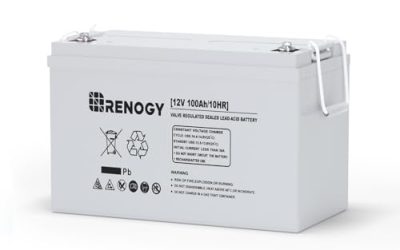
Renogy ANL Fuse
- Best for: Owners whose generator draws starting current from a battery bank and who want that heavy run carrying a stated, replaceable guard before the season turns.
- Brand: Renogy, as named in the listing
- Type: ANL fuse, per the listing name
- Stated rating class: 20A, per the listing name
- Role in this set: The guard post — a stated, sacrificial guard in bolt-down form on the main battery cable run
Owners whose generator draws starting current from a battery bank and who want that heavy run carrying a stated, replaceable guard before the season turns.
The guard covers only the run its rating and form match — confirm the stated rating, holder form and terminal fit on the listing against your own cable run, and never cure a nuisance blow by fitting a higher rating.
Renogy’s listing names an ANL fuse, and it holds the guard post on the cable run that carries the starting current. The ANL form bolts down on the heavy line rather than clipping into a thin lead, and its stated rating is a deliberate weak point: under a fault, the fuse gives up so the cable and the machine behind it do not. Buy it as a record, not a label — the stated rating read against the draw on your main run, the bolt-down form confirmed on the listing, and a spare stored at the machine, because a guard with no spare behind it is a single-use promise.
toolant Bit Set
- Best for: Owners who do their own oil, filter and connection checks and want the bits for that work living in the generator corner instead of a distant toolbox.
- Brand: toolant, as named in the listing
- Type: Bit set, per the listing name
- Role in this set: The tool post — panels, housings and terminal hardware opened and closed where the machine stands
- Stated bit types, piece count, shank and driver compatibility: Confirm on the listing
Owners who do their own oil, filter and connection checks and want the bits for that work living in the generator corner instead of a distant toolbox.
The set turns only the heads its stated assortment names — check the stated types and shank on the listing against your machine’s fasteners and the driver you will hold, before the pack is opened.
toolant’s listing names a bit set, and it staffs the tool post. Nearly every job on a generator starts the same way — a panel, housing or terminal cover has to come off — and the corner that keeps its bits two rooms away starts every job with a walk, or worse, with the wrong driver chewing a screw head round. The purchase here is the stated assortment measured against the fasteners your machine actually wears, then kept in the corner itself, so opening the machine is never the hard part of working on it.
ALYYDBG Shop Vac Bags 5 Pack Type A
- Best for: Owners whose machine stands on a pad or bay floor that gathers grit and leaves, and who sweep it clear with a shop vac before kneeling down to work.
- Brand: ALYYDBG, as named in the listing
- Type: Shop vacuum bags, per the listing name
- Stated fit: Type A, per the listing name
- Stated format: 5 pack, per the listing name
Owners whose machine stands on a pad or bay floor that gathers grit and leaves, and who sweep it clear with a shop vac before kneeling down to work.
Type A is the whole contract — confirm on the listing that your vacuum takes Type A bags, since a near-fit bag seats poorly and leaks dust; then change bags on their stated life rather than when suction dies.
ALYYDBG’s listing names shop vacuum bags with a stated fit — Type A — and a stated count of five, and they hold the ground post. A generator’s standing ground collects the season in layers: grit tracked in, leaf litter blown under the pad, dust shaken down from the machine itself. Fuel and oil work is kneeling work done inside that layer, and a shop vac clears it only while the bag inside still has room. The buy is two printed numbers — the fit letter against your vacuum, the count against your season — and both are settled on the listing before the pack opens.
Frienda Battery Lugs
- Best for: Owners whose starts have grown lazy despite a sound bank, and who want the cable ends — the cheapest inch of the whole run — renewed before blaming the batteries.
- Brand: Frienda, as named in the listing
- Type: Battery lugs, per the listing name
- Role in this set: The connection post — the last inch of the cable run, where cable meets battery post, renewed as stated hardware
- Stated bore size, terminal form, material and pack count: Confirm on the listing
Owners whose starts have grown lazy despite a sound bank, and who want the cable ends — the cheapest inch of the whole run — renewed before blaming the batteries.
A lug fits one cable gauge and one post form — confirm the stated bore and terminal shape on the listing against your cables and posts, and crimp with the proper tool, since a loose crimp recreates the fault you are replacing.
Frienda’s listing names battery lugs, and they take the post this refresh exists to staff: the connection. Everything else in the set guards, opens, clears or wraps, but the current itself crosses from cable to battery post through these small crimped ends — and a lug that has furred with corrosion, loosened on its post or cracked at the crimp taxes every start with heat and voltage drop while the bank behind it tests perfectly healthy. The purchase is mechanical and stated: the bore read against your cable gauge, the terminal form read against your battery posts, both confirmed on the listing before the cables come off.
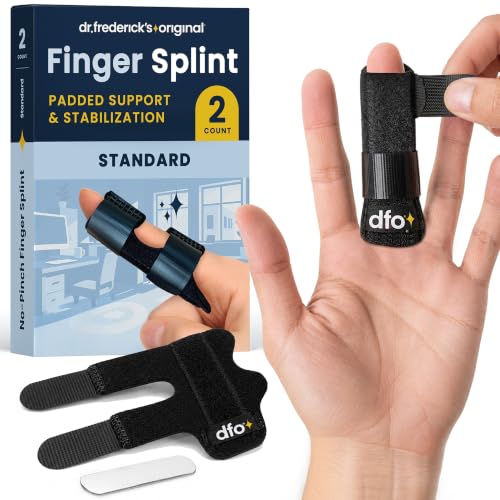
Dr. Frederick’s Trigger Finger Splint
- Best for: Owners who finish cable and fuel work with one sore or nicked finger and want a single-finger wrap already in the kit when it happens again.
- Brand: Dr. Frederick’s, as named in the listing
- Type: Trigger finger splint, per the listing name
- Stated form: A wrap for a single finger, per the listing name
- Role in this set: The hand post — one finger held covered and still while the rest of the hand keeps working
Owners who finish cable and fuel work with one sore or nicked finger and want a single-finger wrap already in the kit when it happens again.
The wrap is shaped and sized for one finger — confirm the stated size range and fit on the listing against your own finger; it holds a finger covered and still as a kit item, and it is not a treatment for a serious injury.
Dr. Frederick’s listing names a trigger finger splint, and it holds the hand post. The rest of this set maintains the machine, its ground and its cable run; the hands doing the crimping, capping and driving maintain themselves, mostly by ignoring whichever finger caught the cable end or the cap edge. The stated form is a wrap made for a single finger, holding that finger covered and still while the rest of the hand keeps its grip. It belongs in the corner drawer as a kit item, bought on a quiet day — a wrap, not a remedy.
Which One Fits Your Situation
The Crank Sounds Tired but the Bank Tests Fine
Start with the battery lugs. When the bank reads healthy and the start still drags, the loss usually sits at the cable ends, where corrosion and a tired crimp turn current into heat. Match the stated bore to your cable gauge and the terminal form to your posts, renew both ends, and the run delivers what the bank was sending all along.
The Heavy Run Runs Unguarded
Start with the ANL fuse. Thin leads collect fuses because they are easy to reach, while the main run — the one carrying starting current — goes bare. Read the stated rating against that run’s draw, bolt the guard down in ANL form, keep a spare at the machine, and the fault that would have ended the night becomes a short swap instead.
Every Job Starts with a Search for Bits
Start with the bit set. Panels guard everything worth checking on the machine, and a corner without its own bits turns each check into a house-wide hunt or a rounded screw head. Match the stated assortment to your machine’s fasteners, park the set in the corner, and the first step of every job disappears.
The Pad Is a Layer of Grit and Leaves
Start with the vacuum bags. Fuel and oil work happens kneeling, and it happens in whatever the season has deposited around the machine. Confirm the Type A fit against your vacuum, keep the stated count ahead of the season, and the ground gets cleared before the work — not complained about during it.
Common Mistakes
- Replacing the battery when the lugs were the fault: a furred or loose terminal end strangles a healthy bank — inspect and renew the cheapest inch of the run before pricing a new battery.
- Trusting the name on the stack: belimbing is one shared name over light hardwoods that merely resemble each other, and a listing headline does the same over its variants — the stated record underneath is what you are buying.
- Upsizing a fuse to silence it: the rating is the guard’s entire job — a fuse that cannot blow is a wire, and the cable run behind it absorbs the fault instead.
- Crimping lugs with pliers and calling it done: a soft crimp loosens, heats and recreates the voltage drop the new lug was bought to cure — use the proper crimping tool.
- Posting soft stock to hard duty: belimbing is not naturally durable and the trade keeps it indoors for that reason — parts with a stated sheltered life deserve the same respect in storage.
Frequently Asked Questions
Is anything in this set actually made of belimbing?
No. The fuse, bit set, vacuum bags, lugs and splint contain no belimbing wood at all. Belimbing is the grading standard the set borrows: a Malaysian yard name for a light hardwood — pale yellow-brown to light brown, medium in texture, mostly straight in grain, light and soft, not naturally durable, and posted by the trade to plywood, boxes, crates and interior joinery.
What is belimbing wood used for?
In Malaysia it goes to interior postings: plywood, boxes, crates and interior joinery. The wood is light and soft with a medium texture and mostly straight grain, and it is very easy to work, which suits it to indoor pieces that are renewed often. Being not naturally durable, it stays out of the weather, and each board is bought on its stated posting rather than its name.
Why did the lugs replace the meter in this round?
Because the connection is crossed by every start, while a reading is taken only now and then. A corroded or loose lug taxes the whole run continuously — heat at the terminal, voltage lost before the starter — and renewing the cable ends cures faults that a meter would only report. The stated bore and terminal form on the listing decide the fit.
When should the corner’s consumables be renewed?
On their stated lives, during calm weather — not after a failure in the dark. A vacuum bag is a stated number of fills, a fuse a stated rating with a spare behind it, a lug a stated bore matched to the cable. Read each figure on its listing, set it against the season ahead, and restock while the grid is still up.


Write Your Review
No reviews yet. Be the first to share your experience!