
🛒 Best Price Today on Amazon
Prime members get fast, free shipping on everything above, plus member-only deals. New members get a 30-day free trial — cancel anytime.
A generator install throws up cutting jobs no saw was built for: flush-cutting conduit where it meets a wall, trimming a mounting board to clear a frame rail, opening a hole in an enclosure panel for a cable gland, or sanding a corner a belt sander will never reach. An oscillating multi-tool handles all of them because its blade sweeps through a tiny side-to-side arc instead of spinning, so it cuts exactly where you point it.
The five tools below span the main platforms a generator owner is likely to own. What separates them is not raw power, which is close across the group, but oscillation angle, speed range, and the blade mounting system.
As an Amazon Associate, we earn from qualifying purchases.
Quick answer
For the fastest cutting on an 18V platform, the Milwaukee M18 FUEL (2836-20) leads with its wide 4.2 degree arc. The DEWALT ATOMIC DCS354B is the compact 20V MAX pick with the friendliest trigger. The Makita XMT03Z offers smooth dial control on the LXT platform. For corded runtime and a full accessory kit, the DEWALT DWE315K is the one. Ryobi ONE+ owners should look at the brushless PBLMT50B.
Milwaukee M18 FUEL Oscillating Multi-Tool (2836-20)
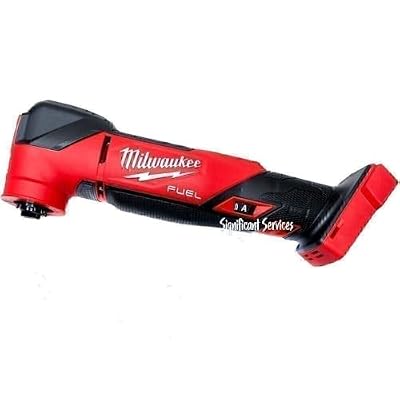
The M18 FUEL is the aggressive cutter of this group. Its 4.2 degree oscillation angle is wider than anything else here, and a wider arc moves each tooth through more material per pass, so plunge cuts in mounting boards and flush cuts in PVC conduit go quicker. The brushless motor holds 10,000 to 20,000 oscillations per minute, and the tool senses load and adds speed as the blade bites.
Blade swaps use a tool-free lever, and the mount accepts common open-back blades. A speed dial with an auto mode lets you run slow for control in sheet metal, then let the tool ramp up on its own in wood. The trade-off for the wide arc is feel: at full speed this is the liveliest tool in the hand here, so dial it down for delicate trim.
Specs
– Platform: Milwaukee M18 18V, tool only
– Motor: Brushless
– Speed range: 10,000–20,000 OPM
– Oscillation angle: 4.2 degrees
– Blade change: Tool-free lever
– Lighting: Built-in LED work light
DEWALT ATOMIC 20V MAX Brushless Oscillating Multi-Tool (DCS354B)

The DCS354B is the compact option for 20V MAX owners. The ATOMIC body is short, which helps when reaching inside an enclosure to trim a cable entry, and the dual-grip variable speed trigger is the best speed control here: squeeze lightly for a slow plunge, or pull through for full speed, without moving your hand to a dial.
Its 3.2 degree total arc and 0 to 18,000 OPM range put it mid-pack for cutting speed, but control is the point of this tool. The spring-loaded Quick-Change clamp swaps blades with no wrench, and a universal accessory adapter is included, so blades from other brands mount up without fuss. A bright LED lights the cut line inside dark cabinets.
Specs
– Platform: DEWALT 20V MAX, tool only
– Motor: Brushless
– Speed range: 0–18,000 OPM
– Oscillation angle: 3.2 degrees total
– Blade change: Tool-free spring clamp
– Included: Universal accessory adapter, LED light
Makita 18V LXT Cordless Multi-Tool (XMT03Z)

The XMT03Z is the smooth, measured choice. A dial sets speed from 6,000 to 20,000 OPM before you pull the trigger, and the motor ramps up gently instead of jumping, making it easier to settle a blade onto a pencil line on a panel. The 3.2 degree arc favors neat work over brute pace, and the grip stays calm on longer sanding sessions.
Blade changes are tool-free through a locking lever, and the box includes two adapters for blades from competing brands. There is no headlight, but as a precise cutter and sander for the LXT platform it is hard to fault.
Specs
– Platform: Makita 18V LXT, tool only
– Motor: Brushed, with gentle ramp-up
– Speed range: 6,000–20,000 OPM
– Oscillation angle: 3.2 degrees
– Blade change: Tool-free locking lever
– Included: Plunge blade and two accessory adapters
DEWALT Oscillating Tool Kit, 3-Amp Corded (DWE315K)

The DWE315K is the pick when work happens at a bench or in a shed with power nearby and you do not want a session to end because a battery did. The 3.0 amp corded motor drives the blade from 0 to 22,000 OPM, the highest top speed here, through the same dual-grip variable speed trigger found on its cordless sibling.
This is a 29-piece kit: blades for wood and metal, a sanding pad with sheets, a depth guide, the universal adapter, and a tool bag. The Quick-Change system swaps accessories without a wrench. You give up cordless freedom and gain steady output for grout removal and long sanding runs.
Specs
– Power: 3.0 amp corded, 120V
– Speed range: 0–22,000 OPM
– Oscillation angle: 3.2 degrees total
– Blade change: Tool-free Quick-Change clamp
– Kit: 29 pieces with tool bag and depth guide
– Included: Universal accessory adapter, LED light
Ryobi 18V ONE+ HP Brushless Multi-Tool (PBLMT50B)

The PBLMT50B brings brushless output to the ONE+ platform, and its 3.6 degree angle sits a step above the 3.2 degree tools, so it cuts a little faster than its size suggests. A dial covers 10,000 to 20,000 OPM, from a low end slow enough for plastic conduit to a top end that keeps up in timber.
Blade changes are tool-free, the mount takes standard open-back accessories, and an LED work light sits at the head. At under three pounds without a battery it is easy to hold overhead while trimming a vent opening. For anyone already running ONE+ batteries around the generator, this is the natural add.
Specs
– Platform: Ryobi 18V ONE+, tool only
– Motor: Brushless HP
– Speed range: 10,000–20,000 OPM
– Oscillation angle: 3.6 degrees
– Blade change: Tool-free
– Lighting: Built-in LED work light
How to choose
Begin with oscillation angle. The arc, in degrees, decides how far each tooth travels. Wide arcs around 4 degrees and up cut fast and clear debris well, but they buzz more and can wander at the beginning of a plunge. Narrower arcs near 3 degrees are calmer and more precise, suiting detail sanding and cuts near finished surfaces.
Speed range matters by material. High OPM suits wood and fast sanding. Drop the speed for metal, where a slower stroke keeps blade teeth alive, and for plastics, where full speed can melt the cut edge. A trigger that meters speed by pressure is easiest for plunge cuts; a dial stays more consistent through a long sanding job.
Check the blade mount before you buy. Most tools here accept universal open-back blades, and several include adapters for older closed blades. One European mount style is a closed, three-dimensional pattern that only takes its own blades; they are excellent but lock you into one accessory line. Tool-free clamps are worth having either way, since install work means constant swaps.
Finally, weigh corded against cordless honestly. Cordless wins for rooftop conduit, fence-line transfer switches, and quick trims. Corded wins for bench work, grout removal, and sessions measured in hours, and it is loud work either way.
FAQ
Can an oscillating tool cut a metal generator enclosure panel?
Yes, with a bi-metal plunge blade and a mid-range speed setting. Mark the opening, drill a corner hole if the blade needs a lead-in, and let the teeth work without forcing the tool. Deburr the edge afterward so cable insulation cannot chafe.
Which blade should I use to flush-cut conduit?
A bi-metal flush-cut or segment blade handles PVC and thin-wall metal conduit cleanly. Run a moderate speed and keep the blade flat against the surface you are trimming to.
Do blades from one brand fit another brand’s tool?
Usually, yes. The open-back universal pattern fits most tools from DEWALT, Milwaukee, Makita, Ryobi, and others, and many tools ship with adapters for older blade styles. The exception is the closed proprietary mount used by a couple of European brands, which accepts only its own accessories.
Is cordless power enough for a full install day?
For cutting and trimming, yes, especially with a mid-size or large battery and a spare on the charger. The jobs are short bursts rather than continuous load. Choose corded if your day is mostly sanding or grout removal, which drain packs quickly.
Verdict
For most generator owners, the Milwaukee M18 FUEL is the strongest all-round pick if you run M18 batteries, thanks to its wide arc and load-sensing speed. DEWALT users get two good answers: the compact DCS354B for cordless work and the DWE315K kit for corded endurance. The Makita XMT03Z is the calm, precise option, and the Ryobi PBLMT50B is the brushless choice for ONE+ households. Pick by the batteries on your shelf first.


Write Your Review
No reviews yet. Be the first to share your experience!