
🛒 Best Price Today on Amazon
Prime members get fast, free shipping on everything above, plus member-only deals. New members get a 30-day free trial — cancel anytime.
- Top Picks at a Glance
- Comparison Table
- 1. Westinghouse 6500 Watt Dual Fuel: Best for Home Backup
- 2. WEN 3600-Watt Portable Inverter Generator: Best for Camping and RV
- 3. PowerSmart 3800 Watt Inverter Generator: Best Quiet Inverter
- 4. DuroMax XP13000HX: Best Big Dual Fuel
- 5. Jackery Solar Generator 1000 v2 with 200W Solar Panel: Best Solar Option
- Also Consider
- How We Chose
- Buying Guide
- Mistakes to Avoid
- Frequently Asked Questions
- Which One Should You Buy?
- Sources
The best generators in 2026 depend on the job, so this ranked list is split by use: the Westinghouse 6500 Watt Dual Fuel is our top pick for home backup, and the WEN 3600-Watt Inverter Generator is the runner-up for camping and RV weekends because it is lighter and quieter. If you want clean power with no fuel at all, the Jackery Solar Generator 1000 v2 is the solar pick. A top 5 list cannot crown one universal winner; a camping inverter and a home-backup gas generator solve different problems. What follows is a research-based comparison of five main picks, four also-considered options and a buying guide that explains how to choose by running watts, fuel type and noise.
We did not personally use these products. The details come from listings, manufacturer documentation and independent reviews we name in the sources. We do not claim any brand is the definitive best, and we do not invent runtime or wattage figures; where a listing does not give a number, we write “not listed.” If you are asking who makes the best portable generators, or which brand portable generators are the best, the honest answer is that several established makers are reasonable, and your load list matters more than the logo.
Top Picks at a Glance
- Best Overall for Home Backup: Westinghouse 6500 Watt Dual Fuel Home Backup Portable Generator
- Best for Camping and RV: WEN 3600-Watt Portable Inverter Generator (RV-ready)
- Best Quiet Inverter: PowerSmart 3800 Watt Portable Inverter Generator
- Best Big Dual Fuel: DuroMax XP13000HX 13,000-Watt Dual Fuel Generator
- Best Solar Option: Jackery Solar Generator 1000 v2 with 200W Solar Panel
Comparison Table
| Product | Best for | Key specs from the listing | Watch for | Price tier |
|---|---|---|---|---|
| Westinghouse 6500 Watt Dual Fuel | Home backup, power outages | 6500 W; gas and propane; transfer-switch-ready 30A outlet; RV-ready 30A outlet | Open-frame; louder than inverter models; runtime: not listed in title | Mid-range |
| WEN 3600-Watt Inverter | Camping, RV, tailgating | 3600 W; RV-ready; fuel shut-off; described as quiet and lightweight | Gas only in this model; check the dual fuel version if you want propane | Mid-range |
| PowerSmart 3800 Watt Inverter | Quiet camping or small home loads | 3800 W; under 59 dBA per listing; under 3% THD | Brand is less established; check warranty terms | Mid-range |
| DuroMax XP13000HX | Large loads, whole-home panels via transfer switch | 13,000 W; gas and propane; electric start | Heavy and loud; needs space and safe placement | Premium |
| Jackery Solar Generator 1000 v2 + 200W panel | Indoor-safe quiet backup, camping | 1024 Wh LiFePO4; 1500 W (3000 W peak); 200 W panel | Limited capacity for big appliances; panel charge time depends on sun | Premium |
1. Westinghouse 6500 Watt Dual Fuel: Best for Home Backup
- 6500 watts, gas or propane
- Transfer-switch-ready 30A outlet
- RV-ready 30A outlet
- Marketed for home backup
- Carbon monoxide sensor feature is described on related Westinghouse listings; check this listing
Best for: households that want to run a refrigerator, some lights, a sump pump and a few small appliances during an outage. Skip if: you need to power central air conditioning or an electric range; step up in size or hire an electrician for a standby system.
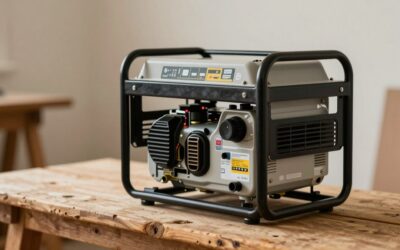
This is a classic home-backup generator layout: a mid-size open-frame engine with both gasoline and propane operation. Dual fuel matters because propane stores far longer than gasoline, which tends to go stale. During a regional outage, gas stations may not be pumping, so having two fuel options is a real advantage. The 30A outlets are the practical features: one is labeled transfer-switch-ready, meaning you can connect it to a properly installed transfer switch or interlock, and one is labeled RV-ready.
Wattage is the headline, but running watts versus starting watts is the detail to understand. Motors in refrigerators and well pumps draw a surge when they start. A listing’s headline number may be peak, not continuous. Because this is the best generator for many home users, add up the running watts of your must-have items, add the highest single surge, and keep the total below the continuous rating, with margin. We do not quote runtime because it depends on fuel, load and tank size.
The trade-off is noise and portability. This is an open-frame unit, not an inverter, so it will be louder and its output is less clean for sensitive electronics. If you plan to run laptops, routers or medical equipment, add a surge-protected path and ask the manufacturer or an electrician. Never run it indoors, in a garage or near a window; carbon monoxide can kill. Keep it outdoors and well away from the house, and use a battery-powered CO alarm inside.
Pros: dual fuel; two 30A outlets; suits home backup; widely sold brand. Cons: loud; heavy; gas needs rotation; not for sensitive electronics without extra protection.
2. WEN 3600-Watt Portable Inverter Generator: Best for Camping and RV
- 3600 watts
- RV-ready
- Fuel shut-off feature
- Quiet and lightweight per listing
- A dual fuel version of the 3600 is also sold
Best for: campers, tailgaters and RV owners who want clean power and moderate size. Skip if: you need to run a whole-house load or a large well pump.
An inverter generator produces power, converts it and outputs a stable waveform, which is why inverter units are favored for laptops, phones, CPAP-style devices (check the maker’s guidance for medical equipment) and sensitive electronics. This WEN is sized for a typical RV: enough to run a 30A rig with some appliances if you manage the load. The listing notes a fuel shut-off, which lets the engine run the carburetor dry before storage, a small feature that helps if the unit sits between trips.
For camping, weight and noise decide most purchases. The listing calls it lightweight and quiet but does not give a decibel figure in the title; check the full specification before you buy. If you plan to camp in campgrounds with generator quiet hours, look at the decibel rating at a quarter load, not at the maximum. Whether you need the dual fuel variant depends on how you store fuel; propane is convenient for travel, but a propane-fueled generator typically produces somewhat lower output than gasoline, so look at the stated figures for each fuel.
Pros: RV-ready; inverter clean power; fuel shut-off; comparatively light. Cons: too small for home backup of big loads; gas only in this version; exact noise figure not in the title.
3. PowerSmart 3800 Watt Inverter Generator: Best Quiet Inverter
- 3800 watts
- Under 59 dBA noise listed
- Under 3% total harmonic distortion
- Marketed for camping or home use
Best for: quiet camping and small home loads like a refrigerator, lights and electronics. Skip if: you want the reassurance of a legacy brand’s service network.
This is the pick for people who shop on noise. The listing specifies under 59 dBA and under 3% THD, which suggests a sine-wave quality suitable for sensitive electronics. We do not independently verify those numbers and note that decibel claims depend on the measurement distance and the load. If you share a campsite or live close to neighbors, this class of generator is more considerate than an open-frame model.
The listing also mentions features such as a digital display; check the page for current details. For home backup, a 3800-watt inverter will carry essentials but not an entire house. It also costs more per watt than an open-frame generator, which is the usual price of quiet and clean output.
Pros: quiet per listing; clean power; good for camping and light home use. Cons: costs more per watt; brand newer to many buyers; verify warranty.
4. DuroMax XP13000HX: Best Big Dual Fuel
- 13,000 watts
- Gas and propane
- Electric start
- Transfer-switch-ready per listing
Best for: larger homes and shops that need a generator to carry a transfer-switch panel with several circuits. Skip if: you want something you can lift into a trunk.
When people ask what the best dual fuel generators are, this is the high-output end of the category. A 13,000-watt unit can cover many household circuits when connected through a transfer switch, and the dual fuel design gives you flexibility. The cost of that capacity is weight, noise and fuel use. This is a unit to place on level ground well away from the house, with a plan for fueling it safely.
A word on propane: dual fuel generators typically produce less power on propane than on gasoline. The stated rating may apply to gasoline, so read the manual’s table for each fuel. Plan your loads around the lower number if you intend to run on propane.
Pros: big capacity; dual fuel; electric start; suited for transfer-switch use. Cons: heavy and loud; needs professional installation of the connection; large fuel use.
5. Jackery Solar Generator 1000 v2 with 200W Solar Panel: Best Solar Option
- 1024 Wh LiFePO4 battery
- 1500 W AC output, 3000 W peak
- 200 W solar panel included in this bundle
- Fast charge noted in the listing
Best for: people who want quiet, fume-free backup for small loads and camping; those searching for the best portable solar power generators. Skip if: you need to run heating, large air conditioning or well pumps for many hours.
A solar generator is a battery with an inverter and a panel. The 1024 Wh capacity is the practical figure: a 100-watt load could, in theory, run for around ten hours before accounting for efficiency losses, so real-world numbers are lower. That math is a rough guide, not a runtime claim. For phones, laptops, a router, lights and a small refrigerator for short periods, it is workable. Because it has no engine, it can be placed in a garage or tent vestibule more safely than a gas generator, but follow the maker’s ventilation and charging guidance.
Charging time depends on sun, season and panel angle. A single 200 W panel will not fill a battery quickly on a cloudy day. For longer outages, many owners add more panels or use wall charging when power returns. If you want to buy solar for emergency use, plan how you will recharge it during a multi-day event.
Pros: silent; no fumes; LiFePO4 battery; includes a panel; flexible. Cons: limited capacity for big loads; slower recharge in poor sun; higher cost per watt-hour than gas.
Also Consider
- ERAYAK 4500W Dual-Fuel Portable Inverter Generator: a smaller dual fuel inverter, listed as 30A RV ready, for campers who want propane flexibility.
- WEN 8000-Watt Dual Fuel Portable Generator: 120V/240V with a 340cc engine and CO Watchdog per listing; a step up from 6500 W without the cost of 13,000 W.
- AIVOLT 1750W Inverter Generator: an ultra-light option listed at about 26.5 pounds for light camping loads.
- Jackery Explorer 300 Portable Power Station: 292 Wh, 300 W AC; enough for phones, lights and small electronics.
How We Chose
This is a research-based guide. We reviewed listing details, manufacturer pages and independent reviews from well-known consumer publications. We did not personally use the products. We searched the store for dual fuel, inverter, home backup and solar categories and picked units that cover different jobs, no more than two per brand. We looked at stated watts, fuel type, outlet types, noise claims and features such as CO sensors. We avoided popularity rankings, star ratings and price quotes, and we use tier words only. Where a figure was not clear, we wrote “not listed.”
Buying Guide
Start with running watts, then add surge
List every device you want to run at the same time, note its running watts and the single biggest starting surge, and size the generator so the total stays under the continuous rating. As rough guidance, a refrigerator and lights may fit under a few thousand watts; adding a well pump, furnace blower or window air conditioner raises it sharply. Appliance labels or manuals give the numbers. Leave about 20 percent headroom so the engine is not working at its limit.
Choose a fuel type
Gasoline is easy to find but degrades in storage. Propane stores for years and burns cleanly but produces a lower rating in most engines. Dual fuel gives you both. Natural gas and tri-fuel options connect to a home line but require professional installation. If you are searching for the best gas generators, remember that stabilizer and rotating fuel are part of the cost of ownership.
Pick inverter or open-frame
Inverter models are quieter and produce cleaner power for electronics; open-frame models give more watts per unit of cost. If you camp, live near neighbors or run sensitive devices, choose an inverter. If you want maximum power for the least money and noise is secondary, open-frame is fine.
Check noise and weight honestly
Decibel claims depend on distance and load. A figure listed at quarter load is different from a figure at full load. Look for the stated conditions in the manual. Weight matters if you must lift the unit into a vehicle: generators over around 100 pounds usually need wheels and a ramp.
Plan for safety and connection
Run any gasoline or propane generator outdoors only, far from doors, windows and vents. Install battery-powered carbon monoxide alarms in the home. Do not plug a generator into a wall outlet to power the house; that can back-feed the grid and hurt line workers. Use a properly installed transfer switch or interlock, and have a licensed electrician do the work.
Mistakes to Avoid
- Buying on peak watts alone and ignoring running watts.
- Storing gasoline for a year without stabilizer.
- Running a generator in a garage with the door open; that is still unsafe.
- Skipping a transfer switch and back-feeding through an outlet.
- Expecting a solar generator to run big appliances for days.
Frequently Asked Questions
What are the best generators for home use?
For home backup, a dual fuel unit around 6500 watts or an inverter in the 3000 to 4000 watt range suits most essential loads. The Westinghouse 6500 Watt Dual Fuel is our home pick; larger homes may need a bigger unit or standby system.
What are the best generators for camping?
Inverter generators in the 1700 to 3800 watt range are the usual choice because they are quieter and lighter. The WEN 3600-Watt Inverter and PowerSmart 3800 are examples in this guide.
What are the best dual fuel generators?
The Westinghouse 6500, the DuroMax XP13000HX and the WEN 8000-watt model are dual fuel options at different sizes. Check each maker’s output for propane, which is usually lower than for gasoline.
Who makes the best portable generators?
Several established brands make reliable models, and no single brand is best for every job. Judge by warranty, parts availability, stated wattage and your load, not by a brand ranking alone.
Are solar generators better than gas generators?
They are quieter and have no fumes, but they hold less energy per dollar. A solar generator suits short outages and small loads; a gas or dual fuel generator suits long outages and large loads.
Can I run a generator in my garage?
No. Never run a gas or propane generator in a garage, basement or enclosed space, even with the door open. Carbon monoxide can build up quickly. Place it outdoors, well away from the house.
Do I need a transfer switch?
If you plan to power household circuits, yes. A licensed electrician should install a transfer switch or interlock. Do not back-feed through a wall outlet.
Which One Should You Buy?
For home backup, buy the Westinghouse 6500 Watt Dual Fuel, or step up to the DuroMax if your load list is large. For camping and RV use, choose the WEN 3600-Watt Inverter, or the PowerSmart 3800 if noise is the main concern. For quiet, fume-free backup on small loads, choose the Jackery Solar Generator 1000 v2. Before you buy anything, add up your watts and read the manual for the fuel you will actually use.
Sources
- Westinghouse Outdoor Power Equipment product pages
- WEN Products generator specifications
- DuroMax Power Equipment product pages
- Jackery product specifications
- U.S. Consumer Product Safety Commission: carbon monoxide and portable generators guidance
Last updated: October 2026


Write Your Review
No reviews yet. Be the first to share your experience!