
Our Short List of 3
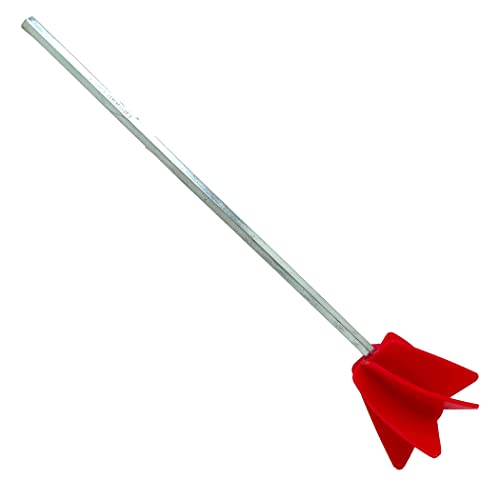
- Type: Drill attachment helix paddle
- Container size: 1-gallon cans, works down to quarts
- Chuck fit: 3/8 inch and larger drills
- Materials: Paint, epoxy, resin, silicone
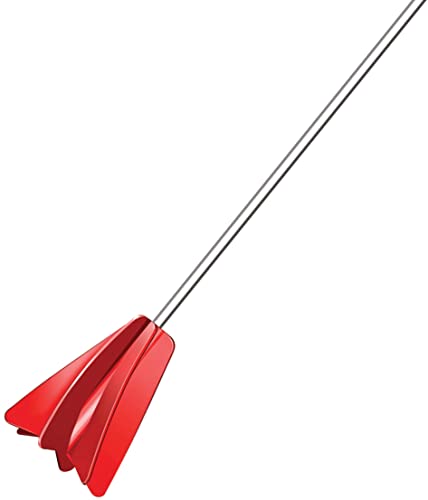
- Type: Drill attachment helix paddle
- Container size: 5-gallon buckets and pails
- Model: HM5
- Head design: Wide helix for deep containers

- Type: Ribbon blade drill attachment
- Container size: 1 to 5 gallon buckets
- Build: Zinc-plated steel, reinforced weld
- Shaft: Hex head, non-slip in the chuck
All 4 Picks at a Glance
| Product | Specs | Action |
|---|---|---|
| Edward Tools Paint Mixer Drill Attachment |
| Check price on Amazon |
| ALLWAY HM5 Original Helix Paint Mixer |
| Check price on Amazon |
| Edward Tools Paint and Mud Mixer |
| Check price on Amazon |
 LINMO 8-Piece Resin Mixer Paddles |
| Check price on Amazon |
🛒 Best Price Today on Amazon
Prime members get fast, free shipping on everything above, plus member-only deals. New members get a 30-day free trial — cancel anytime.
A wooden stir stick fails the moment pigment has settled into a hard layer, grout powder needs folding into water, or a two-part resin has to blend fully before its working time runs out. A proper mixer, whether it rides in a drill chuck or comes as its own machine, folds material from the bottom upward, so the last scoop matches the first.
The five picks below cover the jobs a home workshop actually sees: a small helix paddle for gallon cans, a bigger helix for five-gallon buckets, a standalone electric machine for heavy batches, a ribbon paddle built for mud, and a set of small paddles for resin work.
As an Amazon Associate, we earn from qualifying purchases.
Quick answer
For most people, the Edward Tools Paint Mixer Drill Attachment handles gallon cans of paint, resin and epoxy with the drill already on the bench. Step up to the ALLWAY HM5 Original Helix for five-gallon buckets, or to the Hyundai HYPM1600E Electric Paddle Mixer when thick batches deserve a dedicated machine. The Edward Tools Paint and Mud Mixer is the mud pick, and the LINMO 8-Piece Resin Mixer Paddles suit small resin pours.
Edward Tools Paint Mixer Drill Attachment
- Type: Drill attachment helix paddle
- Container size: 1-gallon cans, works down to quarts
- Chuck fit: 3/8 inch and larger drills
- Materials: Paint, epoxy, resin, silicone
This is the small-can specialist. The paddle head uses an even-flow helix shape sized for one-gallon containers, pulling settled pigment up from the bottom of the can instead of just spinning the liquid near the surface. It drops into any drill with a chuck of 3/8 inch or larger, so the drill already in the shop becomes the mixer.
The same paddle blends epoxy, resin and silicone for small casting jobs, and the head fits inside a quart can. Keep the speed low and the head submerged: run it fast in a half-full can and it throws material over the rim and folds air into the mix. Spin it in water or solvent right after the job, too — a paddle cleaned while wet takes seconds, while one left overnight becomes a lump.
ALLWAY HM5 Original Helix Paint Mixer
- Type: Drill attachment helix paddle
- Container size: 5-gallon buckets and pails
- Model: HM5
- Head design: Wide helix for deep containers
The HM5 is the five-gallon version of the same idea, with a helix head scaled for deep buckets. Deck coatings, sealers, bulk primer and five-gallon paint all settle hard in storage, and the wide helix moves the full depth of the bucket so heavy solids fold back in rather than staying as sludge.
A long shaft keeps the chuck and your hands above the rim while the head works near the floor of the bucket. Run the drill slowly and walk the paddle around the wall and across the bottom; a helix only blends the column it passes through, so a paddle parked in the center leaves the edges unmixed. Thick material in a full bucket is real work for a small cordless drill, so use a corded or high-torque tool and pause between bursts.
Hyundai HYPM1600E Electric Paddle Mixer
A dedicated machine earns its bench space when batches get thick or frequent: plaster, mortar and tile adhesive that would cook a household drill. The HYPM1600E is a corded electric paddle mixer with a 1600-watt motor, a pressure-sensitive trigger for fingertip speed control, and a standard M14 fitting, so paddles of different shapes swap on for different materials.
The trigger lets you ease the paddle up to speed inside the bucket, keeping dry powder from puffing into the air and thin liquids from climbing the walls. A two-stage safety switch guards against the machine jumping to life when picked up by the wrong grip. One check before ordering: this listing is the 230-volt version for UK-style mains, so match the machine to the supply in your region. It ships with a paddle and a five-piece trowel set.
Specs
- Type: Standalone corded electric paddle mixer
- Motor: 1600 W, up to 990 rpm
- Paddle fitting: M14 thread
- Cord length: 4 metres
- Weight: 5.4 kg
- Extras: Mixing paddle and 5-piece trowel set included
Edward Tools Paint and Mud Mixer
- Type: Ribbon blade drill attachment
- Container size: 1 to 5 gallon buckets
- Build: Zinc-plated steel, reinforced weld
- Shaft: Hex head, non-slip in the chuck
Joint compound, grout, thinset and plaster are too thick for a light helix, and this paddle is built for them. The ribbon blade is zinc-plated steel with a reinforced weld where blade meets shaft, and it pushes material sideways and down as it turns, folding dry powder into the wet layer instead of drilling a hole through the batch.
The hex head shaft is the quiet advantage. Round shafts can slip in a drill chuck under the heavy load of a mud batch, chewing the chuck and stalling the mix; the hex profile locks in and holds. It is sized for one to five gallon buckets, covering a patch job and a full bucket of compound alike. Mud work punishes tools put away dirty, so spin the paddle in a rinse bucket while the batch is still wet.
LINMO 8-Piece Resin Mixer Paddles
- Type: Small paddle set for drills
- Count: 8 paddles
- Container size: Cups and small containers
- Materials: Epoxy, resin, silicone, small paint batches
Resin work happens in cups, not buckets, and needs a gentler tool. This set of eight small paddles chucks into a drill and blends epoxy, resin and silicone for molds, jewelry casting and small pours, with spares ready when one is coated in half-cured resin.
Technique decides the result more than the tool. Keep the drill on its slowest setting, the paddle under the surface, and move it along the walls and across the bottom of the cup. Resin clings to the walls in a thin unmixed film, and if that film never folds in, it pours out as soft, uncured streaks that ruin the piece. Slow speed also keeps air out: a fast paddle whips bubbles into resin. Wipe the paddles clean while wet, and cured epoxy peels from the smooth surface once hard.
How to choose
Match the paddle to the container first. A head that is too small spins a narrow column and leaves the edges raw, while a head that barely fits a gallon can splashes material out with every turn. Look at shape next: a helix lifts material from the bottom and suits liquids like paint, coatings and resin, while a ribbon blade folds and pushes, which thick mud, grout and compound need.
Keep drill speed low for everything: high speed foams paint, whips bubbles into resin and overheats a drill motor straining against a thick batch. If thick batches are a weekly habit, a dedicated electric mixer with a trigger you can feather is kinder than abusing a drill. Hex shanks beat round shanks in the chuck, since they cannot spin loose under load. Plan cleanup before the mix, too: these tools rinse easily while wet and are nearly ruined once material sets.
FAQ
Can I mix a five-gallon bucket with a small cordless drill?
For paint, yes, with patience and short bursts. For mud, grout or thinset, the load can overheat a small drill; use a corded or high-torque drill, or a dedicated machine.
Why did my resin cure with soft spots?
Unmixed resin from the walls or bottom of the cup is the usual cause. Scrape the walls and bottom as you mix, pour into a second clean cup, and mix briefly again before the pour.
How fast should the drill turn while mixing?
Slowly. Ease the trigger until the whole batch moves without a vortex reaching the shaft. If the mix foams, splashes or climbs the walls, the speed is too high.
What happens if I leave the paddle in the bucket overnight?
Paint skins over, resin hardens, and mud sets like stone around the blade, and the paddle often becomes scrap. Spin it in a rinse bucket right after every mix.
Verdict
Pick the Edward Tools one-gallon attachment for everyday cans, the ALLWAY HM5 for five-gallon buckets, and the Edward Tools ribbon paddle when mud enters the picture. The Hyundai electric mixer is the step up for thick, frequent batches, and the LINMO set covers resin work at the small end. Match the paddle to the container, keep the speed low, and clean the tool while the mix is wet.

Write Your Review
No reviews yet. Be the first to share your experience!