
When the power goes out, a good portable power station is the difference between a dark, silent house and a home that keeps its lights on, its phones charged, and its refrigerator humming. Unlike loud gas generators, these battery-powered units are quiet, emission-free, and safe to run indoors — which is exactly why they’ve become the go-to backup solution for American households, campers, RVers, and anyone who wants insurance against grid failures. But with capacities ranging from a couple hundred watt-hours to several kilowatt-hours, and prices spanning a huge range, choosing the right one takes a little homework. This guide breaks down the best-selling portable power stations of 2026 from the brands buyers trust most — Jackery, EcoFlow, Anker, and Bluetti — so you can match a unit to your real-world needs and budget.
As an Amazon Associate we earn from qualifying purchases. Prices and availability are accurate as of the date/time indicated and are subject to change.
As an Amazon Associate we earn from qualifying purchases at no extra cost to you.

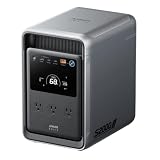


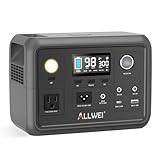


Quick answer: Our top pick in 2026 is the EcoFlow Delta 2 Max (Best Overall) — see the full ranked comparison, alternatives and buying advice below.
🛒 Best Price Today on Amazon
Prime members get fast, free shipping on everything above, plus member-only deals. New members get a 30-day free trial — cancel anytime.
How to Choose the Right Portable Power Station
Before you compare models, it helps to understand the three specifications that matter most. Nail these down and the decision gets a lot simpler. If you’re new to backup power, our beginner’s guide to home battery backup is a good companion read.
Capacity: How Many Watt-Hours (Wh) Do You Need?
Capacity, measured in watt-hours (Wh), tells you how much total energy a portable power station can store. A 1,000Wh unit can, in theory, deliver 1,000 watts for one hour, 100 watts for ten hours, and so on (real-world figures run about 85% of the label after conversion losses). For charging phones, laptops, and running a few LED lights, 300–500Wh is plenty. For keeping a refrigerator, Wi-Fi router, and some lights alive through a multi-hour outage, aim for 1,000–2,000Wh. For whole-day or multi-day resilience — or to power a CPAP machine every night — 2,000Wh and up is the sweet spot, ideally paired with solar.
Output Watts and Ports: Can It Actually Run Your Devices?
Capacity is the fuel tank; output wattage is the engine. Every device draws a certain number of running watts, and motor-driven appliances (fridges, pumps, power tools) spike much higher at startup. A power station rated for 1,800W continuous with a 3,600W surge can handle most household essentials, while a 300W unit is strictly for electronics. Check the port mix too: you’ll want multiple AC outlets, USB-A, USB-C Power Delivery (100W+ is ideal for laptops), and often a 12V car socket. Our appliance wattage cheat sheet lists the draw of common household items.
LiFePO4 Batteries and Solar Input
In 2026, the battery chemistry to look for is LiFePO4 (lithium iron phosphate). Compared to older lithium-ion (NMC) cells, LiFePO4 lasts far longer — typically 3,000 to 6,000+ charge cycles versus 500–800 — runs cooler, and is more thermally stable. Nearly every unit below uses it, which means a decade or more of regular use before meaningful capacity loss. If you plan to recharge off-grid, confirm the solar input rating and whether panels are included; a high solar ceiling (400W+) dramatically shortens recharge time on a sunny day. See our solar generator setup walkthrough for panel-matching tips.
Best Portable Power Stations for 2026: Comparison Table
Here are our five top picks across the most common use cases, from grab-and-go camping units to serious whole-home backup. Our overall #1 recommendation leads the table.
| Power station | Capacity (Wh) | Output | Price range | Rating |
|---|---|---|---|---|
| EcoFlow Delta 2 Max (Best Overall) | 2,048 Wh | 2,400W (3,400W surge) | $1,200–$1,600 | 4.8 / 5 |
| Jackery Explorer 1000 v2 | 1,070 Wh | 1,500W (3,000W surge) | $600–$800 | 4.7 / 5 |
| Anker SOLIX C1000 | 1,056 Wh | 1,800W (2,400W surge) | $500–$700 | 4.7 / 5 |
| Bluetti AC200L | 2,048 Wh | 2,400W (3,600W surge) | $1,100–$1,500 | 4.6 / 5 |
| Jackery Explorer 300 Plus | 288 Wh | 300W (600W surge) | $200–$300 | 4.6 / 5 |
Top Portable Power Station Picks Reviewed
1. EcoFlow Delta 2 Max — Best Overall Portable Power Station
The EcoFlow Delta 2 Max hits the ideal balance of capacity, output, and speed for most homes. Its 2,048Wh LiFePO4 pack can be expanded to 6kWh with add-on batteries, and its 2,400W output (with X-Boost pushing many higher-draw appliances even further) handles refrigerators, space heaters, and even some window ACs. What sets it apart is charging speed: it refills from 0 to 80% in under an hour on AC, and accepts up to 1,000W of solar. For a household that wants one unit to cover outages, road trips, and job sites, this is the one to beat.
2. Jackery Explorer 1000 v2 — Best for Camping and RV Use
Jackery essentially popularized the category, and the Explorer 1000 v2 shows why the brand remains a best-seller. At just under 24 pounds with a genuinely portable folding handle, it’s the friendliest 1,000Wh-class unit to carry to a campsite or toss in an RV. The 1,500W output runs coffee makers, mini-fridges, and CPAP machines, and the app-based controls are refreshingly simple. It’s our pick for buyers who prioritize portability and ease of use over maximum expandability.
3. Anker SOLIX C1000 — Best Value
The Anker SOLIX C1000 delivers a lot of power station for the money. With 1,056Wh, a strong 1,800W output, and one of the fastest recharge rates in its class (58 minutes to full on AC), it routinely undercuts rivals on price without cutting corners on build quality. Anker’s reputation for durable electronics carries through here, making it the smart budget-conscious choice for first-time buyers who still want to run real appliances.
4. Bluetti AC200L — Best for Expandable Home Backup
Bluetti’s AC200L is a workhorse built for people who want to grow their system over time. Its 2,048Wh base can scale to a massive 8,192Wh with expansion batteries, and its 3,600W surge rating tackles demanding startups from pumps and larger appliances. A dedicated 30A RV port and generous solar input make it a favorite for off-grid cabins and serious preppers. Learn how it fits into a larger setup in our off-grid power system guide.
5. Jackery Explorer 300 Plus — Best Compact Pick
Not everyone needs a small suitcase of batteries. The Explorer 300 Plus weighs about eight pounds and slips into a backpack, yet still delivers a 288Wh LiFePO4 cell and a 300W output — enough for phones, tablets, laptops, a CPAP on low, or a string of camp lights through the night. For day trips, emergency go-bags, and apartment dwellers with modest needs, it’s an affordable, grab-and-go entry point.
Frequently Asked Questions
What’s the difference between a portable power station and a generator?
A traditional generator burns gasoline, propane, or diesel to produce electricity, which makes it loud, requires fuel storage, and emits carbon monoxide — so it can only run outdoors. A portable power station is a large rechargeable battery with built-in outlets. It’s silent, produces no fumes, and is safe to use indoors, making it ideal for overnight outages, apartments, and camping. The trade-off is runtime: a gas generator can run as long as you keep feeding it fuel, while a battery station runs until depleted (unless recharged by solar or the grid).
What size portable power station do I need for home backup?
It depends on what you want to keep running. To cover essentials during a multi-hour outage — a refrigerator, Wi-Fi, phone charging, and a few lights — a 1,000–2,000Wh unit with at least 1,500W output is a reliable starting point. For longer outages, medical devices, or running more appliances at once, step up to 2,000Wh or more and consider an expandable system. Add up the running watts of your must-have devices, factor in surge draw, and buy a unit with headroom above that total.
Can a portable power station run a refrigerator?
Yes, most mid-size and larger units can. A typical full-size refrigerator draws around 100–200 running watts but spikes to 800–1,200 watts at startup, so you need a power station with enough surge capacity — 1,500W or higher is a safe bet. In terms of runtime, a 1,000Wh unit will typically keep a modern energy-efficient fridge cold for roughly 8–15 hours, while a 2,000Wh unit can stretch that to a full day or more, since the compressor only cycles on periodically rather than running constantly.
How does solar charging work with a portable power station?
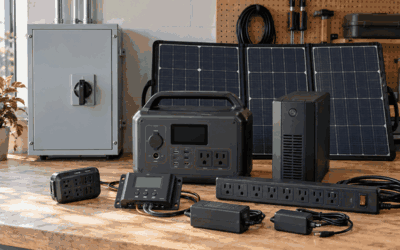
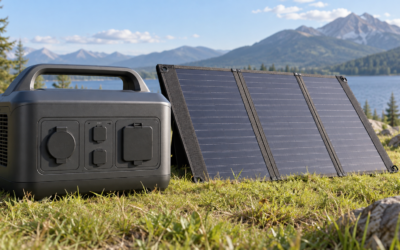
Most modern power stations have a built-in MPPT solar charge controller, so you simply connect compatible solar panels to the unit’s solar input port. On a sunny day, the panels replenish the battery while you keep drawing power — effectively creating a “solar generator” that can run indefinitely off-grid. Recharge speed depends on the unit’s maximum solar input rating and how many watts of panels you connect; a station accepting 400W or more of solar can meaningfully top up in a few hours of good sun. Always match panel voltage and wattage to the station’s specifications to charge safely and efficiently.
Final Verdict
For the widest range of buyers, the EcoFlow Delta 2 Max is our top portable power station of 2026, thanks to its large expandable capacity, fast charging, and strong output. Campers who value portability should look at the Jackery Explorer 1000 v2, value seekers at the Anker SOLIX C1000, expandable-backup buyers at the Bluetti AC200L, and minimalists at the compact Jackery Explorer 300 Plus. Whichever you choose, prioritizing LiFePO4 chemistry and enough capacity for your specific devices will give you years of dependable backup power — outage after outage.
More Guides You May Like
- Best Generators for Storm and Flood Power Outages (2026 Hurricane Season)
- Dual Fuel vs Gas Generator: Is the Flexibility Worth It?
- Generator Transfer Switch Explained: Types and Safety
- How to Ground a Generator: When You Need To and How
- How to Break In a New Generator the Right Way
Top picks from this guide
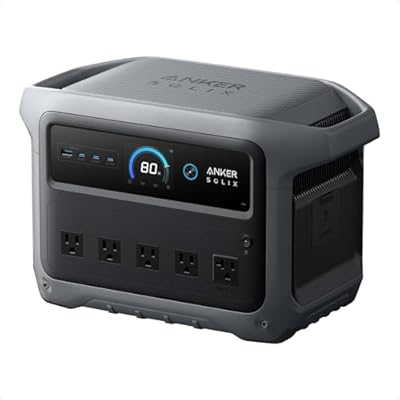 AnkerAnker SOLIX C1000 Gen 2 Portable Power Station$470 \xc2\xb7 99/100
 JackeryJackery Explorer 300 Portable Power Station,292Wh$239 \xc2\xb7 99/100
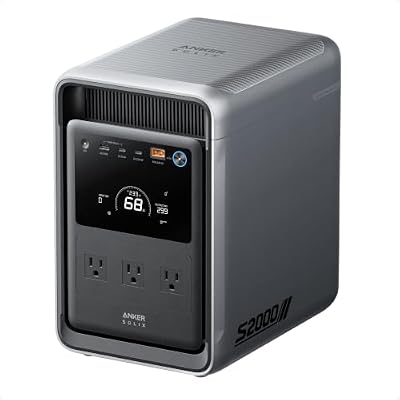 AnkerAnker SOLIX S2000 Portable Power Station, 2,010Wh, 1,500W$650 \xc2\xb7 99/100
 JackeryJackery Solar Generator 300 and 40W Solar Panel,292Wh,300W AC$319 \xc2\xb7 99/100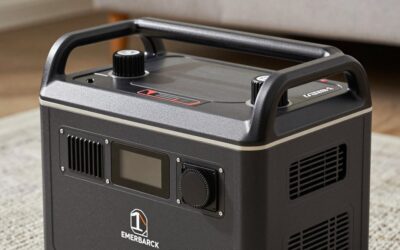
Write Your Review
No reviews yet. Be the first to share your experience!