
🛒 Best Price Today on Amazon
Prime members get fast, free shipping on everything above, plus member-only deals. New members get a 30-day free trial — cancel anytime.
A second battery in a truck only helps if the two batteries stay separated when they should, and the kit that connects them decides whether the starter still turns over in the morning. A 140-amp voltage sensitive relay kit suits a fridge and a few lights, while a 300-amp kit with a display suits a winch, a large inverter and a lithium house battery. Buying the relay alone leaves the cables, lugs and terminals to be sourced separately, which is why a complete kit matters: everything arrives in one box, sized to work together.
This guide is for truck owners who run a fridge, a winch, camp lights or a large inverter from a second battery, from weekend campers to work-truck drivers. It compares three dual battery kits sold on Amazon, chosen from the names and specifications on their product pages, with notes on amperage, cable length and voltage sensing, so the kit you buy matches the loads you run.
Quick Picks
As an Amazon Associate we earn from qualifying purchases
| Product | Best for | Key spec from title |
|---|---|---|
| VEVOR Dual Battery Isolator Kit 12V 300 Amp | High-current systems with monitoring | 300-amp rating with LCD voltage display |
| Nilight 12V 140A Dual Battery Isolator Kit | Everyday truck use in wet conditions | 140-amp VSR with IP66 waterproof rating |
| THEPRO Upgraded 12V 140 Amp Dual Battery Isolator Kit | Marine-grade durability with long cables | 140-amp VSR 2.0 with 20 ft pure copper cable |
How to Choose
Size the Amperage to the Load
Amperage is the first number to match, because a relay that is too small for the load will run hot and fail early. A 140-amp kit covers a fridge, camp lights and small accessories on most trucks, which is why two of the kits below carry that rating. A 300-amp kit suits heavier setups: a winch, a large inverter, or a lithium house battery that draws hard when charging. Add up the loads the second battery will feed, then pick a kit whose continuous rating clears that total with room to spare, rather than one that only just matches it.
Check the Cable Length and Gauge
The cable decides where the second battery can live, so measure the run before ordering. The VEVOR 300-amp kit includes 20 feet of 2 AWG cable, which reaches a bed-mounted battery in most pickups, and the THEPRO kit includes 20 feet of pure copper cable for the same kind of run. Thicker cable carries more current with less loss, and pure copper conducts better than mixed metals over a long run. Measure from the starter battery to the planned second-battery location, add slack for routing around the frame, and confirm the included length covers it.
Understand How the Voltage Relay Switches
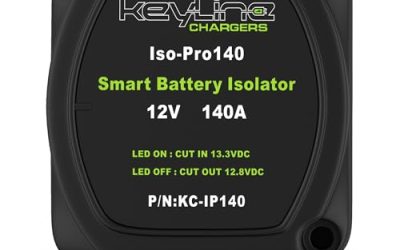
A voltage sensitive relay joins the two batteries while the alternator charges and separates them when charging stops, and the switching points decide how well that works. The standard points in this class are a cut-in near 13.3 volts and a cut-out near 12.8 volts, so the relay waits until the alternator is genuinely charging before sharing, then splits the banks before the accessories can drain the starter. The VEVOR 300-amp kit adds an adjustable delay of 3 to 60 seconds to reduce frequent switching. Read the listed switching behavior before buying, since a relay that joins too early can leave both batteries flat.
Match the Kit to the Battery Chemistry
Not every kit suits every battery, so check the chemistry on the listing before ordering. The VEVOR 300-amp kit lists compatibility with lithium, lead-acid and other battery types, which suits owners who run a lithium house battery beside a lead-acid starter. The THEPRO kit and the Nilight kit are built around the standard 12-volt lead-acid setup most trucks use. If the second battery is lithium, pick a kit that states lithium compatibility on its listing; if it is a standard deep-cycle lead-acid battery, a 140-amp kit with a voltage sensitive relay covers the job.
The 3 Best Options
VEVOR Dual Battery Isolator Kit 12V 300 Amp
The VEVOR 300-amp kit is the high-current pick in this guide, built for trucks whose second battery feeds a winch, a large inverter or a lithium house bank. Its 300-amp rating clears the loads that would strain a 140-amp relay, and the LCD voltage display shows both batteries at a glance, so the state of the system is visible without a separate meter. Manual and automatic modes add flexibility: automatic mode handles daily charging, while manual mode lets a charged auxiliary battery help start a vehicle with a depleted main battery. The 20 feet of 2 AWG cable reach a bed-mounted battery in most pickups.
Specs
- 300-amp current rating
- 12-volt system
- LCD voltage display with voltmeter
- Manual and automatic modes
- 20 ft 2 AWG cables
- Compatible with lithium and lead-acid batteries
- Adjustable delay from 3 to 60 seconds
- Overvoltage and undervoltage protection
Best for: Truck owners with high-current second-battery systems who want monitoring, manual override and lithium compatibility.
Watch out for: The higher current rating and manual mode need careful wiring and fuse sizing, so read the installation instructions before starting the job.
ASIN: B0FYF7Y8JM
Nilight 12V 140A Dual Battery Isolator Kit

The Nilight 140-amp kit is the straightforward pick for most trucks, because it covers the common second-battery loads without extra complexity. Its voltage sensitive relay joins the batteries while charging and separates them when charging stops, so the fridge and camp lights draw from the auxiliary battery while the starter stays reserved. The IP66 waterproof rating suits engine bays and bed mounts that see rain, dust and washdowns. For a truck owner adding a first auxiliary battery for a fridge and lights, this kit is the simplest route from unboxing to charging.
Specs
- 140-amp current rating
- 12-volt system
- Voltage sensitive relay
- IP66 waterproof rating
Best for: Truck owners adding a first auxiliary battery for a fridge, lights and small accessories in wet conditions.
Watch out for: The 140-amp rating suits moderate loads, so confirm the total draw of the accessories before pairing it with a winch or a large inverter.
ASIN: B0CZMXN5SK
THEPRO Upgraded 12V 140 Amp Dual Battery Isolator Kit
The THEPRO kit suits owners who want a 140-amp setup built with heavier materials, because its 20 feet of pure copper cable and marine-grade IP65 weatherproofing are aimed at rugged, wet environments. The VSR 2.0 smart voltage sensitive relay manages charging automatically, joining the batteries while the alternator runs and separating them when it stops. Pure copper conductors carry current with less loss than mixed metals over a long run, which matters when the second battery sits in the bed. For a truck, RV or marine setup where the cable run is long and the weather is rough, this kit is the durable choice.
Specs
- 140-amp current rating
- 12-volt system
- VSR 2.0 smart voltage sensitive relay
- 20 ft pure copper cable
- IP65 marine-grade weatherproofing
Best for: Truck, RV and marine owners who need a durable 140-amp kit with a long pure copper cable run.
Watch out for: The heavier build and long cable suit larger installs, so confirm the routing and mounting space before ordering for a compact engine bay.
ASIN: B0GS4Z2MFS
Which One Fits Your Situation
Running a Fridge and Camp Lights
A truck owner who runs a fridge and camp lights from a second battery needs a kit that separates the banks when the engine stops. The Nilight 140-amp kit covers that job with a voltage sensitive relay and an IP66 waterproof rating, so the starter stays reserved. Confirm the total draw stays inside 140 amps, then fit the kit and the auxiliary battery.
Powering a Winch and a Large Inverter
A winch and a large inverter draw hard enough to strain a 140-amp relay, so the VEVOR 300-amp kit is the pick for that setup. Its 300-amp rating clears the heavy loads, the LCD display shows both batteries, and manual mode lets the auxiliary battery help with a start. Size the fuses to the cable before the first use.
A Long Cable Run in Rough Weather
A second battery mounted in the bed or on a trailer needs a long cable, and a wet climate needs weatherproofing to match. The THEPRO kit answers both with 20 feet of pure copper cable and IP65 marine-grade sealing, plus a VSR 2.0 relay that manages charging on its own. Measure the run first, then route the cable away from heat and sharp edges.
A First Dual Battery Install
A first dual battery install should stay simple: pick the kit that matches the loads, measure the cable run, and follow the instructions step by step. The Nilight 140-amp kit is the straightforward start for a fridge and lights, while the VEVOR 300-amp kit is the pick when a winch joins the circuit. Fuse the positive cable near each battery and test the switching points first.
Common Mistakes
- Sizing the kit to the battery instead of the load, then fitting a 140-amp relay to a winch that draws far more, which overheats the relay and leaves the system dead when it is needed most, when adding up the accessory draw first would have shown the 300-amp kit was the right choice.
- Buying the relay alone and discovering the cables, lugs and terminals still need sourcing, which stalls the install for days while parts are ordered separately, when a complete kit such as the ones above arrives with the wiring sized to the relay.
- Running the cable too short for the planned battery location, then splicing in an extension that adds resistance and a weak joint, when measuring the run from the starter battery to the second battery before ordering would have shown whether 20 feet was enough.
- Skipping the fuse on the positive cable near each battery, which leaves a short circuit with nothing to stop it, when a fuse at each end is the basic protection every dual battery install needs and the instructions call for it plainly.
- Mixing a lithium house battery with a kit that never states lithium compatibility, then finding the relay switching points do not suit the lithium charge profile, when the listing for the VEVOR 300-amp kit states lithium and lead-acid compatibility and that check takes a minute.
Frequently Asked Questions
What does a dual battery kit actually do?
A dual battery kit connects a second battery to the charging system through a voltage sensitive relay, so the alternator charges both while driving and the relay separates them when the engine stops. Accessories then draw from the auxiliary battery while the starter stays reserved. The kits here include the relay, cables, lugs and terminals needed for the install.
Is 140 amps enough for a truck fridge?
Yes, for most setups a 140-amp kit covers a fridge, camp lights and small accessories with room to spare, since those loads draw far less than the relay rating. The Nilight and THEPRO kits both carry that rating. A winch or a large inverter needs more headroom, and the VEVOR 300-amp kit is the pick for those loads.
Can I use a dual battery kit with a lithium battery?
It depends on the kit, so check the listing before ordering. The VEVOR 300-amp kit states compatibility with lithium and lead-acid batteries, which suits a lithium house battery beside a lead-acid starter. Kits that only list standard 12-volt lead-acid use should not be assumed to suit lithium, since the switching points may not match the lithium charge profile.
Where should the second battery go?
The second battery usually sits in the bed, on a tray, or in a ventilated compartment, wherever the cable run is short and the battery stays secure. Measure the run before ordering, since the VEVOR and THEPRO kits include 20 feet of cable, which reaches a bed mount in most pickups. Secure the battery firmly so it cannot shift on rough roads.



Write Your Review
No reviews yet. Be the first to share your experience!