
🛒 Best Price Today on Amazon
Prime members get fast, free shipping on everything above, plus member-only deals. New members get a 30-day free trial — cancel anytime.
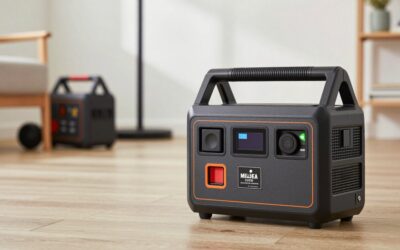
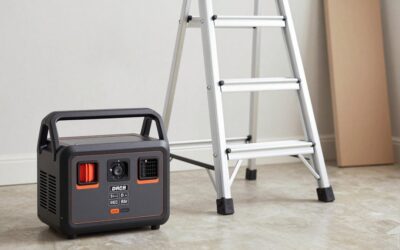
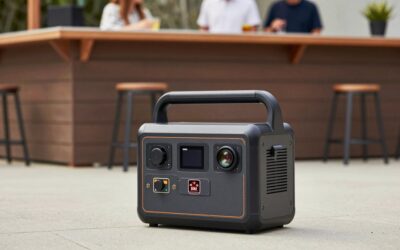
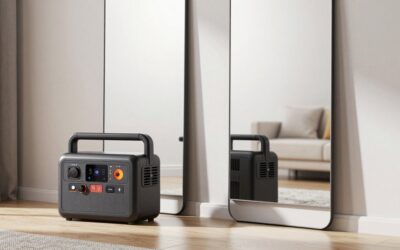
The River 2 Pro sits in an awkward but useful spot: it is bigger than the lunchbox-sized stations that only charge phones and laptops, yet noticeably cheaper and lighter than the 1kWh units most reviewers push people toward. So the real question is not whether it is a good power station, but whether a battery in the high-700Wh range is the right amount of money to spend, or whether you should stretch to 1kWh or step down to something smaller. This review looks at it purely as a buying decision: what that capacity actually runs, where the value sits against its neighbors, and the situations where it is the smartest purchase on the shelf.
What the capacity really buys you
EcoFlow rates the River 2 Pro in the high-700Wh class with LiFePO4 cells and an AC inverter around 800W continuous, plus a boost mode that lets simple resistive loads run at reduced voltage. Always confirm the current listing, because revisions happen. After inverter losses of 10 to 15 percent, plan on roughly 640 to 680Wh of usable AC energy. That is the number that matters for runtime math.

EF ECOFLOW Portable Power Station RIVER 2, 256Wh 300W
Included for 'EcoFlow River 2 Pro Review: Is It Worth Buying in 2026?' because the listing specifies 256Wh 300W, details this guide uses to compare options.
View on Amazon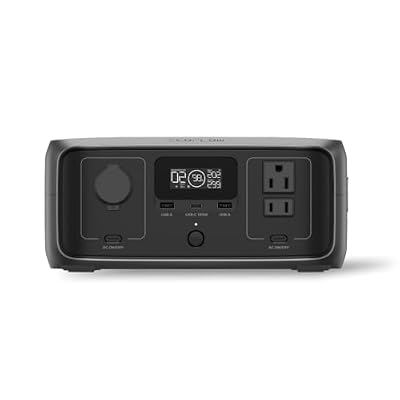
EF ECOFLOW Portable Power Station RIVER 3 230,230 Wh,550W Up to 600W
Included for 'EcoFlow River 2 Pro Review: Is It Worth Buying in 2026?' because the listing specifies 230 Wh and 550W Up to 600W, details this guide uses to compare options.
View on Amazon
BLUETTI Elite 30 V2 Portable Power Station 288Wh 600W LFP Solar Generator
Included for 'EcoFlow River 2 Pro Review: Is It Worth Buying in 2026?' as a relevant option in this category; details come from the product listing.
View on Amazon
EF ECOFLOW Portable Power Station River 3 Max Plus, 858Wh 990W
Included for 'EcoFlow River 2 Pro Review: Is It Worth Buying in 2026?' because the listing specifies 858Wh 990W, details this guide uses to compare options.
View on AmazonRuntime at realistic loads
The table uses 660Wh usable and steady average draw. Motor loads like fridges cycle, so their average is far below their running watts.
| Load | Average draw | Estimated runtime |
|---|---|---|
| Wi-Fi router + fiber modem | 20W | ~33 hours |
| CPAP, no heated humidifier | 40W | ~16 hours (about 2 nights) |
| Full-size fridge (cycling average) | 60-80W | ~8-11 hours |
| Laptop working day | 50W | ~13 hours |
| 55-inch LED TV + streaming stick | 90W | ~7 hours |
| Mini fridge in a camper | 35W | ~19 hours |
The pattern is clear: it covers one essential category comfortably, or two lighter ones for an evening. It will not carry a refrigerator through a full 24-hour outage without a recharge.
Where the value lands
Street prices for this class move constantly, but mid-700Wh LiFePO4 stations tend to sell for roughly $0.60 to $0.90 per watt-hour on sale, while 1kWh flagships often land between $0.50 and $0.80 per Wh. In other words, the step up to 1kWh frequently costs only $100 to $200 more for about 35 percent more energy. That is the single biggest argument against the River 2 Pro for home backup buyers.
When smaller is actually better
Weight changes the equation. A station around 17 pounds can live in a car trunk, ride in a daypack-style carry, and move between rooms without thought. A 1kWh unit at 23 to 30 pounds starts to feel like a chore for daily use. If you will carry it more than you store it, the River 2 Pro’s size is a feature rather than a compromise.
Who should buy it
It is a strong fit for weekend campers who run a 12V fridge and lights, remote workers who want four to eight hours of laptop and router time during short outages, and apartment dwellers who cannot store fuel and mainly need phones, a fan, and Wi-Fi. It also pairs well with a single 200 to 220W solar panel; on a 5 peak-sun-hour day that panel returns roughly 750Wh before losses, close to a full refill.
Who should skip it
Skip it if your main goal is keeping a full-size fridge and freezer alive through multi-day storms, if you need to run a sump pump or well pump, or if you want to cook with an induction plate. Those jobs call for 2kWh or more, or a fuel generator. Buying the River 2 Pro for them just means buying a second unit later.
Ownership details that matter
Fast AC charging is one of this line’s real strengths; roughly an hour from empty on wall power means you can top it up during a brief restoration window in a rolling-outage scenario. LiFePO4 chemistry is typically rated for 3,000 cycles to 80 percent capacity, so even daily use gives it the better part of a decade. Store it around 50 to 60 percent charge if it will sit for months, and cycle it every 3 months so the battery management system stays calibrated.
FAQ
Can the River 2 Pro run a full-size refrigerator?
Yes, most modern full-size fridges start and run on an 800W-class inverter, but expect roughly 8 to 11 hours of runtime before you need to recharge. Plan a solar panel or car charging if the outage could run overnight and into the next day.
Is it better to buy two small stations or one larger one?
For most people, one larger station is cheaper per watt-hour and simpler. Two small units make sense only when you need power in two places at once, such as a bedroom CPAP and a kitchen fridge.
Bottom line
The River 2 Pro is worth buying if portability and fast recharging matter more to you than raw capacity: campers, commuters, and short-outage apartment kits. If your plan revolves around a refrigerator or multi-day storms, spend the extra $100 to $200 on a 1kWh-class unit instead, because the per-watt-hour value is better and you will not outgrow it in the first long outage.


Write Your Review
No reviews yet. Be the first to share your experience!