
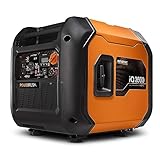
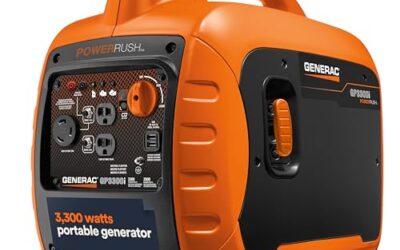
- Top Pick: Generac 3,300 Watt Gas Powered Portable Inverter Generator, USB Charging
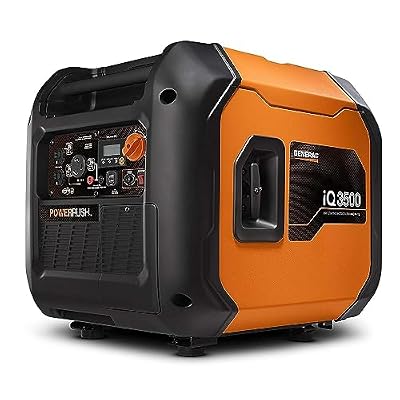
- Best Value: Generac 7127 iQ3500 3,500-Watt Gas-Powered Portable Inverter Generator – Durable, Lightweight Design – Speed Selection for Quiet Performance or Maximum Power – CARB Compliant – Orange/Black
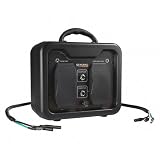
- Premium Choice: Carburetor Fit for Generac GP3000i 3000Watt Powered Portable Inverter Generator
Generac is a household name in backup power, and its compact inverter generators bring that reputation to campers, tailgaters, and homeowners who want clean, quiet portable power. In this review we take a close look at the Generac GP3000i-class inverter and how it performs for everyday use.
- Watch: Generac 7127 GP3000i Inverter Generator Review — Video Review
- Design & Build
- Performance
- Pros & Cons
- Alternatives to Consider
- What to Look For in a 3,000-Watt-Class Inverter Generator
- Sizing Example: A Weekend Camp
- Which One Should You Buy?
- Common Mistakes When Buying an Inverter Generator
- Maintenance and Storage Checklist
- Using It for Home Backup
- Placement, Cords, and Carbon Monoxide
- Before the First Trip
- Frequently Asked Questions
- Verdict
- Related Articles
The main product here is the Generac 3,300 Watt Gas Powered Portable Inverter Generator with USB charging, the current model in the GP3000i family. We evaluate its build quality, real-world output, and quiet operation, then point you to alternatives and genuine Generac accessories if you need more or less power.
As an Amazon Associate we earn from qualifying purchases at no extra cost to you.



⚡ Save on Your Next PC — Amazon Prime
Prime members get fast free shipping on the systems above, plus early access to Prime Day & Black Friday PC deals. New members get a 30-day free trial.
Watch: Generac 7127 GP3000i Inverter Generator Review — Video Review
Design & Build
The Generac inverter arrives in a sleek, fully enclosed case with a compact footprint and an integrated handle that makes one-hand carrying easy. A clean control panel features a 120V outlet, USB charging ports, and a simple LED status readout. At around 60 pounds it is light enough for most people to load into a trunk, and the enclosed design both cuts noise and protects the internals from dust and weather during use.
Performance
Rated at roughly 3,300 starting watts and 2,300 to 3,000 running watts, this Generac comfortably powers a refrigerator, a few lights, a fan, and charges devices at the same time — ideal for essential backup or a campsite. The inverter technology delivers clean sine-wave power safe for laptops and phones, and Generac’s economy mode throttles the engine to match load, stretching runtime and keeping noise near a conversational 58 dB. It starts easily and idles smoothly even after sitting.
Pros & Cons
- Pro: Clean inverter power is safe for sensitive electronics.
- Pro: Quiet operation around 58 dB in economy mode.
- Pro: Compact, enclosed, and easy to carry at about 60 pounds.
- Pro: Trusted Generac brand with wide parts availability.
- Con: Single 120V output limits it to essentials, not whole-home backup.
- Con: Gas-only, with no dual-fuel option in this model.
Alternatives to Consider
If you need more power, the Generac 7127 iQ3500 3,500-Watt inverter steps up output while keeping the quiet, portable design. For fuel flexibility, the Generac 5,200 Watt Dual-Fuel Portable Inverter adds propane capability and higher wattage. And to expand capacity, the Generac 7668 120V Parallel Cable Kit lets you link two compatible units for greater output.
What to Look For in a 3,000-Watt-Class Inverter Generator
The GP3000i sits in a crowded category, so it helps to know which specifications separate a good buy from a merely adequate one. These are the points that matter most for camping, tailgating, and home backup.
Running Watts Versus Starting Watts
The “3,300 watt” label in the product name refers to the starting rating, while continuous output is lower, commonly about 3,000 watts for this class. Confirm both numbers on the listing. Continuous watts decide whether a load keeps running; starting watts only cover a brief surge. A good habit is to keep your steady load at or below about 80 percent of the running figure, which leaves room for motor startups without pushing the engine to its limit.
Clean Power for Electronics
Inverter designs convert the engine’s output to a stable, low-distortion sine wave, which is why they are the usual choice for laptops, phone chargers, CPAP machines, and modern appliances with electronic boards. Manufacturers often cite total harmonic distortion under about 3 percent for inverter models. If you own medical equipment, always read that device’s manual, since some specify power requirements.
Efficiency and Eco Mode
Most inverter generators include an economy setting that lowers engine speed when the load is light. That feature saves fuel and reduces noise when you are charging a few devices overnight. Under a heavy load, such as an air conditioner starting, the engine speeds up automatically. Look for the manufacturer’s stated runtime at a quarter load and at half load; those two numbers describe real-world use better than a single best-case figure.
Outlets, USB, and Parallel Capability
Count the outlets and match them to your gear. A typical layout offers a couple of 120-volt household receptacles, a 30-amp RV-style outlet on some models, and USB ports for small electronics. Parallel capability lets two compatible units combine output through a connection kit, but only models designed for it can do this, and the kit is usually sold separately. Confirm on the listing whether the GP3000i accepts a parallel kit before assuming it does.
Sizing Example: A Weekend Camp
A small camp makes the numbers concrete. The loads below are rounded illustrations; check the labels on your own gear.
| Load | Approximate running watts |
|---|---|
| Small RV or camper refrigerator | 150 to 200 |
| Two LED lanterns and string lights | 40 |
| Laptop and phone charging | 100 |
| Electric kettle | 1,000 to 1,500 |
| Small 5,000 BTU air conditioner | 400 to 500 |
Everything except the kettle adds up to under 900 watts, which is a light load for a 3,000-watt-class generator and a good fit for the economy setting. Adding the kettle pushes the total toward 2,400 watts at worst, still inside the running rating but close to the 80 percent guideline, so run the kettle on its own when the other loads are modest.
Which One Should You Buy?
| If you… | Choose… |
|---|---|
| Want quiet power for a camper, tailgate, or a few household essentials | The Generac GP3000i on its own |
| Occasionally need more than 3,000 running watts, such as a larger air conditioner | Two units connected with a compatible parallel kit, if the model supports it |
| Need to power whole-home circuits through a transfer switch | A larger open-frame generator, since this class is better for selected circuits |
| Plan to charge phones and laptops with minimal fuss | The GP3000i, using the built-in USB ports and eco setting |
| Care most about carrying weight on every trip | A smaller inverter in the 2,000-watt class |
Common Mistakes When Buying an Inverter Generator
- Treating starting watts as the real capacity. The continuous figure is the one that governs everyday use.
- Buying too small for an air conditioner. Many RV air conditioners need a larger starting surge than a 3,000-watt generator provides unless a soft-start device is installed.
- Forgetting the parallel kit. Two generators need a matching cable set, and not every model supports it.
- Skipping break-in care. New engines usually call for an early oil change, and the manual lists the interval.
- Leaving fuel in the tank for months. Stale gasoline can clog the carburetor; stabilizer or ethanol-free fuel helps.
- Running it too close to the tent or camper. Exhaust contains carbon monoxide, so keep the unit well away from sleeping areas.
Maintenance and Storage Checklist
Inverter generators are low-fuss, but a few habits extend their life. Check the oil level before each start, replace the oil at the interval listed in the manual, and inspect the air filter after dusty trips. Clean or replace the spark plug on schedule. Before long storage, either run the carburetor dry or add fuel stabilizer, and keep the unit covered in a ventilated space. Starting it under load for a short time every month or two helps keep the carburetor clear and confirms it will run when you need it.
Using It for Home Backup
A 3,000-watt-class inverter is better at covering selected essentials than whole-house loads. The table lists common household items with rounded watt ranges drawn from typical nameplates, which vary by model, so check your own appliances.
| Household item | Approximate running watts | Notes |
|---|---|---|
| Refrigerator | 150 to 200 | Startup surge may reach several times the running figure |
| Furnace blower | 400 to 800 | Gas furnaces need only the blower and controls |
| Sump pump, 1/3 horsepower | 800 to 1,000 | Larger starting surge than running draw |
| LED lighting for several rooms | 50 to 150 | Low load, good candidate for always-on use |
| Television and router | 100 to 200 | Benefits from clean inverter power |
| Microwave oven | 1,000 to 1,500 | Run alone, not alongside motors |
Adding the refrigerator, furnace blower, lights, and television gives roughly 700 to 1,350 watts running, which leaves plenty of room. A sump pump pushes the total toward 2,350 watts at the upper end, close to the practical limit. The sensible approach is to rotate heavier loads instead of running them together.
Placement, Cords, and Carbon Monoxide
Place the generator outdoors, on level ground, at least 20 feet from the house if possible, with the exhaust directed away from doors, windows, and vents. Do not run it in a garage or under an overhang that traps exhaust. A battery-powered carbon monoxide alarm in sleeping areas is a basic safeguard. Heavy-duty, outdoor-rated extension cords sized for the load keep voltage drop low, and short runs are best. If you plan to power the home panel, use a transfer switch or interlock installed by a licensed electrician, and never backfeed through a wall outlet.
Before the First Trip
Read the manual’s break-in notes, add the specified oil, and run the generator in the yard with a modest load so any problem shows up before a campsite or an outage. Confirm that the outlets you plan to use are the right type, that any parallel kit and USB accessories you need are on hand, and that the fuel cap vent setting matches the manual’s instructions for running and storage.
Frequently Asked Questions
What can the Generac GP3000i power?
It comfortably runs a refrigerator, several lights, a fan, and charges phones and laptops at once, making it well suited to essential backup and camping.
Is it safe for laptops and phones?
Yes. Its inverter design produces clean sine-wave power, so it is safe for sensitive electronics like computers, TVs, and mobile devices.
How quiet is it really?
In economy mode it runs around 58 dB, roughly the level of normal conversation, which is quiet enough for most campgrounds and neighborhoods.
Can I connect two together for more power?
Yes, with a compatible parallel cable kit like the Generac 7668, you can link two units to increase available wattage for larger loads.
Verdict
The Generac GP3000i-class inverter is a well-rounded choice for portable, clean power. It nails the essentials — quiet operation, safe electronics-grade output, and easy portability — backed by Generac’s trusted name and parts support. It is not a whole-home solution, but for camping, tailgating, and essential backup, it delivers reliable performance and strong value.



Write Your Review
No reviews yet. Be the first to share your experience!