
🛒 Best Price Today on Amazon
Prime members get fast, free shipping on everything above, plus member-only deals. New members get a 30-day free trial — cancel anytime.
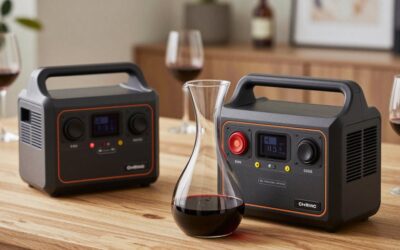
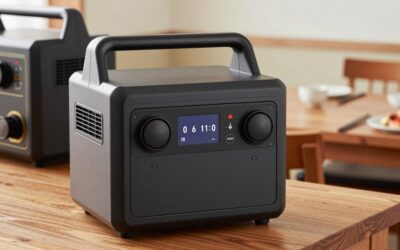
This is the scenario the Bluetti Pioneer Na was designed for. Most lithium power stations share a frustrating winter weakness: their cells cannot be charged below freezing, and they deliver noticeably less energy when cold. The Pioneer Na uses sodium-ion chemistry, which Bluetti says can charge and discharge at temperatures that would stop a typical LFP station. For winter storm outages, particularly in homes that get cold during long outages, that is a meaningful advantage.
What Bluetti claims for cold weather
According to Bluetti, the Pioneer Na can charge at temperatures down to about 5°F (-15°C) and discharge down to about -13°F (-25°C), retaining a large share of its capacity. Below roughly 14°F, Bluetti says charging is limited to a partial state of charge, and charging speed drops as temperatures fall. The unit holds about 900 Wh, delivers roughly 1,500 W continuously with a higher Power Lifting figure and weighs about 35 pounds. Check the current spec sheet and manual for exact cold-weather limits.
Why that matters in a real outage
| Situation | Typical LFP station | Pioneer Na (per Bluetti’s claims) |
|---|---|---|
| Battery at 25°F, solar panel in sun | Charging usually blocked until warmed above freezing | Can charge, at reduced speed and limited top state of charge |
| Battery at 0°F in a cold room | Reduced discharge capacity; may shut down near lower limit | Rated to discharge, with most capacity available |
| Stored in unheated garage for emergencies | Must warm before charging | More tolerant, though warmer storage still extends life |
In practice, this means you can leave the Pioneer Na in a cooling house or a cold vehicle and still expect it to work, and you can recharge from solar in freezing weather rather than waiting for the unit to warm up.
What 900 Wh can do in winter
Personal warmth
Two electric blankets on low at 50 to 70 W each can run for five to seven hours, or one blanket for most of a night plus phone and light needs.
Furnace blower
At 300 to 700 W, a furnace blower would run for roughly one to two and a half hours. That can warm a house once or twice. A licensed electrician must install a transfer switch or furnace inlet; never backfeed through an outlet.
Space heaters
Power Lifting mode is aimed at resistive loads like heaters and electric blankets, but a 1,500 W heater would drain the battery in about half an hour. Use heaters only for brief warm-ups.
Recharging in winter weather
The Pioneer Na’s cold charging ability pairs well with solar. Even at freezing temperatures, a 200 W panel on a clear day may add 200 to 500 Wh. Keep panels clear of snow and tilted steeply. For faster recovery, Bluetti quotes quick charging from AC combined with solar when the battery is in a moderate temperature range; cold slows that down.
If recharging from a generator, keep the generator at least 20 feet from the house, never in a garage, porch, shed or breezeway, and keep snow away from the exhaust. Install battery CO alarms near all sleeping areas; CO incidents spike in winter storms as people bring generators too close.
Idle draw and inverter use
Bluetti lists a moderate idle draw when the AC inverter is on. During a long outage, turn the inverter off when only USB devices are charging, and use the 12V outlet for compatible devices. Those habits add hours of runtime over a few days.
Limits to keep in mind
- Capacity is modest for all-day furnace operation or long outages without recharge.
- Sodium-ion is new in portable stations, so long-term freeze-thaw durability has less real-world data than LFP.
- It is not expandable.
FAQ
Can I leave the Pioneer Na in an unheated garage all winter?
Bluetti’s cold ratings suggest it can tolerate it better than LFP units, but moderate storage temperatures still help long-term battery life. Bring it inside when possible.
Does it need to be warmed before charging?
Not above its rated cold charging limit, according to Bluetti, though charging will be slower and may stop at a partial charge in very low temperatures.
Bottom line
The Bluetti Pioneer Na is one of the best-suited portable power stations for winter storm outages, especially in homes that get cold or when you want to recharge from solar in freezing weather. Its 900 Wh capacity limits heavy use, so focus it on personal warmth, communications, medical devices and short furnace sessions, and plan a way to recharge for longer storms.
Write Your Review
No reviews yet. Be the first to share your experience!