
🛒 Best Price Today on Amazon
Prime members get fast, free shipping on everything above, plus member-only deals. New members get a 30-day free trial — cancel anytime.
At 5,000 and 10,000 watt-hours, you’re no longer shopping for a portable power station in the camping sense. You’re designing a home battery backup system. Most setups at this scale are an expandable main unit plus one or more add-on battery packs, wired to your panel through a transfer switch or smart home hub. Whether you need 5 kWh or 10 kWh comes down to three things: how long your outages last, whether heating or cooling is on the must-run list, and how much solar you can add to refill the batteries.
What each capacity delivers
| Scenario (typical loads) | Average draw | 5,000Wh (~4,300Wh usable) | 10,000Wh (~8,600Wh usable) |
|---|---|---|---|
| Bare essentials: fridge, internet, LED lights, phones | 120-150W | ~29-36 hrs | ~57-72 hrs |
| Essentials + chest freezer + CPAP + TV evening | 200-250W | ~17-22 hrs | ~34-43 hrs |
| Essentials + gas furnace blower (winter) | 350-500W avg | ~9-12 hrs | ~17-25 hrs |
| Essentials + 1 HP well pump (typical family use) | 200-300W avg | ~14-22 hrs | ~29-43 hrs |
| Central AC, 3-ton (cycling ~50%) | 1,500-1,800W avg | ~2.5-3 hrs | ~5-6 hrs |
Usable energy assumes about 86% after inverter losses and some reserve. Your actual draw depends on appliance age, climate, and habits. Sizing from a week of smart-meter data or a plug-in energy monitor gives the best numbers.

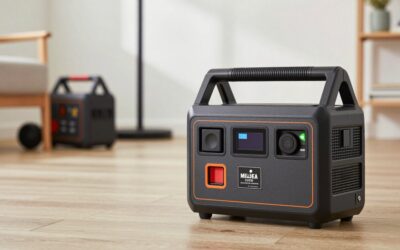
EF ECOFLOW 12kWh Portable Power Station: DELTA Pro 3 with 2 Extra Batteries
Included for '5000Wh vs 10000Wh Power Station: Which Size Do You Need?' as a relevant option in this category; details come from the product listing.
View on Amazon
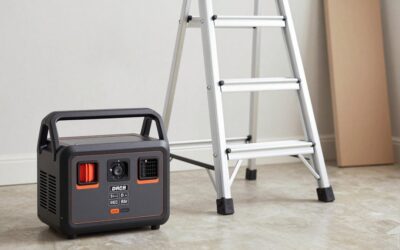
STARYLINE 1000W Portable Power Station 1024Wh LiFePO4 for Outdoor & Home
Included for '5000Wh vs 10000Wh Power Station: Which Size Do You Need?' as a relevant option in this category; details come from the product listing.
View on Amazon
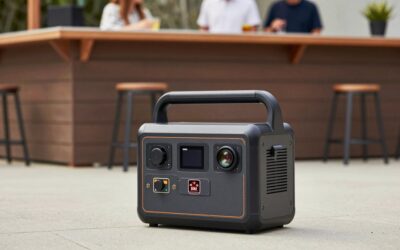
EBL Portable Power Station 1000W Solar Generator 999Wh for Home Backup
Included for '5000Wh vs 10000Wh Power Station: Which Size Do You Need?' as a relevant option in this category; details come from the product listing.
View on Amazon
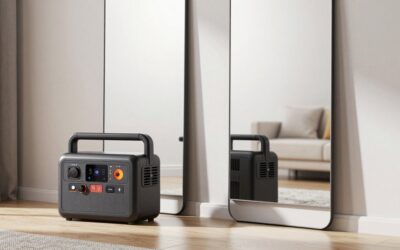
STARYLINE 1000W Portable Power Station 1024Wh LiFePO4 for Outdoor & Home
Included for '5000Wh vs 10000Wh Power Station: Which Size Do You Need?' as a relevant option in this category; details come from the product listing.
View on AmazonWhen 5,000Wh is enough
Short, infrequent outages with solar or a small generator
If most outages in your area last under a day, 5 kWh covers essentials overnight with room to spare. Add 1,500-2,500W of solar and a sunny day refills most of the battery, so moderate-length outages become sustainable for fridge, lights, and internet. Keeping a small inverter generator as a last resort also makes 5 kWh surprisingly resilient. The generator only needs to run a couple of hours a day, outdoors, at least 20 feet from the house, to top up the battery.
When 10,000Wh earns its cost
Multi-day outages, winter heating, or well water
Regions with multi-day storm outages, homes that depend on a well pump, and households that must keep a gas furnace blower running through a winter night all benefit from the second 5 kWh. It’s also the realistic minimum if you want a few hours of central AC during a heat-wave outage. Even then, a soft-start kit on the compressor, installed by an HVAC technician, is usually needed to keep the startup surge within the inverter’s limits.
Output power matters as much as capacity
Capacity is only part of the story. A 10 kWh system built on a single 6,000-7,200W inverter still can’t start a load that surges beyond that inverter’s limits. Many platforms allow two main units to be linked for 12,000-14,400W of output. That is what running a 4-ton AC or an electric range alongside other loads actually requires. Match continuous and surge output to your largest appliance first, then choose capacity.
Price and installation
Expandable portable-style systems typically land around $2,500-$4,500 for about 5 kWh and $5,000-$9,000 for about 10 kWh, before panel integration. Wall-mounted home batteries in the 10-13.5 kWh range, installed, often run $10,000-$16,000. Federal, state, and utility incentives for home batteries have changed recently and vary by location, so check current rules before budgeting. Any system that connects to your panel needs a transfer switch or listed backup gateway installed by a licensed electrician, and usually a permit. That hardware is what prevents backfeeding into utility lines.
Space, weight, and environment
Figure roughly 100-140 lb per 5 kWh for portable-style units, and 250-350 lb for a wall-mounted 10-13.5 kWh unit. Place batteries in a garage or utility room that stays within the manufacturer’s range, ideally 32-95°F. LiFePO4 cells shouldn’t be charged below freezing unless the unit self-heats, and heat speeds up aging. Sodium-ion alternatives handle cold better, though they’re heavier per kWh. Keep clearances for ventilation, and don’t store fuel cans, paint, or solvents beside the batteries.
A cost-per-hour perspective
For essentials-only households in areas with short outages, the second 5 kWh may sit unused for most of its life. For rural homes that lose power for two or three days several times a year, it’s the difference between a comfortable outage and running a generator at 3 a.m. Think about your worst realistic outage of the past five years, not your average one.
FAQ
Can 10kWh of battery run a house for a day?
For essentials, yes, and often two to three days. For a whole house with central AC or electric heat in use, 10 kWh may last only 4-8 hours.
Should I start with 5kWh and expand later?
That’s a smart approach on expandable platforms. Buy a main unit whose inverter can handle your largest appliance, then add battery packs as budget and experience allow. Confirm that expansion packs will remain available for your model.
Bottom line
A 5,000Wh system suits short outages and essential loads, especially when paired with solar or a small backup generator. A 10,000Wh system suits multi-day outages, well pumps, winter furnace duty, and limited AC use. Size the inverter to your biggest load first, then choose capacity.

Write Your Review
No reviews yet. Be the first to share your experience!