
🛒 Best Price Today on Amazon
Prime members get fast, free shipping on everything above, plus member-only deals. New members get a 30-day free trial — cancel anytime.
A backyard party generator works in a surprisingly demanding environment: kids running around, drinks spilling, cords laid across lawns, and neighbors a few yards away. The loads can include an inflatable blower that runs for hours, a projector that dislikes dirty power, and a speaker system that picks up electrical hum. Choosing well means balancing power, noise, clean output, and safety. This guide walks through the decision for people who host a few times a year and want reliable, low-drama power.
Step 1: Size for the busiest hour
Parties peak when everything is on: blower, music, lights, drinks, and maybe a warming tray.
| Party setup | Running watts | Starting surge | Suggested generator |
|---|---|---|---|
| Lights, speaker, beverage fridge | 150–300W | 400–600W | 1,000W inverter |
| Above plus projector | 300–650W | 600–900W | 1,000–2,000W inverter |
| Single bounce house blower + music + lights | 900–1,400W | 1,800–2,500W | 2,000–2,500W inverter |
| Two blowers or blower + slushie machine | 1,800–2,600W | 3,000–4,000W | 3,500–4,500W inverter |
| Electric smoker, roaster, blower, music | 2,500–3,500W | 3,500–5,000W | 4,500W+ inverter |
Inflatable blowers are motors, so they need extra surge capacity at start. A 1 HP blower can briefly draw roughly twice its running watts. Give yourself 20 to 30 percent headroom above the running total.
Step 2: Choose an inverter for clean, quiet power
Projectors, LED drivers, and speakers can buzz, flicker, or hum on generators with high harmonic distortion. An inverter generator delivers stable, low-distortion power, typically under 3 percent THD, and throttles down when loads are light. Inverters are also much quieter, often 50 to 58 dBA at 23 feet, versus 65 to 75 dBA for open-frame units. For a backyard, that difference decides whether guests have to raise their voices.
Step 3: Consider noise in your neighborhood
Check local noise ordinances; many towns restrict loud equipment in the evening. Point the exhaust and muffler side away from your guests and your neighbors’ windows. A fence, hedge, or shed between the generator and the party absorbs some sound, as long as airflow around the generator remains open and it is not enclosed.
Step 4: Plan cords and GFCI protection
Cords across a lawn are the most common party hazard.
- Use outdoor-rated 12-gauge cords for runs up to 50 feet with blowers or cooking appliances.
- Route cords along edges, under mats, or with cord covers where people walk.
- Use GFCI protection; many inverter generators have GFCI outlets, or add a portable GFCI adapter.
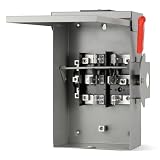
- Keep connections off wet grass using a covered connection box.
- Separate the blower’s cord from the music and lights so a blower trip does not kill the playlist.
Step 5: Runtime and fuel for a party
A 2,000 to 2,500W inverter at half load typically runs 4 to 6 hours on a tank of about 1 to 1.2 gallons. That covers most parties, but check before guests arrive. Fill the tank in advance so you do not refuel a hot engine with children nearby. Dual fuel models allow you to run on a propane grill cylinder, but keep a separate cylinder for the grill so you do not run out mid-cookout.
Step 6: Safe placement in the yard
| Placement rule | Reason |
|---|---|
| 20+ ft from house doors and windows | Keeps carbon monoxide out of the home |
| Downwind of the gathering | Exhaust drifts away from guests |
| Flat, dry, stable ground | Prevents tipping and water exposure |
| Behind a barrier or out of play zones | Hot muffler and moving air intake |
| Never under a party tent or canopy | Exhaust can accumulate quickly |
Step 7: Buy, rent, or borrow?
If you host a couple of parties a year and also want outage backup, buying a 2,000 to 3,500W inverter makes sense because it serves both roles. If you only need power for one big event with multiple inflatables, renting a larger quiet generator for the day may be cheaper. Party rental companies often include a generator option with bounce houses; ask about noise rating and fuel before booking.
FAQ
What size generator runs a bounce house?
A single bounce house blower of roughly 1 HP typically needs a 2,000 to 2,500W inverter generator, which also leaves room for music and lights. Two blowers usually need a 3,500W-class generator or two units in parallel.
Will a generator damage my speakers or projector?
An inverter generator with clean power is safe for speakers and projectors. Buzzing or flickering is more common on open-frame generators with higher harmonic distortion.
Bottom line
For backyard parties, choose a quiet inverter generator sized to your busiest hour: about 1,000W for lights and music, 2,000 to 2,500W for a single bounce house, and 3,500W or more for multiple blowers or electric cooking. Protect cords with GFCI and cord covers, place the generator downwind and away from play areas, and fill the tank before the first guest arrives.

Write Your Review
No reviews yet. Be the first to share your experience!