
🛒 Best Price Today on Amazon
Prime members get fast, free shipping on everything above, plus member-only deals. New members get a 30-day free trial — cancel anytime.
An ice fishing generator faces conditions few others do: subzero starts, blowing snow, a sled ride across rough ice, and a location a few yards from a tightly sealed shelter full of people. Choosing one for this role means prioritizing cold-start reliability, low weight, low noise, and above all safe operation around enclosed shanties. This guide is aimed at anglers with wheelhouses, hub shanty camps, or permanent shelters who want power for lights, electronics, a TV, battery charging, and small appliances.
Step 1: Keep the size small
Ice fishing loads are modest unless you bring kitchen appliances.
| Shanty setup | Running watts | Suggested generator |
|---|---|---|
| Lights, flasher chargers, phone, radio | 50–200W | 1,000W inverter |
| Above plus auger battery charger and TV | 200–500W | 1,000–2,000W inverter |
| Above plus coffee maker or small microwave | 1,000–1,700W | 2,000–2,500W inverter |
| Wheelhouse with 12V system charging and appliances | 1,200–2,500W | 2,500–3,500W inverter |
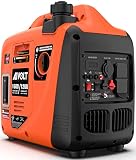
A 1,000 to 2,000W inverter covers most setups. Bigger units are heavier to drag across the ice and burn more fuel for little benefit.
Step 2: Cold-start features
| Feature | Why it matters on the ice |
|---|---|
| Electric start with recoil backup | Recoil works when the battery is cold and weak |
| Easy-grip choke and controls | Operable with gloves |
| Winter-weight oil per manual | Easier cranking in subzero temps |
| Fuel shutoff valve | Run carburetor dry to avoid stale fuel and icing |
| Enclosed design | Protects controls from blowing snow |
Bring the generator’s starter battery into the heated shanty overnight if it is removable, or keep it on a small maintainer at home between trips. Fresh, stabilized fuel makes a bigger difference than any other factor in cold starts.
Step 3: Weight for sled transport
You will likely haul the generator on a sled or in a truck to a wheelhouse. 1,000W-class inverters commonly weigh 25 to 35 lb, and 2,000W-class inverters 40 to 55 lb. Strap the generator upright on the sled, fuel valve closed, and cushion it from jarring over pressure ridges.
Step 4: Placement and carbon monoxide safety
This is the most important part of the decision. Ice shanties are small and sealed against wind, which is exactly the condition where carbon monoxide becomes deadly.
- Run the generator outside, never inside a shanty, wheelhouse, or enclosed porch.
- Place it at least 20 feet away, downwind, with exhaust pointed away from the shelter.
- Watch for snow drifts or wind shifts that push exhaust toward doors or vents.
- Use a battery-powered CO alarm inside the shelter at all times.
- Choose a model with automatic CO shutoff for extra protection.
Step 5: Noise and vibration
Engine noise and vibration may travel through the ice. Many anglers try to keep generators away from their holes, especially in shallow water. In shanty villages, neighbors appreciate a generator that runs at 50 to 55 dBA at 23 feet in economy mode. Set the generator on a rubber mat or piece of plywood to reduce vibration and keep it from melting into the ice surface.
Step 6: Fuel planning in the cold
| Trip length | Daily run time | Fuel estimate (1,000–2,000W inverter) |
|---|---|---|
| Day trip | 2–4 h | 0.3–0.8 gal |
| Weekend | 4–8 h/day | 1.5–3 gal total |
| Week in wheelhouse | 6–10 h/day | 5–10 gal total |
Gasoline works reliably in cold if fresh. Propane pressure drops in extreme cold; dual fuel generators on small cylinders can struggle below about 10 degrees, so bring gasoline as the primary fuel for very cold trips.
Step 7: Consider a hybrid
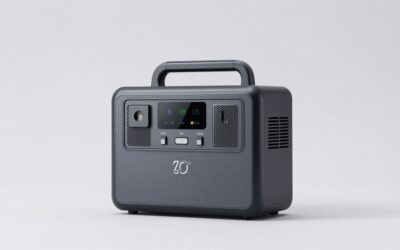
Many wheelhouses use a battery bank or power station for overnight loads and run the generator a few hours a day to recharge. This limits engine run time, reduces fuel, and means no generator runs while everyone sleeps.
Step 8: End-of-season care
Ice season ends with slush, standing water, and a generator that has been wet for weeks. Before storage, run the carburetor dry or drain it, change the oil, check the air filter for moisture, and let the unit dry fully indoors. Spray exposed metal with a light corrosion inhibitor, since road salt and meltwater are hard on frames and fasteners.
FAQ
What is the best generator size for ice fishing?
For most anglers, a 1,000 to 2,000W inverter generator is ideal: light enough to sled, quiet, and enough for lights, electronics, charging, and a small coffee maker.
How far should a generator be from an ice shack?
At least 20 feet, downwind, with exhaust pointed away from the shelter. Check placement as wind and snow change, and always use a CO alarm inside.
Bottom line
For ice fishing, choose a light 1,000 to 2,000W inverter generator with reliable cold-start features, a fuel shutoff, and CO protection. Place it well outside and downwind of your shelter, cushion vibration, bring fresh fuel, and pair it with a battery for silent overnight power.



Write Your Review
No reviews yet. Be the first to share your experience!