
🛒 Best Price Today on Amazon
Prime members get fast, free shipping on everything above, plus member-only deals. New members get a 30-day free trial — cancel anytime.
Photographers, videographers, and drone operators working away from mains power have a specific power problem: lots of battery charging, some continuous loads like monitors and lights, sensitive chargers that dislike rough power, and a set where engine noise can ruin audio. A generator for location work must be sized to the charging rotation, deliver clean power, stay far enough away to keep sound clean, and run through a full shoot day. This guide explains how to choose one.
Step 1: Map your charging rotation
Drone and camera workflows rely on rotating batteries: fly or shoot on one set while charging another. The generator must keep up with that rotation.
| Gear | Battery or device energy | Charger draw |
|---|---|---|
| Consumer or prosumer drone battery | 40–100Wh | 60–120W per charger |
| Multi-battery drone charging hub | 3–4 batteries in sequence | 100–240W |
| Larger professional drone packs | 100–300Wh+ each | 200–500W+ |
| Mirrorless camera battery | 15–20Wh | 10–25W |
| Cinema camera V-mount battery | 90–250Wh | 60–200W per channel |
| Laptop for offloading and edits | 50–100Wh | 65–140W |
| On-camera or field monitor | — | 10–30W |
| LED light panel | — | 50–300W each |
A small drone crew with two chargers, camera batteries, and a laptop typically draws 300 to 600W. A production with V-mount chargers and several LED panels can draw 1,000 to 2,000W.
Step 2: Choose clean power
Battery chargers, laptop power supplies, and LED drivers are electronic loads that prefer a stable sine wave. Inverter generators produce low total harmonic distortion, typically under 3 percent, similar to grid power. Conventional generators with higher distortion can cause chargers to run hot, fault, or charge slowly, and some LED panels flicker on camera. For location work, choose an inverter generator.
Step 3: Size for the peak of the rotation
| Location setup | Continuous draw | Suggested generator |
|---|---|---|
| Solo drone pilot, 2 chargers + phone + laptop | 250–450W | 1,000W inverter |
| Photo shoot with camera batteries, laptop, 2 LED panels | 400–800W | 1,000–2,000W inverter |
| Video crew with V-mount chargers, monitors, 3–4 LED panels | 1,000–1,800W | 2,000–3,000W inverter |
| Larger set with many lights and a DIT station | 2,000–3,000W | 3,500W+ inverter or parallel pair |
Keep continuous draw at or below about 70 to 80 percent of the generator’s running rating so the engine is not working at its limit all day.
Step 4: Noise and distance on set
For stills and drone-only work, a generator 30 to 50 feet away rarely matters. For video with sound, generator noise is a serious problem. Look for units rated around 48 to 55 dBA at 23 feet in eco mode, and plan to place them 100 feet or more from the recording position, behind a vehicle or terrain feature, with the exhaust side pointing away. Budget for a heavy-duty 12-gauge cord of 100 feet to a distribution box on set; lighter cords drop voltage and heat up over that distance.
Step 5: Runtime for a shoot day
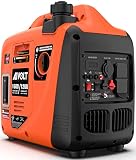
A 1,000 to 2,000W inverter at a quarter to half load typically runs 4 to 10 hours per tank. Check the runtime at your expected load and plan refueling during breaks, never while the engine is hot or near equipment. Bring an approved fuel can and a funnel, and keep fuel away from gear cases.
Step 6: Features for creative crews
- USB-C and USB-A ports for phones and small accessories.
- Parallel capability so two light units can power a larger set.
- Eco mode to reduce noise and fuel at light load.
- CO shutoff sensor for safety around vans and trailers.
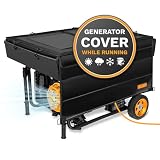
- A cover or shelter for rain without enclosing the exhaust.
Step 7: Consider a hybrid with a power station
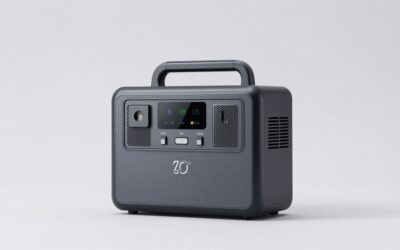
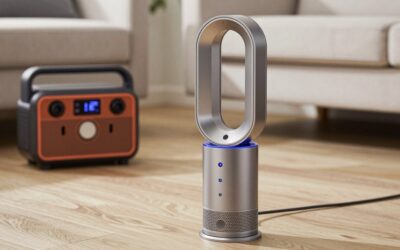
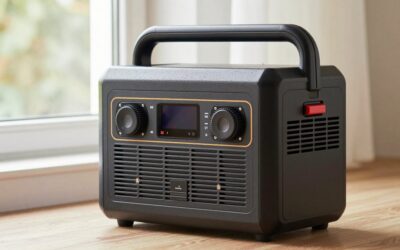
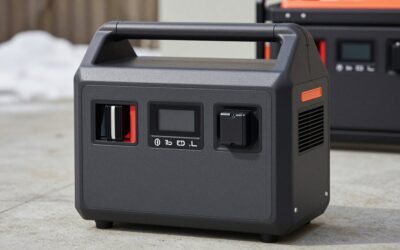
Many crews run a power station of 1,000 to 2,000Wh on set for silent charging and monitors, while a generator far away recharges a second station or feeds chargers during non-audio breaks. This keeps the set quiet during takes and still provides unlimited energy across multi-day shoots.
FAQ
What size generator do I need to charge drone batteries?
A 1,000W inverter generator is enough for most drone pilots running two chargers plus a laptop. Crews charging larger professional packs or several V-mount batteries at once should look at 2,000W or more.
Is it safe to charge drone batteries from a generator?
Yes, from an inverter generator with clean power, using the manufacturer’s chargers. Avoid conventional generators with high distortion, and never charge batteries unattended.
Bottom line
For location drone and camera work, choose a quiet inverter generator sized to your charging rotation plus lights: about 1,000W for solo pilots, 2,000 to 3,000W for video crews with lights. Place it far from recording positions with a heavy cord, keep draw under 80 percent of capacity, and pair it with a power station for silent charging on set.


Write Your Review
No reviews yet. Be the first to share your experience!