
🛒 Best Price Today on Amazon
Prime members get fast, free shipping on everything above, plus member-only deals. New members get a 30-day free trial — cancel anytime.
- Quick answer: which 5000-watt generator for which outage
- How we chose
- Is 5000 watts the right size for a power outage?
- What matters on a 5000-watt portable generator
- Comparison table: eight 5000-watt-class generators
- The eight generators in detail
- Worked example: sizing and fuel for a three-day outage
- Decision matrix: choose by situation
- Transfer-switch readiness
- Safety
- Maintenance before the storm
- Frequently asked questions
The Westinghouse WGen5300 and its dual-fuel sibling, the WGen5300DFc, are the best 5000-watt-class portable generators for most home power outages, because they pair a true 5,000-plus running-watt rating with an L14-30 outlet for a transfer switch. The Generac GP5500 is the traditional gasoline-only value pick, the DuroMax XP5500EH and WEN DF5600X are the dual-fuel value options, and the Honda EM5000SX is the premium, quiet-running choice for people who want long service life and are willing to pay for it.
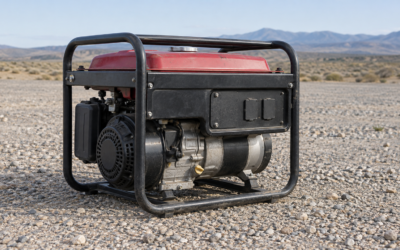
A 5000-watt portable generator sits in the sweet spot for outage planning. It is large enough to run a refrigerator, a sump pump, a furnace blower, lights and a few small loads at the same time, yet small enough to move on a wheel kit and run for hours on a single tank. The number on the box, however, rarely tells the whole story. Rated running watts, starting (peak) watts, fuel type, outlet layout and runtime at half load all differ between models that share the same marketing label. This guide explains which wattage you really need, how to match it to your loads, and how eight popular models compare.

Oxseryn 5000W Inverter Generator Gas Powered, Portable Open Frame Generator | Pure Sine Wave, RV Ready, 30A Outlet, ECO Mode, 70dBA Low Noise, 10H Long Runtime, EPA Compliant
Included for 'Best 5000 Watt Portable Generators for Power Outages' because the listing specifies Portable Open Frame Generator and Pure Sine Wave, details this guide uses to compare options.
View on Amazon
Oxseryn 5000-Watts Portable Inverter Generator, Gas Generator for Home Backup, 30A Outlet, RV Ready, ECO Mode, 60Lbs, EPA Compliment
Included for 'Best 5000 Watt Portable Generators for Power Outages' because the listing specifies Gas Generator for Home Backup and 30A Outlet, details this guide uses to compare options.
View on Amazon
Oxseryn 5000-Watts Inverter Generator, Portable Gas Generator | for Camping, Home Use, 70dB, 60Lbs, RV Ready, ECO Mode, EPA Compliment
Included for 'Best 5000 Watt Portable Generators for Power Outages' because the listing specifies Portable Gas Generator and for Camping, details this guide uses to compare options.
View on Amazon
Oxseryn Power Equipment 4400 Watts Inverter Generator Gas Powered, Portable Open Frame Generator, Low Noise with ECO Mode, RV Ready, Emergency Home Backup
Included for 'Best 5000 Watt Portable Generators for Power Outages' because the listing specifies Portable Open Frame Generator and Low Noise with ECO Mode, details this guide uses to compare options.
View on AmazonQuick answer: which 5000-watt generator for which outage
- Best all-round for home backup: Westinghouse WGen5300 (gasoline) or WGen5300DFc (dual-fuel).
- Best gasoline-only value: Generac GP5500.
- Best dual-fuel value: DuroMax XP5500EH or WEN DF5600X.
- Best with natural-gas option: Champion 5000-watt-class tri-fuel model.
- Best with remote start and CO protection: Pulsar PG5000BiSRCO.
- Premium, long-life: Honda EM5000SX.
How we chose
This guide is research-based. We compared manufacturer specification pages, independent trade-site comparisons and published owner reports, and we did not run physical bench trials. A generator made the list if it is a current portable model in the 4,000 to 5,500 running-watt class, if it has a 120/240-volt L14-30 outlet or an equivalent 30-amp 240-volt output, and if it carries carbon monoxide protection or comparable safety features. Sources disagree on running watts for a few models (the same model name often covers variants with different ratings), so we describe those specs by class and flag them. Check the exact model number, fuel type and outlet panel on the manufacturer page before you buy.
Is 5000 watts the right size for a power outage?
Most homes in a multi-day outage need between 3,000 and 5,000 running watts for essentials. The right size depends less on the label and more on what you plan to run and, most importantly, what starts with a surge.
Typical loads and surges
These are typical planning figures for common appliances, not exact ratings. Check the nameplate on your own equipment.
| Load | Running watts (typical) | Starting watts (typical) |
|---|---|---|
| Refrigerator or freezer | 600 to 800 | 1,800 to 2,500 |
| Sump pump (1/3 to 1/2 HP) | 800 to 1,100 | 1,800 to 2,500 |
| Gas or oil furnace blower | 500 to 800 | 1,200 to 2,000 |
| LED lights (several rooms) | 100 to 200 | None |
| Modem, router, phone and laptop chargers | 100 to 250 | None |
| Microwave | 1,000 to 1,500 | Same as running |
| Well pump (1/2 HP) | 1,000 to 1,500 | 2,500 to 3,500 |
| Window air conditioner (10,000 BTU) | 900 to 1,200 | 2,500 to 3,000 |
Why 5000 watts is the sweet spot
At about 4,000 to 5,300 running watts, a generator covers a refrigerator, sump pump and furnace blower together with lighting, and it still has room for a microwave or a window air conditioner if you stagger the loads. At 3,500 watts you must switch things off to start the sump pump. At 7,500 watts and above you are buying a heavier, thirstier machine you will rarely use fully.
What matters on a 5000-watt portable generator
1. Running watts, not starting watts
Running (rated) watts are what the generator can supply continuously. Starting (peak or surge) watts are a short burst, usually a few seconds. Many models advertise a bigger number like 5,500 or 6,600 starting watts, while the true continuous output is 4,000 to 4,500. Size by running watts, then check that the surge covers your largest motor start.
2. Fuel type
Gasoline-only models are simple and have the longest tank-to-runtime ratio per refill. Dual-fuel (gasoline and propane) models let you store propane almost indefinitely, but they usually lose around 10 percent of output on propane. Tri-fuel models add natural gas, which can give very long unattended runtime if you have a gas line and a proper connection, but they give up output again on that fuel and need correct installation.
3. Outlets, especially L14-30
An L14-30R outlet provides 120 and 240 volts at up to 30 amps and is the standard connection for a manual transfer switch or generator inlet box. Also look for a 120-volt 30-amp TT-30 RV outlet and at least two household 20-amp outlets. A 30-amp 240-volt outlet tops out at about 7,200 watts, well above what a 5000-watt generator delivers, so the outlet will not be the limit.
4. Electric start and wheel kit
A push-button electric start is worth having in an outage, especially in the cold. A wheel kit and folding handle matter because these units weigh roughly 85 to 130 pounds, and a heavier tri-fuel model more.
5. Fuel runtime
Look for tank size and the manufacturer’s runtime at 50 percent load. Tanks run from about 3 to 4.7 gallons on typical value models, and published half-load runtimes range from about 8 to 14 hours. Lower-output inverter-style models run quieter and longer per gallon at partial load.
6. Carbon monoxide protection
Choose a model with a built-in CO sensor that shuts the engine down. It is a backup, not a substitute for correct placement outdoors, and it never replaces working CO alarms indoors.
7. Noise and weight
Conventional open-frame 5000-watt generators run around 65 to 70 dB at a typical measuring distance, and a few quieter designs run lower. Check the manufacturer’s dB figure and the distance it was measured at, and consider your neighbors and local noise rules.
Comparison table: eight 5000-watt-class generators
| Model | Running watts (class) | Fuel | L14-30 | Electric start | CO protection | Best role |
|---|---|---|---|---|---|---|
| Westinghouse WGen5300 | About 5,300 gas | Gasoline | Yes | Yes | Yes | Home backup |
| Westinghouse WGen5300DFc | About 5,300 gas, about 4,800 propane | Dual-fuel | Yes | Yes | Yes | Home backup with propane option |
| Generac GP5500 | About 5,500 gas | Gasoline | Yes (L14-30 class) | Recoil on base class, check variant | Varies by version | Gasoline value |
| DuroMax XP5500EH | About 4,500 gas | Dual-fuel | Yes | Yes | Check version | Dual-fuel value |
| WEN DF5600X | About 4,500 gas | Dual-fuel | Yes | Yes | Yes | Dual-fuel value |
| Champion 5000-watt-class tri-fuel | About 4,000 gas (varies by model) | Gas, propane, natural gas | Yes | Yes | Yes | Natural-gas backup |
| Pulsar PG5000BiSRCO | About 4,000 gas | Dual-fuel | Check outlet panel | Remote and electric | Yes | RV and camping crossover |
| Honda EM5000SX | About 4,500 | Gasoline | Yes (check panel) | Yes | Yes | Premium, long life |
The eight generators in detail
Westinghouse WGen5300
Spec line: about 5,300 running watts · about 6,600 starting watts · gasoline · about 4.7 gal tank · electric start · L14-30R and TT-30R outlets
Best for: homeowners who want a full 5,000-watt-class output on gasoline for a transfer switch.
Skip if: you want to store propane instead of gasoline.
- Pros: high running output for the class, large tank, transfer-switch-ready outlets, wheel kit and electric start.
- Cons: heavy, and gasoline needs stabilizer and rotation.
Westinghouse WGen5300DFc
Spec line: about 5,300 running watts on gasoline · about 4,800 on propane · dual-fuel · electric start · L14-30R and TT-30R outlets
Best for: households that want a propane option for long-term fuel storage.
Skip if: you only plan to run on gasoline and want to save weight and cost.
- Pros: propane stores for years, strong running output for the class, transfer-switch-ready.
- Cons: output drops on propane, and you must keep a regulator and hose in good condition.
Generac GP5500
Spec line: about 5,500 running watts · about 6,875 starting watts · gasoline · L14-30 class outlet · wheel kit
Best for: shoppers who want a high-output gasoline generator from a familiar brand at a mid-range cost.
Skip if: you need electric start or CO shutdown as a guaranteed feature; verify the exact version since specs vary.
- Pros: strong running output, wide parts and service availability.
- Cons: an older design in some listings, and features differ between versions.
DuroMax XP5500EH
Spec line: about 4,500 running watts · about 5,500 starting watts · dual-fuel · about 4 gal tank · electric start · about 124 lb
Best for: budget-minded buyers who want dual-fuel flexibility and a transfer-switch outlet.
Skip if: you need more than 4,500 running watts on gasoline, or a quiet unit.
- Pros: dual-fuel at a value price tier, electric start, wide availability.
- Cons: lower running output than the 5300 class, loud, and runtime on a full tank is moderate.
WEN DF5600X
Spec line: about 4,500 running watts on gasoline · about 5,600 starting watts · dual-fuel · about 4.3 gal tank · CO shutdown · about 124 lb
Best for: value-focused buyers who want dual-fuel and a built-in CO safeguard.
Skip if: you want the highest running output or long-term brand service network.
- Pros: dual-fuel, CO shutdown, long runtime for the tank size.
- Cons: loud, heavy, and lower output on propane.
Champion 5000-watt-class tri-fuel model
Spec line: about 4,000 running watts on gasoline (varies by model) · tri-fuel: gasoline, propane, natural gas · about 5 gal tank · CO shutoff · about 128 lb
Best for: homes with a natural-gas line who want unattended long runtime during extended outages.
Skip if: you want the maximum running output; confirm the exact model rating before you buy.
- Pros: three fuel options, CO shutoff, large tank.
- Cons: heavy, output is lower on gaseous fuels, and natural gas hookup needs correct installation.
Pulsar PG5000BiSRCO
Spec line: about 4,000 running watts · about 5,000 starting watts · dual-fuel · about 3 gal tank · remote start · CO sensor · about 78 lb
Best for: campers and RV owners who also want backup power and a lighter unit.
Skip if: you need long half-load runtime; the published figure is shorter than most.
- Pros: light for the class, remote start, CO sensor.
- Cons: smaller tank and shorter runtime, and outlet layout should be verified for transfer-switch use.
Honda EM5000SX
Spec line: about 4,500 running watts · gasoline · about 6.2 gal tank · electric start · CO-Minder system · about 217 lb
Best for: owners who want long service life, refined running and a large tank, and will pay a premium tier for it.
Skip if: weight, purchase cost or propane compatibility matter most.
- Pros: strong reputation for durability, large tank, CO safety system, quieter operation than most open-frame designs.
- Cons: very heavy, premium cost tier, lower output than a 5300 gas model.
Worked example: sizing and fuel for a three-day outage
Suppose you want to run a refrigerator, a 1/2 HP sump pump, a furnace blower, lights and your internet gear.
- Add running watts. Refrigerator 700, sump pump 1,000, furnace blower 600, lights 150, modem and chargers 150. Total running load is 2,600 watts.
- Add the largest surge on top. The sump pump surge is about 2,200 starting watts, which is about 1,200 above its running load. Starting watts needed are roughly 2,600 plus 1,200, or 3,800 watts, so the loads fit into both the running and surge limits of every 4,000 to 5,300-watt model above.
- Check loading. A 4,500-watt generator running 2,600 watts is at about 58 percent load, which is a healthy range. At 4,000 running watts the load is 65 percent, still fine.
- Estimate fuel. At a 50 to 60 percent load, a generator in this class burns around 0.4 to 0.5 gallons per hour (an estimate, since models vary). Over 72 hours that is roughly 29 to 36 gallons, which is six to eight refills of a 4.5-gallon tank, or about 30 to 36 gallons of gasoline on hand.
- Add a second large load. If you add a 10,000-BTU window air conditioner (about 1,000 running watts), the running total reaches 3,600 watts and the start surge reaches about 5,100 watts. A 5,300-class unit handles it; a 4,000-watt unit does not.
Result: a 4,500-watt unit covers the base essentials with margin, and a 5,300-watt unit covers the base load plus one large motor. Use the real nameplate numbers for your appliances before you buy.
Decision matrix: choose by situation
| If you… | Choose | Why |
|---|---|---|
| Want maximum running watts for the class | Westinghouse WGen5300 or Generac GP5500 | 5,300 to 5,500 class running output |
| Want to store fuel for years | Dual-fuel with propane (WGen5300DFc, DuroMax, WEN) | Propane keeps without degrading |
| Have a natural-gas line | Tri-fuel Champion | Long unattended runtime |
| Camp or RV as well | Pulsar PG5000BiSRCO | Lighter, remote start |
| Prioritize long life and quiet | Honda EM5000SX | Premium build, CO system |
| Only need fridge, lights and phones | A smaller inverter generator or power station | Less fuel and noise |
Transfer-switch readiness
- Use an L14-30 inlet and a manual transfer switch or interlock kit installed by a licensed electrician. This is the safe way to power a home panel.
- Never backfeed through a dryer or wall outlet with a male-to-male cord. It can energize utility lines and endanger line workers and neighbors.
- Use a heavy-duty 30-amp generator cord of the right gauge and length, and keep it short.
- Check the neutral and ground bonding of your generator against the transfer switch type with the electrician, since some switches require a floating-neutral generator and others a bonded one.
Safety
- Run it outdoors only, at least 20 feet from the house, with the exhaust pointed away from doors, windows and vents. Never run a generator in a garage, basement or near an open window.
- Install battery-powered or battery-backup carbon monoxide alarms on every level and near sleeping areas. A generator CO shutoff is not a replacement.
- Let the engine cool before refueling. Store fuel in approved containers away from living spaces and ignition sources.
- Keep the generator dry. Use a purpose-built generator tent or canopy with open sides, not a tarp that traps exhaust.
- Use ground-fault protection for outdoor extension cords and keep cords undamaged.
- Do not overload the generator. Start the largest motor first, then add smaller loads.
- Do not use propane indoors, and keep propane cylinders upright and outside.
Maintenance before the storm
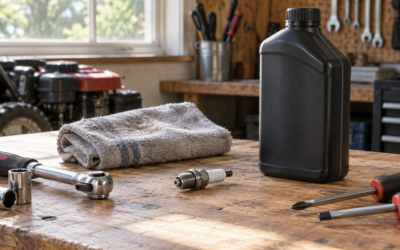
- Run the generator under load for 20 to 30 minutes every few months.
- Change oil on the schedule in the manual, and check it before every run.
- Use fuel stabilizer in gasoline and rotate stored fuel; run the carburetor dry before long storage if the manual says to.
- Keep the air filter and spark plug clean and replace them as specified.
- Confirm that the wheel kit, handle and cord are in good condition and that you have the right adapter.
Frequently asked questions
Is a 5000-watt generator enough to run a house?
It is enough for essentials: refrigerator, sump pump, furnace blower, lights and electronics, plus one large motor if you stagger the loads. It is not enough to run central air conditioning and an electric range together.
What is the difference between running and starting watts?
Running watts are continuous output, while starting watts are a short surge for motor start-up. Size by running watts and make sure the surge covers the largest motor start.
Do I need an L14-30 outlet?
Yes if you plan to connect to a transfer switch or inlet box. L14-30 supplies 120 and 240 volts at 30 amps and is the common standard for home backup connections.
Is dual-fuel worth it?
Often yes for outage prep, because propane stores for years without degrading. Expect roughly 10 percent less output on propane than on gasoline.
How long will a 5000-watt generator run on one tank?
Published runtimes at half load are about 8 to 14 hours for tanks of 3 to 6 gallons, depending on model. At heavier loads, runtime drops accordingly.
Can I run a sump pump and refrigerator on the same generator?
Yes. A 4,500-watt generator handles both with margin if the sump pump is 1/2 HP or smaller and you start the larger motor first.
How far from the house should the generator be?
At least 20 feet, with the exhaust pointing away from the house and any neighbor’s windows. Place it on a level, dry surface under an open-sided cover.
Is an inverter generator better than a 5000-watt open-frame one?
Inverter models are quieter and more fuel-efficient at partial load, but large inverter units in this class cost more. An open-frame model is cheaper per watt and fine for outdoor outage use.


Write Your Review
No reviews yet. Be the first to share your experience!