
🛒 Best Price Today on Amazon
Prime members get fast, free shipping on everything above, plus member-only deals. New members get a 30-day free trial — cancel anytime.
- Quick Picks at a Glance
- How We Chose
- What Daily Use Changes
- Conventional vs Inverter vs Diesel for Long Runtime
- Product Reviews
- Comparison Table
- Worked Example: Fuel Economy and Refuel Frequency
- Decision Matrix: Which Generator for Which Daily Job
- Buying Criteria and Thresholds
- Daily-Use Maintenance Checklist
- Safety
- Frequently Asked Questions
- Bottom Line
The best generators for daily use and long runtime are the Honda EU7000iS if you want the quietest and most fuel-efficient option, the Westinghouse WGen9500DF or Champion 7500-watt dual fuel if you want high output and fuel flexibility on a budget, the Generac GP8000E for a conventional workhorse, and the Generac XD5000E diesel if hours per tank matter more than weight and noise. One honest caveat first: almost every portable generator is designed for intermittent, standby-style use, so running one every day means you must choose by oil service interval, load percentage and warranty terms, not only by wattage. This guide is for off-grid cabin owners, tradespeople and work-site crews who run a generator for hours each day.
Quick Picks at a Glance
- Best overall for quiet daily running: Honda EU7000iS
- Best high-output dual fuel: Westinghouse WGen9500DF
- Best value dual fuel: Champion 7500-watt dual fuel
- Best conventional workhorse: Generac GP8000E
- Best mid-size conventional: Generac GP6500
- Best diesel for hours per tank: Generac XD5000E
- Best compact diesel for light daily loads: Yanmar YDG3700W-6EI
- Best inverter with big output: Champion 201004 inverter
How We Chose
This ranking comes from research into manufacturer data and published comparison guides, not first-hand evaluation. We began with the usual home-and-job-site portables, then filtered on what matters when a generator runs daily: rated watts versus surge watts, published runtime at half load, engine type (conventional, inverter or diesel), noise, fuel options, and warranty. Where sources disagreed, for example on the Honda EU7000iS tank size or the Westinghouse running watts, we used the manufacturer-style figure or left the spec out. We did not use any rating counts or scores. Specs you cannot confirm, such as oil change intervals for each model, are noted as items to check in the owner’s manual before you buy.

PowerSmart 4000 Watt Portable Inverter Generator for Home Use | Super Quiet <59dBA, 8H Long Runtime, Parallel Ready, Eco Mode, <3% THD Clean Power
Included for 'Best Generators for Daily Use and Long Runtime' because the listing specifies Super Quiet <59dBA and 8H Long Runtime, details this guide uses to compare options.
View on Amazon
Efurden 6000W Portable Inverter Generator, Open Frame Gas Powered Generator for Home Use, 30A RV Ready, 3-Gallon Fuel Tank for Camping, Jobsite and Emergency Backup
Included for 'Best Generators for Daily Use and Long Runtime' because the listing specifies Open Frame Gas Powered Generator for Home Use and 30A RV Ready, details this guide uses to compare options.
View on Amazon
POXURIO 2550-Watt Portable Inverter Generator for Home Use, 1.06Gallon Large Fuel Tank Up to 10 Hours Use, 120V Gas Powered Generator Super Quiet - EPA Compliant-Blue
Included for 'Best Generators for Daily Use and Long Runtime' because the listing specifies 1.06Gallon Large Fuel Tank Up to 10 Hours Use and 120V Gas Powered Generator Super Quiet, details this guide uses to compare options.
View on Amazon
POXURIO 2450-Watt Portable Inverter Generator for Home Use, Super Quiet Small 120V Gas Generator for Camping, 1.6 Gallon Gas Tank for 8.3 Hours Use, EPA Compliant
Included for 'Best Generators for Daily Use and Long Runtime' because the listing specifies Super Quiet Small 120V Gas Generator for Camping and 1.6 Gallon Gas Tank for 8.3 Hours Use, details this guide uses to compare options.
View on AmazonWhat Daily Use Changes
A generator that runs two hours during a storm and a generator that runs eight hours every day face different failure modes. Think of daily use as a different duty cycle.
Rated watts, not surge watts
Surge (starting) watts last for a few seconds and only matter when a motor starts. For daily use, size by rated (running) watts and aim to keep the load at about 50 to 75 percent of the rating. A generator held near 100 percent runs hot, burns more fuel per kilowatt-hour and wears faster. Running far below 25 percent is also a problem for conventional and diesel engines.
Hours per tank
Published runtime is usually quoted at 50 percent load, so use it as a planning number. Divide the hours by your daily running time to see how often you must refuel. A unit that runs 12 hours at half load can cover a full workday on one fill, while a 6-hour unit needs a mid-shift refill.
Oil change interval
Oil is often the real limit on continuous running. Many portable engines call for oil changes in the range of every 50 to 100 hours after an initial break-in change, but the schedule varies by model, so confirm in the manual. At eight hours a day, that is an oil change every one to two weeks.
Warranty and duty rating
Residential portables often have shorter coverage, and some manufacturers limit coverage for commercial or prime-power use. If the generator will be your main power source, read the warranty terms about continuous operation before purchase.
Conventional vs Inverter vs Diesel for Long Runtime
Conventional open-frame
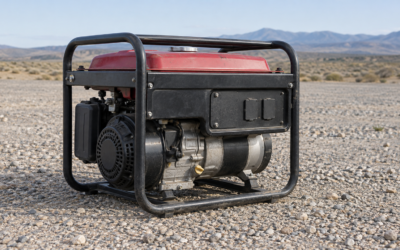
The Generac GP8000E and GP6500 and the Champion dual-fuel models are conventional designs. They are the lowest cost per watt, easy to service and tolerant of heavy loads. They run the engine at a fixed speed, so they are louder and use more fuel at light loads.
Inverter
The Honda EU7000iS and the Champion 201004 inverter adjust engine speed to the load. That cuts fuel use and noise at partial load and gives clean power for electronics. The trade-off is a much higher price per watt for premium models.
Diesel
The Generac XD5000E and the Yanmar YDG3700W-6EI offer the best fuel economy under steady load and long engine life. They are heavy, louder than inverters and more expensive upfront. For daily use at a cabin or work site where fuel logistics matter, they deserve a close look.
Product Reviews
1. Honda EU7000iS
Spec line: 5,500 rated watts · 7,000 maximum watts · 5.1-gallon tank · about 6.4 hours at rated load, about 16 hours at one-quarter load · 52 to 58 dB(A) · inverter · gasoline
Best for: cabin owners and mobile crews who run a lot of hours and want low noise and fuel economy.
Skip if: you want the lowest price or need more than 5,500 watts continuously.
- Pros: very quiet for its size; efficient at light loads; clean power for electronics; strong reputation for long service life.
- Cons: premium price; gasoline only; rated output is lower than some conventional models that cost less.
2. Westinghouse WGen9500DF
Spec line: 9,500 running watts on gasoline · 8,500 running watts on propane · 12,500 starting watts · about 12 hours at 50% load · dual fuel · 3-year warranty (as listed in guides)
Best for: work sites and larger cabins where high output and a propane option matter.
Skip if: you need a quiet unit or must carry it by hand.
- Pros: high output; dual fuel gives a long-storage option with propane; published 12-hour half-load runtime; multi-year warranty.
- Cons: conventional engine noise; heavy; some sources list lower running watts, so confirm the exact version.
3. Champion 7500-Watt Dual Fuel (Electric Start)
Spec line: 7,500 running / 9,375 starting watts on gasoline · 6,750 running / 8,400 starting watts on propane · about 8 hours at 50% load · dual fuel · electric start
Best for: value-minded buyers who want propane flexibility and 7,500 watts.
Skip if: you need a full day on a tank or very quiet running.
- Pros: strong output for the money; propane output covers many daily loads; electric start.
- Cons: 8 hours at half load means a refill during a long workday; conventional noise.
4. Generac GP8000E
Spec line: 8,000 running watts · 10,000 starting watts · about 73 dB · about 10 to 11 hours at 50% load · conventional gasoline · electric start
Best for: tradespeople who want a straightforward gasoline workhorse at a moderate price.
Skip if: you want propane flexibility or a quiet generator.
- Pros: high rated output; simple controls; widely available service parts.
- Cons: loud at about 73 dB; fuel use rises at light loads; gasoline storage is limited.
5. Generac GP6500
Spec line: 6,500 running watts · 8,125 maximum starting watts · conventional gasoline
Best for: cabin and shop loads of 3,000 to 5,000 watts, where you want to stay near half load.
Skip if: your daily load exceeds about 5,000 watts.
- Pros: a sensible size for many daily loads; straightforward maintenance.
- Cons: published runtime and oil interval vary by version, so check the manual; conventional noise.
6. Generac XD5000E (Diesel)
Spec line: 5,000 running watts · 5,500 starting watts · 12-gallon tank · up to 32.4 hours at 50% load · Yanmar 435cc diesel · air-cooled · about 254 lb
Best for: remote cabins and sites where refueling is inconvenient.
Skip if: you need quiet running or need to move the unit often.
- Pros: longest published runtime in this group; strong fuel economy under steady load; durable engine class.
- Cons: heavy; louder than an inverter; listings disagree on the start method, so confirm electric start.
7. Yanmar YDG3700W-6EI (Diesel)
Spec line: 3,500 watts continuous · about 13-liter tank · about 9 hours per tank · about 81 kg · Yanmar diesel
Best for: light daily loads such as a small cabin, a well pump and lighting, with the engine kept at a healthy load.
Skip if: your loads exceed about 3,000 watts or you want long runtime from one fill.
- Pros: lighter than other diesels; long-life engine reputation.
- Cons: modest runtime per tank; costly for its output.
8. Champion 201004 Inverter (Dual Fuel)
Spec line: about 8,500 watts on gasoline · about 7,650 watts on propane · inverter · dual fuel (as listed in guides; confirm the exact figures)
Best for: buyers who want inverter fuel savings and clean power with more output than most inverters offer.
Skip if: you want a lighter, smaller generator.
- Pros: inverter efficiency at part load; propane option; high output.
- Cons: specs differ between sources; heavy and costly versus conventional units.
Comparison Table
| Model | Running watts | Surge watts | Fuel | Published runtime | Type |
|---|---|---|---|---|---|
| Honda EU7000iS | 5,500 | 7,000 | Gasoline | 6.4 h rated load; 16 h quarter load | Inverter |
| Westinghouse WGen9500DF | 9,500 gas / 8,500 propane | 12,500 | Dual fuel | 12 h at 50% | Conventional |
| Champion 7500 dual fuel | 7,500 gas / 6,750 propane | 9,375 gas / 8,400 propane | Dual fuel | 8 h at 50% | Conventional |
| Generac GP8000E | 8,000 | 10,000 | Gasoline | 10 to 11 h at 50% | Conventional |
| Generac GP6500 | 6,500 | 8,125 | Gasoline | Check manual | Conventional |
| Generac XD5000E | 5,000 | 5,500 | Diesel | Up to 32.4 h at 50% | Diesel |
| Yanmar YDG3700W-6EI | 3,500 | Not confirmed | Diesel | About 9 h | Diesel |
| Champion 201004 | About 8,500 gas / 7,650 propane | Not confirmed | Dual fuel | Not confirmed | Inverter |
Worked Example: Fuel Economy and Refuel Frequency
Use published runtime to compare how much electricity each generator makes per gallon, then plan refueling around your daily hours.
- Honda EU7000iS at one-quarter load: 5,500 W x 0.25 = 1,375 W. A 5.1-gallon tank over about 16 hours is roughly 0.32 gallons per hour. Output per gallon is 1.375 kW x 16 h / 5.1 gal, or about 4.3 kWh per gallon.
- Generac XD5000E at half load: 5,000 W x 0.5 = 2,500 W. A 12-gallon tank over 32.4 hours is roughly 0.37 gallons per hour. Output per gallon is 2.5 kW x 32.4 h / 12 gal, or about 6.75 kWh per gallon.
- Refuel frequency for an 8-hour daily load: the Honda at one-quarter load uses about 2.6 gallons per day, so one tank lasts about two days. The XD5000E at half load uses about 3 gallons per day, so one tank lasts about four days.
The diesel yields about 55 percent more electricity per gallon in this comparison and goes twice as long between fills, although it is loaded twice as hard. The Honda wins on noise and on very light loads. These figures use published runtime numbers at specified loads, so your real-world results will differ.
Decision Matrix: Which Generator for Which Daily Job
| Your situation | Daily load | Best match | Why |
|---|---|---|---|
| Off-grid cabin, quiet neighbors, 3 to 4 kW peak | 1 to 3 kW | Honda EU7000iS | Quiet, efficient at low load |
| Remote cabin, infrequent supply runs | 2 to 4 kW | Generac XD5000E | Largest tank and runtime |
| Work site with power tools | 5 to 7 kW | Generac GP8000E or Westinghouse WGen9500DF | High rated output, easy service |
| Mixed use, propane available | 4 to 6 kW | Champion 7500 dual fuel | Fuel flexibility |
| Small cabin, light loads, weight matters | 1 to 2.5 kW | Yanmar YDG3700W-6EI | Lighter diesel |
Buying Criteria and Thresholds
- Rated watts: add your daily running loads and choose a generator whose rated output is at least 1.4 times that total, so you stay near 70 percent load.
- Runtime: at least 10 hours at half load if you want to refuel once per day; at least 25 hours if you want to refuel every other day.
- Noise: 60 dB or lower for inverter-class comfort near a living area; about 70 dB or higher is typical for open-frame conventionals.
- Fuel: choose dual fuel or diesel if you want long-term storage.
- Warranty: read the terms for continuous or commercial operation before you rely on the unit for daily power.
Daily-Use Maintenance Checklist
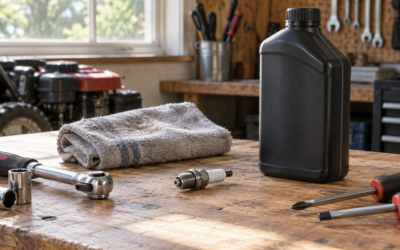
- Check the oil level before every run, and change oil at the manual’s interval. Track engine hours on a notebook or the hour meter.
- Clean or replace the air filter more often in dusty conditions.
- Use fresh fuel and a stabilizer if you ever leave fuel in the tank for more than a few weeks.
- Let the engine cool before refueling. Never refuel while the generator is running.
- Inspect spark plugs, fuel lines and the exhaust spark arrestor at least once per season.
- Give the generator a day of rest when possible. Rotating two smaller units extends life and gives you backup.
Safety
- Run generators outdoors only, at least 20 feet from the house, with the exhaust pointed away from windows, doors and vents. Carbon monoxide kills quickly and cannot be seen or smelled.
- Install battery-backed carbon monoxide alarms in the cabin or house.
- Do not backfeed a panel through an outlet. Use a transfer switch or interlock installed by a licensed electrician.
- Store fuel in approved containers, away from the generator and heat sources.
- Keep the generator dry but ventilated, using a canopy designed for generators. Never run it in an enclosed shed.
- Ground the generator following the manual and use heavy-duty, properly rated extension cords.
Frequently Asked Questions
Can a portable generator run every day?
Some can, but most are designed for intermittent use. Pick one with a quality engine, keep the load near 50 to 75 percent, and follow the oil schedule closely.
Check the warranty for limits on continuous or prime-power use.
Which generator has the longest runtime per tank?
The Generac XD5000E lists up to 32.4 hours at 50 percent load, the longest in this group. Diesel units generally lead on hours per tank.
Among gasoline units, the Westinghouse WGen9500DF lists about 12 hours at half load.
Is diesel better than gasoline for daily use?
For steady daily loads diesel is usually more fuel-efficient and long-lived, but it is heavier, louder and costs more upfront.
If you prefer low noise and portability, an inverter gasoline model may suit you better.
How often should I change the oil if I run a generator daily?
Many portable engines call for changes every 50 to 100 hours, but intervals vary. Always follow your model’s manual.
At eight hours a day, that means an oil change roughly every one to two weeks.
What is the difference between rated watts and surge watts?
Rated watts are the continuous output the generator can sustain. Surge watts are a short burst, lasting seconds, for starting motors.
For daily use, size by rated watts and keep a margin.
Is an inverter generator good for long runtime?
Yes, at light and moderate loads. Inverter models lower engine speed when the load drops, saving fuel and noise.
At heavy sustained loads the advantage shrinks, and conventional units cost less per watt.
How much fuel does a generator use per day?
It depends on load and design. From published runtimes, a 5,500-watt inverter at one-quarter load uses roughly 0.32 gallons per hour, and a 5,000-watt diesel at half load roughly 0.37.
Multiply by your daily hours to estimate fuel needs.
Can I run a generator in the rain?
Only with a purpose-built generator canopy or tent that keeps water off while allowing airflow and exhaust to escape.
Never run it in a garage, shed or enclosed space.
Bottom Line
For daily use, the Honda EU7000iS is the quiet, efficient choice, the Westinghouse WGen9500DF and Champion 7500 dual fuel give flexible high output, the Generac GP8000E is a simple workhorse, and the Generac XD5000E diesel goes the longest between fills. Keep the load near half the rating, track oil hours, and match the generator to your real daily watts rather than the biggest surge number.


Write Your Review
No reviews yet. Be the first to share your experience!