
⚡ Key Takeaways
- Running Watts vs. Starting Watts
- Appliances a 2000 Watt Generator Can Power
- Powering a Refrigerator During an Outage
- What It Cannot Run
- Combining Appliances Safely
- Getting the Most From a 2000 Watt Generator
- Powering an RV or Campsite
- Linking Two Generators for More Power
- Is a 2000 Watt Generator Right for You?
- Top-Rated Picks
- Related Guides
- Frequently Asked Questions
- Conclusion
- Related Articles
- Related Guides
- Before listing what a 2000 watt generator can run, you must understand the two numbers that govern every appliance.
- A 2000 watt generator comfortably handles a wide range of household and recreational items, one or a few at a time.
- A typical fridge runs at 150 to 400 watts but surges to 1,000 to 1,600 watts when the compressor kicks on.
- Running two high-wattage items at once, such as a microwave and a coffee maker together, will also overload it.
If you are shopping for a compact, portable backup power source, you are probably asking what can a 2000 watt generator run. The answer is more than you might expect, but less than you might hope, and the key is understanding the difference between running watts and starting watts. A 2,000-watt inverter generator is one of the most popular sizes for camping, tailgating, RVs, and emergency essentials because it is quiet, fuel-efficient, and light enough to carry with one hand. In this guide we break down exactly which appliances a 2000 watt unit can power, how to combine devices without overloading it, and where its limits lie.
As an Amazon Associate we earn from qualifying purchases at no extra cost to you.


🛒 Best Price Today on Amazon
Prime members get fast, free shipping on everything above, plus member-only deals. New members get a 30-day free trial — cancel anytime.
Running Watts vs. Starting Watts
Before listing what a 2000 watt generator can run, you must understand the two numbers that govern every appliance. Running watts, also called rated watts, is the continuous power a device needs to keep operating. Starting watts, or surge watts, is the brief spike of extra power that motor-driven appliances, like refrigerators and pumps, demand the instant they switch on. A 2,000-watt generator typically provides around 2,000 starting watts and about 1,600 running watts continuously. That surge headroom is what lets it briefly handle a motor’s startup draw, but the continuous figure is what limits how much you can run at once.
Appliances a 2000 Watt Generator Can Power
A 2000 watt generator comfortably handles a wide range of household and recreational items, one or a few at a time. The table below shows typical running and starting watts for common devices.
| Appliance | Running Watts | Starting Watts |
|---|---|---|
| Refrigerator | 150–400 | 1,000–1,600 |
| LED lights (several) | 60–150 | 60–150 |
| Laptop | 50–100 | 50–100 |
| Television | 100–200 | 100–200 |
| Coffee maker | 600–1,200 | 600–1,200 |
| Microwave (small) | 700–1,000 | 700–1,000 |
| Box fan | 50–100 | 200 |
| CPAP machine | 30–100 | 30–100 |
| Phone/device charger | 10–25 | 10–25 |
| Portable space heater | 1,500 | 1,500 |
As you can see, many individual items fall well within range. The art is combining them without exceeding the continuous 1,600-watt limit.
Powering a Refrigerator During an Outage
One of the most common questions is whether a 2000 watt generator can run a refrigerator, and the answer is yes. A typical fridge runs at 150 to 400 watts but surges to 1,000 to 1,600 watts when the compressor kicks on. A 2,000-watt generator handles that surge, then settles into the low running draw, leaving room for a few lights and a phone charger. Just avoid starting another high-surge appliance at the exact moment the fridge compressor cycles on.
What It Cannot Run
A 2000 watt generator has real limits. It cannot power central air conditioning, electric water heaters, electric ranges or ovens, or most well pumps, all of which demand far more than 2,000 watts. Running two high-wattage items at once, such as a microwave and a coffee maker together, will also overload it. Large window air conditioners and electric clothes dryers are likewise out of reach. For whole-home backup, you need a much larger unit.
Combining Appliances Safely
To run multiple devices, add up their running watts and keep the total comfortably under 1,600, while making sure no single startup surge pushes the instantaneous total past 2,000. For example, you could run a refrigerator, several LED lights, a laptop, and phone chargers simultaneously, then carefully add a TV. Stagger high-draw items rather than starting them together. Use a properly rated generator extension cord so voltage stays stable and motors do not draw extra current to compensate for drops over long, undersized cords.
Getting the Most From a 2000 Watt Generator
Inverter generators in this class often include an eco or economy mode that throttles the engine to match demand, dramatically improving fuel efficiency and reducing noise. Keep the engine maintained for reliable starts and full output; a basic generator maintenance kit with the right oil, filter, and spark plug keeps a small inverter running at its rated power. Because these units are small enough to use for camping and home backup alike, many owners pair one with a portable power station or solar generator to cover silent, fuel-free overnight power for small loads while the generator rests.
It also pays to know how to read your generator’s load indicator if it has one. Many inverter models display the current output as a percentage or with colored lights, letting you see at a glance how close you are to capacity. Watching that gauge as you add appliances is the simplest way to avoid an overload and to understand which combinations your unit handles comfortably. If the generator bogs down, the lights dim, or an overload alarm sounds, shed a load immediately by unplugging the most power-hungry device, since repeatedly overloading the unit stresses the engine and electronics and can shorten its life.
Powering an RV or Campsite
The 2000 watt class is enormously popular with RV owners and campers, and for good reason. A single unit can run an RV’s basic systems, charge the house batteries, power lights and a small television, and keep a fan or modest air conditioner going, depending on the AC size. The most common limitation is the rooftop air conditioner, which surges hard at startup. A 13,500 BTU RV air conditioner often exceeds what a single 2,000-watt generator can start, though a soft-start device installed on the AC can reduce that surge enough to make it work. For tailgating and camping, the quiet operation and light weight of these inverter units make them the go-to choice over louder conventional generators.
Linking Two Generators for More Power
One of the most useful features of many 2000 watt inverter generators is the ability to run two units in parallel. With a parallel kit, two identical generators connect together and combine their output, effectively giving you close to 4,000 watts while retaining the portability of two smaller machines you can carry separately. This approach lets you start with one unit for light needs and add a second later when your demands grow, such as when you want to run a larger air conditioner or several appliances at once. Parallel capability turns a modest 2,000-watt generator into a flexible system that scales with your needs, which is a major advantage over being locked into a single larger, heavier machine.
Is a 2000 Watt Generator Right for You?
A 2000 watt generator is ideal if your goal is keeping essentials alive, the refrigerator, some lights, phones, a laptop, and a medical device like a CPAP, during an outage, or powering a campsite or tailgate. If you need to run an air conditioner, well pump, or multiple large appliances at once, step up to a larger generator. For whole-home backup connected to your panel through a generator interlock kit, you will want considerably more capacity.
Top-Rated Picks

Prime
Best Seller
Westinghouse 12500 Watt Dual Fuel Home Backup Portable Generator, Remote Electric Start, Transfer Switch Ready, Gas and Propane Powered


| Product | Brand | Rating | Reviews | Price |
|---|---|---|---|---|
| Westinghouse 12500 Watt Dual Fuel Home Backup Portabl… | — | ★ 4.7 | 10.8k | under $1,000 |
| Jackery Explorer 500 v2 Portable Power Station and 16… | — | ★ 4.7 | 8.8k | under $350 |
| Jackery Explorer 1000 v2 Portable Power Station,1070W… | — | ★ 4.7 | 3.3k | under $450 |
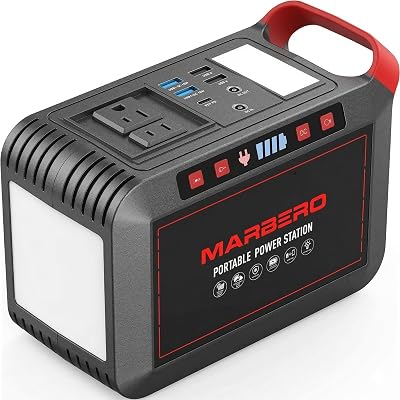
| Portable Power Station 300W MARBERO 237Wh Camping Sol… | MARBERO | ★ 4.2 | 8.7k | under $150 |
| MARBERO Solar Generator 111Wh Portable Power Station … | MARBERO | ★ 4.2 | 8.7k | under $150 |
Frequently Asked Questions
Can a 2000 watt generator run a refrigerator? Yes. A typical refrigerator runs at 150 to 400 watts and surges to around 1,000 to 1,600 watts at startup, which a 2,000-watt generator can handle while leaving room for a few small devices.
Can a 2000 watt generator run an air conditioner? Only a small one. A 5,000 to 8,000 BTU window unit may run on it, but central air conditioning and larger window units exceed its capacity.
What is the difference between running and starting watts? Running watts is the continuous power an appliance needs to operate, while starting watts is the brief surge that motor-driven devices require to switch on. A 2,000-watt generator supplies about 2,000 starting and 1,600 running watts.
Can a 2000 watt generator power a house? Not a whole house. It can power essential individual appliances like a refrigerator, lights, and electronics, but not central HVAC, electric water heaters, or multiple large appliances at once.
How many things can I run at once on a 2000 watt generator? As many as you like, provided their combined running watts stay comfortably under about 1,600 and no startup surge pushes the instantaneous total past 2,000 watts.
Conclusion
A 2000 watt generator is a versatile, portable workhorse that keeps your most important appliances running when the power fails. Understand the gap between running and starting watts, add up your loads carefully, and stagger high-surge items, and this compact unit will reliably power a refrigerator, lights, and electronics through an outage or a weekend off the grid.
Top picks from this guide
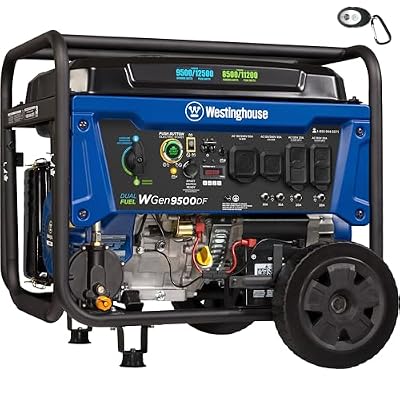 WestinghouseWestinghouse 12500 Watt Dual Fuel Home Backup Portable Generator, Remote…$999 \xc2\xb7 99/100
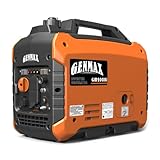
 GENMAXGENMAX Portable Generator, 2000W Low-Noise Gas Engine, EPA Compliant, Eco…$264 \xc2\xb7 99/100
 MARBEROPortable Power Station 300W MARBERO 237Wh Camping Solar Generator Backup…$123 \xc2\xb7 99/100
 JackeryJackery Explorer 500 v2 Power Station, 512Wh/500W, AC Cable Included…$359 \xc2\xb7 97/100








Write Your Review
No reviews yet. Be the first to share your experience!