
⚡ Key Takeaways
- Why Generators Produce Deadly Carbon Monoxide
- The Cardinal Rule: Never Run a Generator Indoors
- Safe Placement Distances and Direction
- Install Carbon Monoxide Detectors
- Choose Generators with CO Shutoff Technology
- Why Open Windows and Fans Are Not Enough
- Special Risks During Storms and Cold Weather
- Recognizing the Symptoms of CO Poisoning
- Powering Your Home Safely
- Top-Rated Picks
- Related Guides
- Frequently Asked Questions
- Conclusion
- Related Articles
- Carbon monoxide, or CO, forms whenever a carbon-based fuel like gasoline, propane, or diesel burns.
- Never operate a portable generator inside a home, garage, basement, crawlspace, shed, or any partially enclosed area, even with doors and windows open.
- Place your generator at least 20 feet away from your home, with the exhaust pointed away from the house and away from any door, window, or vent.
- Every home that uses a generator should have battery-powered or battery-backup CO detectors on each level and near sleeping areas.
Generator carbon monoxide safety is not optional reading, it is the single most important thing you must understand before you ever pull the starter cord. Every portable generator burns fuel, and that combustion produces carbon monoxide, an invisible, odorless gas that kills hundreds of people in the United States every year, most of them during storms and power outages. The tragedy is that nearly all of these deaths are preventable with a few simple rules. This guide explains exactly how carbon monoxide poisoning happens, where you can and cannot place a generator, and the safeguards that keep your family alive when the grid goes down.
As an Amazon Associate we earn from qualifying purchases at no extra cost to you.




🛒 Best Price Today on Amazon
Prime members get fast, free shipping on everything above, plus member-only deals. New members get a 30-day free trial — cancel anytime.
Why Generators Produce Deadly Carbon Monoxide
Carbon monoxide, or CO, forms whenever a carbon-based fuel like gasoline, propane, or diesel burns. A single portable generator can produce as much CO as hundreds of idling cars. Because the gas has no color, smell, or taste, your body gives you no warning. CO binds to hemoglobin in your blood far more readily than oxygen does, starving your organs of the oxygen they need. Within minutes, high concentrations cause confusion, unconsciousness, and death, often before a sleeping person ever wakes.
The danger is worst in enclosed or partially enclosed spaces where exhaust can accumulate. This is why the overwhelming majority of generator deaths occur when people run units inside garages, basements, sheds, or too close to open windows.
The Cardinal Rule: Never Run a Generator Indoors
Never operate a portable generator inside a home, garage, basement, crawlspace, shed, or any partially enclosed area, even with doors and windows open. Ventilation is not enough. A garage with the door fully raised can still trap lethal CO levels within minutes. The same applies to carports, breezeways, and covered porches attached to the house.
The only safe place to run a generator is outdoors, in an open area, well away from any structure. Opening a window or running a fan does not make an indoor space safe. There is no exception to this rule, regardless of how short you think the run will be.
Safe Placement Distances and Direction
Place your generator at least 20 feet away from your home, with the exhaust pointed away from the house and away from any door, window, or vent. Wind can carry exhaust back toward openings, so check the breeze and reposition if you smell or sense fumes near the house. The table below summarizes safe practices.
| Location | Safe? | Why |
|---|---|---|
| Open yard, 20+ ft from house | Yes | Exhaust disperses freely |
| Garage with door open | No | CO accumulates rapidly |
| Basement or crawlspace | No | Fatal CO buildup |
| Covered porch or carport | No | Partial enclosure traps gas |
| Near an open window or vent | No | CO drifts indoors |
| Under a canopy, open sides, 20+ ft away | Caution | Acceptable only if fully open and distant |
Install Carbon Monoxide Detectors
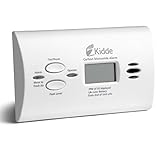
Every home that uses a generator should have battery-powered or battery-backup CO detectors on each level and near sleeping areas. These alarms are your last line of defense, sounding before levels become deadly. Test them monthly and replace batteries at least once a year. A CO detector with a digital display is especially useful because it shows rising concentrations before the alarm threshold, giving you time to act.
Do not rely on smoke detectors; they do not sense carbon monoxide. If a CO alarm sounds, get everyone outside into fresh air immediately and call emergency services. Do not re-enter until the source is removed and the building is ventilated.
Choose Generators with CO Shutoff Technology
Many newer portable generators include built-in CO sensors that automatically shut the engine off if dangerous gas levels are detected nearby. These systems, marketed under names like CO Guard, CO Sense, and CO Protect, meet voluntary safety standards designed to prevent poisoning. If you are shopping for a new unit, prioritizing one with automatic CO shutoff adds a meaningful layer of protection, though it never replaces correct placement.
For low-power needs like lights, phones, and a CPAP machine, consider whether a battery-based solution can do the job entirely without combustion. A portable power station or solar generator produces zero emissions and can be used safely indoors, eliminating CO risk for those smaller loads.
Why Open Windows and Fans Are Not Enough
A persistent and dangerous myth is that you can run a generator in an enclosed space as long as you crack a window or point a fan toward an opening. This is false and has cost many lives. Carbon monoxide from a generator is produced in enormous volume, far faster than passive ventilation can clear it. In tests, a generator running in an attached garage with the door fully open still drove indoor CO to lethal levels within minutes, because exhaust pools and seeps into the connected living space through gaps, doorways, and shared ductwork.
Fans can actually make things worse by pushing exhaust toward, rather than away from, occupied areas, or by creating air currents that draw fumes deeper into the home. There is no ventilation trick that makes indoor generator use safe. The only acceptable practice is outdoor operation, well away from the structure, with exhaust directed into open air. Treat every claim about safe indoor running with extreme skepticism, no matter how confident the source sounds.
Special Risks During Storms and Cold Weather
Most generator CO deaths cluster around major storms, hurricanes, and winter cold snaps, precisely when people most need backup power and are most tempted to bring the machine closer to the house. Cold weather encourages owners to run generators in garages or near doorways to keep them warm and accessible, which is exactly the wrong instinct. Snow and rain push people to shelter the unit improperly. Wind shifts can carry exhaust back toward the home from a generator that seemed safely placed. During these high-risk periods, double down on the fundamentals: keep the unit far from the house, monitor wind direction, check your CO detectors before the storm arrives, and never compromise on placement just because conditions are miserable outside.
Recognizing the Symptoms of CO Poisoning
Early symptoms of carbon monoxide poisoning mimic the flu: headache, dizziness, weakness, nausea, shortness of breath, and confusion. Because the gas is undetectable, people often dismiss these warning signs. If multiple people, or pets, in a home feel sick at the same time during generator use, treat it as a CO emergency. Move everyone outdoors immediately, call 911, and seek medical attention. Prompt treatment with oxygen can prevent permanent injury.
Powering Your Home Safely
Running long cords from a properly placed outdoor generator is the safest way to power individual appliances. Use heavy-duty, outdoor-rated cords sized for the load; a quality generator extension cord lets you keep the generator far from the house while still reaching essential devices. If you want to power your home’s circuits, have a licensed electrician install a transfer switch or a generator interlock kit, which prevents dangerous backfeeding while letting the generator stay safely outdoors. Routine upkeep with a generator maintenance kit keeps the engine tuned, which helps it burn cleaner and produce less CO.
Top-Rated Picks

Prime
Best Seller
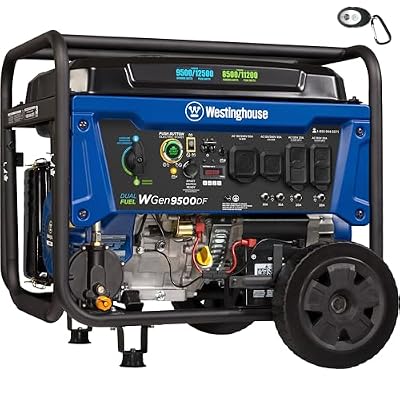
Westinghouse 12500 Watt Dual Fuel Home Backup Portable Generator, Remote Electric Start, Transfer Switch Ready, Gas and Propane Powered

| Product | Brand | Rating | Reviews | Price |
|---|---|---|---|---|
| Westinghouse 12500 Watt Dual Fuel Home Backup Portabl… | — | ★ 4.7 | 10.8k | under $1,000 |
| Jackery Explorer 500 v2 Portable Power Station and 16… | — | ★ 4.7 | 8.8k | under $350 |
| Jackery Explorer 1000 v2 Portable Power Station,1070W… | — | ★ 4.7 | 3.3k | under $450 |
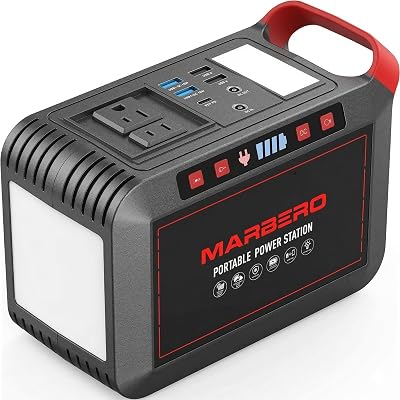
| Portable Power Station 300W MARBERO 237Wh Camping Sol… | MARBERO | ★ 4.2 | 8.7k | under $150 |
| MARBERO Solar Generator 111Wh Portable Power Station … | MARBERO | ★ 4.2 | 8.7k | under $150 |
Frequently Asked Questions
How far away should a generator be from the house? At least 20 feet, with the exhaust directed away from the home and away from any doors, windows, or vents. Check wind direction and reposition if fumes drift toward openings.
Can I run a generator in my garage if the door is open? No. An open garage door does not provide enough ventilation to prevent lethal carbon monoxide buildup. Generators must always run outdoors and well away from the structure.
How quickly can carbon monoxide become deadly? In an enclosed space, CO can reach fatal concentrations within minutes. This is why running a generator indoors, even briefly, is never safe.
Do I still need CO detectors if my generator has a CO shutoff sensor? Yes. Built-in shutoff sensors add protection but are not foolproof. Independent CO alarms inside your home remain essential, especially near sleeping areas.
What should I do if my CO alarm goes off? Get everyone outside into fresh air immediately, call emergency services, and do not re-enter the building until the source is removed and the space is fully ventilated.
Conclusion
Carbon monoxide is the deadliest hazard of generator ownership, and it is also the most preventable. Run your generator outdoors only, keep it at least 20 feet from the house with exhaust pointed away, install working CO detectors, and never ignore flu-like symptoms during use. Follow these rules without exception and your generator will deliver power, not tragedy.
Top picks from this guide
 WestinghouseWestinghouse 12500 Watt Dual Fuel Home Backup Portable Generator, Remote…$999 \xc2\xb7 99/100
 MARBEROPortable Power Station 300W MARBERO 237Wh Camping Solar Generator Backup…$123 \xc2\xb7 99/100
 JackeryJackery Explorer 500 v2 Power Station, 512Wh/500W, AC Cable Included…$359 \xc2\xb7 97/100
 MARBEROMARBERO 111Wh Solar Generator with Panels Included Solar Panel Kit…$95 \xc2\xb7 96/100









Write Your Review
No reviews yet. Be the first to share your experience!