
🛒 Best Price Today on Amazon
Prime members get fast, free shipping on everything above, plus member-only deals. New members get a 30-day free trial — cancel anytime.
The Anker SOLIX C1000 competes in the crowded ~1kWh LiFePO4 class, where fast recharge, inverter surge, and outlet mix separate the good units from the average. This review uses it to explain how to compare 1kWh stations, since capacity alone rarely tells you which one fits your life best.
Why the 1kWh class comes down to details
Most 1kWh units store similar energy, so the meaningful differences are recharge speed, surge capability, solar input, and ergonomics. A station that refills in under an hour and starts a fridge on the first try beats one with the same capacity that charges slowly and trips on compressor inrush. The C1000 class emphasizes fast charging and strong surge, which is exactly what matters here.
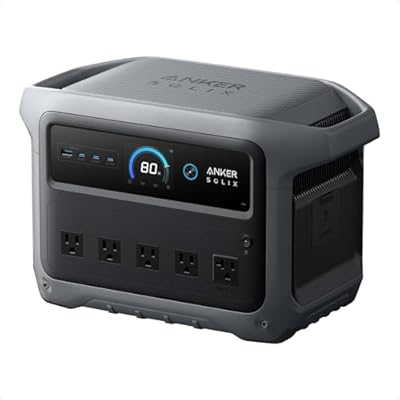
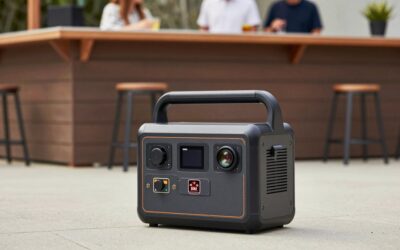
Anker SOLIX C1000 Gen 2 Portable Power Station
Included for 'Anker SOLIX C1000 Review: A Fast-Charging 1kWh Station Worth Considering' as a relevant option in this category; details come from the product listing.
View on Amazon
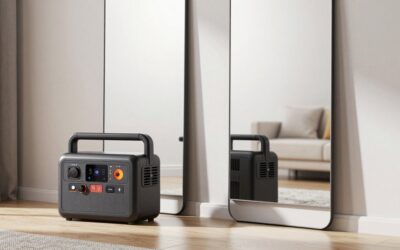
Anker SOLIX C1000 Portable Power Station with Car Charging Cable, 1,056Wh
Included for 'Anker SOLIX C1000 Review: A Fast-Charging 1kWh Station Worth Considering' because the listing specifies 056Wh, details this guide uses to compare options.
View on Amazon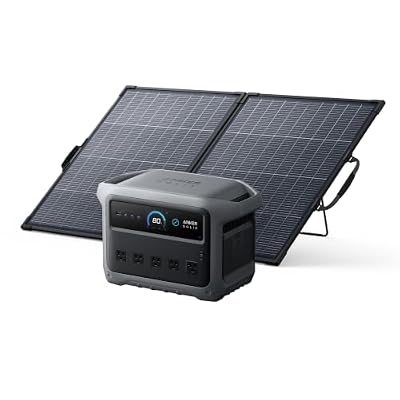
Anker SOLIX C1000 Gen 2 Portable Power Station with 200W Solar Panel
Included for 'Anker SOLIX C1000 Review: A Fast-Charging 1kWh Station Worth Considering' as a relevant option in this category; details come from the product listing.
View on Amazon
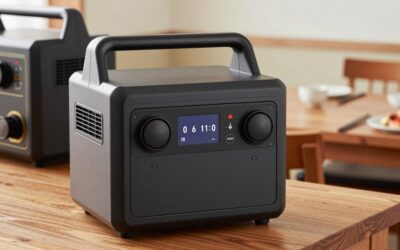
Anker SOLIX C300 Portable Power Station, 288Wh Solar Generator for Camping
Included for 'Anker SOLIX C1000 Review: A Fast-Charging 1kWh Station Worth Considering' because the listing specifies 288Wh Solar Generator for Camping, details this guide uses to compare options.
View on AmazonRuntime reference
| Device | Draw | Runtime (~1kWh, ~870Wh usable) |
|---|---|---|
| Router + modem | 20W | ~40 hours |
| CPAP (humidifier off) | 35W | ~24 hours |
| Fridge (avg) | 120W | ~7 hours |
| Space heater (low) | 750W | ~1.1 hours |
What to compare
Recharge speed
Fast AC recharge, full in roughly an hour on this class, is a genuine advantage. It means you can top the unit during a brief grid restoration or from a generator quickly, effectively making a 1kWh battery behave larger during rolling outages.
Surge headroom
Look for a surge rating well above the continuous figure, often via a boost mode. That is what lets a ~1500W inverter start a fridge or a power tool whose inrush momentarily exceeds its rating. Without adequate surge, the unit shuts off at the worst moment.
Expansion and solar
Some 1kWh units accept an add-on battery to double capacity, and most take 200-600W of solar. If you want a growth path or off-grid endurance, prioritize a model that offers both.
Where it fits
The SOLIX C1000 class suits people who want a fast-charging, appliance-capable 1kWh unit for outages, camping, and mobile work. If you need all-day refrigeration, step up to 2kWh. If you only charge electronics, a smaller unit is lighter and cheaper.
FAQ
Is fast recharge really that important?
Yes, for outage use. A battery you can refill in an hour from the grid or a generator covers rolling and intermittent outages far better than a slow-charging unit of the same capacity, because it spends less time depleted.
Can a 1kWh unit start a refrigerator?
Generally yes, if its surge rating covers the compressor’s startup spike. That is why surge headroom, not just continuous watts, is the spec to check before relying on it for refrigeration.
Reading beyond the spec sheet
Two 1kWh stations can look identical on paper yet feel very different in use. Recharge speed determines how quickly you recover during a brief grid restoration; surge headroom determines whether a fridge or drill starts on the first try; and the port layout determines how many devices you can actually run at once. When comparing, weigh these practical traits as heavily as the headline capacity, because they shape daily usability.
The recharge-speed advantage in practice
During rolling blackouts, power may return for thirty minutes at a time. A station that refills to 80% in under an hour captures those windows and stays ready; a slow-charging rival spends the outage half-empty. That is why fast recharge can make a 1kWh unit outperform a larger but sluggish competitor during real, intermittent outages.
Surge headroom and appliance confidence
A generous boost or surge mode is what lets a ~1500W inverter start motors that momentarily spike far higher. Before relying on a unit for refrigeration or tools, check that its surge rating clears your worst-case startup. Continuous watts alone will mislead you; the surge figure is the true test of appliance compatibility.
Expandability and long-term fit
If there is any chance your needs will grow, favor a 1kWh unit that accepts an expansion battery. Doubling capacity later without buying a whole new system is far cheaper and simpler, and it turns a single-purpose backup into a scalable platform that keeps pace with your life.
Bottom line
The Anker SOLIX C1000 class shows that in the 1kWh tier, recharge speed and surge headroom matter as much as capacity. Compare those alongside solar input and expandability, and choose the unit whose strengths match your use, fast refills and confident appliance starts make a 1kWh station punch above its size.

Write Your Review
No reviews yet. Be the first to share your experience!