
🛒 Best Price Today on Amazon
Prime members get fast, free shipping on everything above, plus member-only deals. New members get a 30-day free trial — cancel anytime.
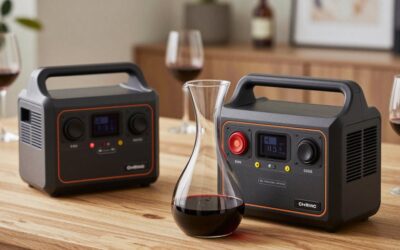
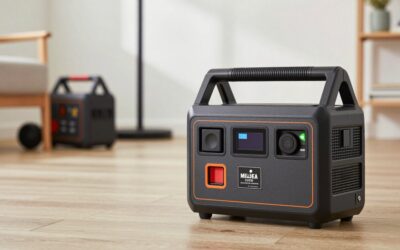
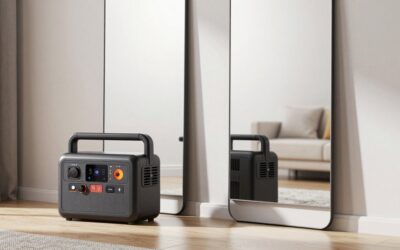
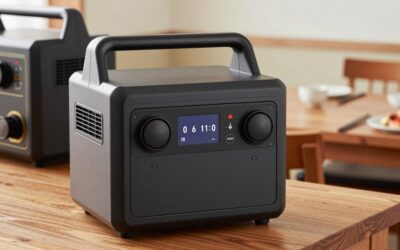
Not everyone preparing for hurricane season needs to keep a whole kitchen running. Apartment dwellers, renters and people who evacuate early often need something simpler: a way to charge phones, run a fan, keep a CPAP going and maybe save the contents of a small fridge. The Jackery Explorer 1000 v2 is aimed at exactly that group. It is light enough to carry in one hand and small enough to take with you if you leave, which matters as much as capacity in a hurricane.
The unit in brief
Jackery rates the Explorer 1000 v2 at about 1,070 Wh of LiFePO4 capacity with roughly 1,500 W of continuous output and a 3,000 W surge. It weighs about 24 pounds, accepts up to around 400 W of solar and recharges from a wall outlet in roughly an hour in its app-enabled emergency mode. It has three AC outlets and cannot be expanded. Confirm current details on the spec sheet.
What 1 kWh covers in a hurricane outage
| Scenario | Loads | Approximate runtime |
|---|---|---|
| Communications only | Phones, weather radio, LED lanterns, Wi-Fi hotspot (30–40 W average) | 1 to 1.5 days of constant use; several days with care |
| Sleep comfort | CPAP without heated humidifier (40–50 W) plus a small fan (30 W) | two nights, sometimes three |
| Food save | Mini fridge or compact 10 cu ft fridge (600–900 Wh/day in heat) | about 1 day |
| Full-size fridge | 1,500–2,200 Wh/day in heat | 10–14 hours |
That last row tells the story: the Explorer 1000 v2 is not a whole-fridge solution for more than a night. Where it shines is keeping people connected, comfortable and safe.
Evacuation-friendly design
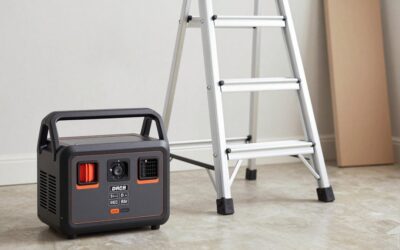
Hurricane plans often end with a drive inland. A 24-pound station fits on the floor of a back seat and can run a laptop, charge a family’s phones or power a medical device in a hotel room or a relative’s spare bedroom. Heavier home-backup units get left behind; this one comes with you. Charge it fully before you leave and it can also recharge from the car’s 12V outlet on the road, slowly.
Recharging after the storm
Solar is the key. A 200 W panel in clear post-storm sunshine returns roughly 700 to 1,000 Wh per day; with the full 400 W, the station can fill in a morning. That supports a communications-plus-fans routine indefinitely. Keep panels indoors while winds are high.
If you recharge from a gas generator, keep it at least 20 feet from the building, never in a garage, porch or breezeway, and with exhaust pointed away from windows and doors. Have a battery CO alarm inside.
What it cannot do
- Run a window air conditioner for more than about an hour or two.
- Power 240V appliances or hardwired circuits.
- Serve as whole-home backup through a transfer switch; its capacity is too small to justify one.
Heat management
After a hurricane, indoor temperatures can climb into the 90s. Keep the station out of direct sun, off hot floors near windows and away from the car dashboard. High heat reduces battery life and may trigger thermal protection.
Pre-season checklist
- In early June, run it through a full discharge and recharge to confirm health.
- Store it at 60 to 80% between storms, then top it up when a storm enters the forecast cone.
- Test your real loads with it: plug in the CPAP or fridge for a night and note the percentage used.
How it fits a layered storm kit
Think of the Explorer 1000 v2 as one layer rather than the whole plan. The first layer is small battery banks for each family member’s phone. The second is this station, which covers medical devices, fans and a router. The third, if you own a house, might be a larger battery or a properly installed generator for the kitchen. Building in layers means a single failure, such as a dead generator or a cloudy week, does not leave you without communications or sleep equipment. It also means the 1 kWh unit does what it is best at instead of being stretched across loads it cannot sustain.
FAQ
Is it safe to run inside an apartment?
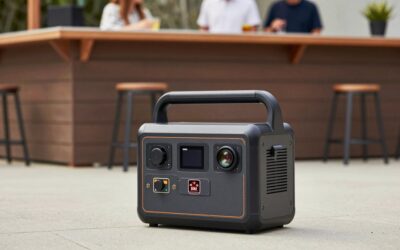
Yes. It produces no exhaust or carbon monoxide, which is why it suits apartments where gas generators are both unsafe and usually prohibited.
Can it save a full-size fridge?
For a night, yes. Keep the door closed, fill empty space with water jugs and pre-chill before landfall. For longer outages you will need solar input or a bigger battery.
Bottom line
The Jackery Explorer 1000 v2 is good for hurricane season as a portable, apartment-safe, evacuation-ready battery for communications, fans, medical devices and short-term food saving. Pair it with a 200 to 400 W solar panel and it can keep going through a long recovery. Homeowners who want to keep the full kitchen running should step up to a 3 kWh or larger system.

Write Your Review
No reviews yet. Be the first to share your experience!