
🛒 Best Price Today on Amazon
Prime members get fast, free shipping on everything above, plus member-only deals. New members get a 30-day free trial — cancel anytime.
A dual-fuel generator around 5,200 watts is the classic home-outage workhorse: big enough to run a refrigerator, freezer, sump pump, furnace blower, and lights together, and flexible enough to burn either gasoline or propane. The biggest question buyers face with this class is not about the generator itself but about fuel. This review evaluates Generac’s 5,200-watt dual-fuel class through the lens of fuel economics and storage, because that decision determines whether the machine is worth buying for your home.
What 5,200 watts covers
In this class, gasoline output is typically rated around 5,200 starting watts with running watts somewhat lower, and propane output a bit lower still. Confirm exact ratings on the current label. That is enough for essentials plus some comfort, but not central air or an electric range.

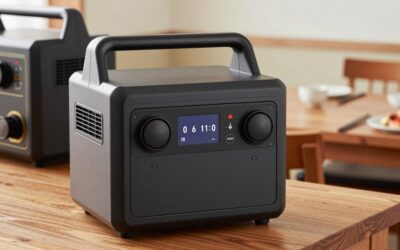
Generac 8,250 Starting Watt Dual Fuel Portable Gas Generator Electric Start
Included for 'Generac 5200-Watt Dual Fuel Review: Is It Worth Buying in 2026?' as a relevant option in this category; details come from the product listing.
View on AmazonEssentials load example
| Appliance | Running watts | Starting watts |
|---|---|---|
| Refrigerator | 700-800W | 1,500-2,200W |
| Chest freezer | 500-700W | 1,000-1,500W |
| 1/3 hp sump pump | 800W | 1,300-2,000W |
| Gas furnace blower (1/3 hp) | 500-800W | 1,000-1,600W |
| Lights, router, TV, phones | 400-600W | None |
| Total running | ~2,900-3,700W | Stagger starts |
Running totals fit comfortably. Starting surges must be staggered so two motors do not start at the same instant; most owners plug in loads one at a time after the generator warms up.
Gasoline versus propane: the real trade-off
The table shows typical characteristics for this class; runtimes are approximate at half load.
| Factor | Gasoline | Propane |
|---|---|---|
| Energy per gallon | ~114,000-120,000 BTU | ~91,500 BTU |
| Output on this generator | Full rating | Typically 5-10% lower |
| Storage life | 3-6 months untreated, ~12 with stabilizer | Indefinite in a sealed tank |
| Half-load runtime per fill | ~8-10 hours per tank | ~7-9 hours per 20-lb cylinder |
| Refill during a storm | Gas stations may lack power | Cylinder exchanges may run out |
| Carburetor issues from storage | Common | Rare |
Propane’s indefinite shelf life and cleaner burn are the reasons many owners run primarily on propane and keep gasoline as backup. Four to six 20-pound cylinders cover roughly two days of essential loads.
Daily fuel cost estimate
At half load, figure roughly 0.4 to 0.5 gallons of gasoline per hour, or about 10 to 12 gallons per 24 hours. At $3 to $4 per gallon, that is $30 to $48 per day. Propane at roughly 0.5 to 0.6 gallons per hour, about 2.5 to 3 20-pound cylinders per day, typically runs $45 to $75 per day at exchange prices, less if you refill.
Stretching fuel
You do not need to run the generator around the clock. Running it 4 hours on, 2 hours off keeps a fridge and freezer cold and a sump pit under control while cutting fuel use by a third.
Connecting to the house
A 5,200-watt generator typically has a 120/240V outlet. Pair it with a manual transfer switch or a panel interlock and a generator inlet box installed by a licensed electrician. That lets you run a furnace blower and hard-wired sump pump safely. Never backfeed a dryer outlet with a double-male cord.
Placement and safety
Carbon monoxide from open-frame generators is lethal. Operate it outdoors at least 20 feet from the house, away from windows and doors, with the exhaust pointed away. Never run it in a garage, carport, or enclosed porch. Install CO alarms on every level of the home. Keep propane cylinders upright and outdoors.
Noise
Open-frame dual-fuel generators run at roughly 68 to 75 dBA at 23 feet, noticeably louder than inverter models. Neighbors will hear it, and some HOAs restrict operating hours. A well-placed sound barrier that does not block airflow can help.
Switching fuels mid-outage
One practical advantage of dual fuel is switching without draining anything. Most units in this class use a selector knob: turn off gasoline flow, let the engine run until the carburetor empties, then connect the propane regulator hose, open the cylinder valve, and restart on the propane setting. That sequence also leaves the carburetor dry for storage, which prevents gum and varnish. Keep a spare propane hose and a leak-check spray bottle of soapy water with the generator, and always change cylinders with the engine off and cool.
FAQ
Should I run my dual-fuel generator on propane or gasoline?
Propane is simpler to store and kinder to the carburetor, while gasoline gives slightly more power per gallon. Many owners use propane for most outages and keep gasoline as a backup.
Can a 5,200-watt generator run central air?
Usually not reliably. Most central AC systems need more starting power than this class provides, even with a soft-start kit.
Bottom line
A Generac 5,200-watt dual-fuel generator is worth buying for homeowners who want to run essentials during outages and value propane’s easy storage. Plan fuel carefully, budget for a transfer switch or interlock, and it will cover most storms. If you need central AC or 240V appliances, step up to 7,500 watts or more.





Write Your Review
No reviews yet. Be the first to share your experience!