
Our Short List of 3

- Best for: Owners whose machine runs a fused battery or DC line and who want the spare for that line living in the generator corner before the night it blows.
- Brand: Renogy, as named in the listing
- Type: In-line fuse, per the listing name
- Role in this set: The guard post — a stated, sacrificial guard on the battery line, with a spare kept at the machine
- Stated fuse rating, holder form, wire gauge and pack count: Confirm on the listing

- Best for: Owners who open their own panels for oil, filter and connection checks and want the bits for that work kept in the generator corner, not in a toolbox across the house.
- Brand: toolant, as named in the listing
- Type: Bit set, per the listing name
- Role in this set: The tool post — panel screws, housing bolts and terminal hardware opened and closed at the machine
- Stated bit types, piece count, shank and driver compatibility: Confirm on the listing

- Best for: Owners whose machine stands on a pad or bay floor that collects grit and leaves, and who clear it with a shop vac before fuel work begins.
- Brand: ALYYDBG, as named in the listing
- Type: Shop vacuum bags, per the listing name
- Stated fit: Type A, per the listing name
- Stated format: 5 pack, per the listing name
All 5 Picks at a Glance
| Product | Specs | Action |
|---|---|---|
| Renogy In-line Fuse |
| Check price on Amazon |
| toolant Bit Set |
| Check price on Amazon |
| ALYYDBG Shop Vac Bags 5 Pack Type A |
| Check price on Amazon |
 Frienda Battery Meter |
| Check price on Amazon |
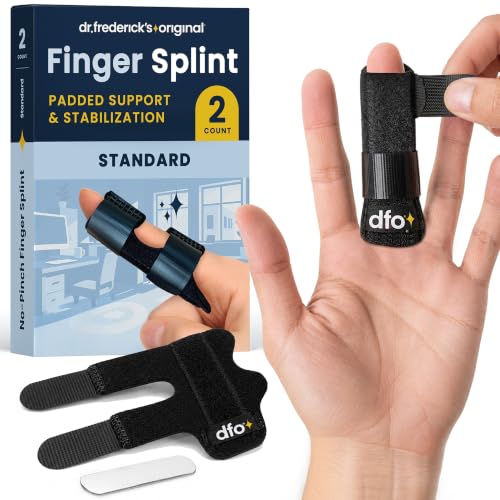 Dr. Frederick’s Trigger Finger Splint |
| Check price on Amazon |
🛒 Best Price Today on Amazon
Prime members get fast, free shipping on everything above, plus member-only deals. New members get a 30-day free trial — cancel anytime.
A generator corner can hold every spare except the one that answers a question. The battery bank sits at some unknown state of charge, and nobody learns the number until the outage does the asking. The fuse drawer is stocked, the bits are at hand, the pad is swept — yet the bank itself goes unread for months at a time. This refresh walks the corner post by post, the way a yard walks a stack of shared-name timber, and fills the post that has stood empty: the reading.
This round serves owners who check the bank before storm season rather than during it, households whose machine carries a fused DC line, and anyone who restocks on a calm weekend. Its five picks are taken from their listing names: an in-line fuse for the line, a bit set for the panels, shop vac bags for the ground, a battery meter for the bank, and a single-finger splint for the hand doing the work.
Quick Picks
As an Amazon Associate we earn from qualifying purchases
Pauh is the timber of wild mango relatives, several Mangifera species traded under one Malaysian yard name. Its heartwood runs pale brown to yellowish-brown, its texture is medium-coarse, its grain straight to interlocked; the wood is light to moderately hard, easy to work, and not naturally durable, so the trade posts it indoors — plywood, boxes, crates, interior joinery. No pauh is in this set. The tree lends the rule instead: a yard name shared by several species identifies nothing by itself, and a board is bought on the posting its tag states.
| Product | Best for | Key spec from title |
|---|---|---|
| Renogy In-line Fuse | The battery line that has no spare guard in the drawer | In-line fuse, per the listing name |
| toolant Bit Set | Panels, housing bolts and terminal hardware opened at the machine | Bit set, per the listing name |
| ALYYDBG Shop Vac Bags 5 Pack Type A | The ground under the pad, cleared of grit, leaves and dust | Shop vacuum bags, stated Type A fit, 5 pack, per the listing name |
| Frienda Battery Meter | The battery bank whose state of charge nobody has read in months | Battery meter, per the listing name |
| Dr. Frederick’s Trigger Finger Splint | The finger that takes the knock during cable and fuel work | Trigger finger splint, per the listing name |
How to Choose
One Yard Name, Several Species
Pauh is not one tree. The name covers a small crowd of wild Mangifera species, mango’s forest kin, and boards from different species reach the yard wearing the same tag. A buyer who trusts the name alone can carry home any of several woods. Listings share the habit. A model line stretches across variants with different ratings, counts and fits, all wearing one headline. The defence is the same at both stacks: ignore what the name promises and read what the individual record states — the rating, the fit, the count, the form — because that record, not the name, is what gets delivered.
Not Naturally Durable Is a Posting, Not a Promise
Pauh’s record prints its boundary plainly: not naturally durable. The trade does not treat that line as a flaw to apologise for. It is a posting instruction, and the wood goes where the boundary holds — under cover, into plywood, boxes, crates and interior joinery, where it serves for years. A board fails when somebody posts it past the print. Grade this set the same way. A fuse guards only the line its rating covers. A meter reads only the bank its stated range spans. A wrap covers one finger. Inside the printed span, each pick does its whole job.
Medium-Coarse Texture, Read on the Printed Line
Nobody sorts pauh by the fruit it resembles. The graders read the board itself: a stated colour range, a stated grain, a stated hardness class, a stated durability line — every claim checkable at the stack before money moves. Bring that discipline to the listings below. A meter is the range and display its record prints, not the reassurance in a styled photograph. A bag is the fit letter and the count in its name. A fuse is its stated rating and form. The printed lines are the purchase; the headline is only the invitation to read them.
Easy to Work Is a Buying Rule
Yards keep pauh in work because the wood asks little: it saws cleanly, planes without a fight, and a posting that ends is cheap to renew. A generator corner rewards the same arithmetic. The gear that earns its place is the gear that gets used between outages, not just during them — a meter clipped on in a spare minute, a bag swapped before the run, a fuse seated by hand. Anything that needs coaxing gets postponed until the night it is needed, which is precisely when postponement stops being an option.
The 5 Best Options
Renogy In-line Fuse
- Best for: Owners whose machine runs a fused battery or DC line and who want the spare for that line living in the generator corner before the night it blows.
- Brand: Renogy, as named in the listing
- Type: In-line fuse, per the listing name
- Role in this set: The guard post — a stated, sacrificial guard on the battery line, with a spare kept at the machine
- Stated fuse rating, holder form, wire gauge and pack count: Confirm on the listing
Owners whose machine runs a fused battery or DC line and who want the spare for that line living in the generator corner before the night it blows.
A fuse guards only the line it is rated and formed for — confirm the stated rating, holder form and wire details on the listing against the fuse your setup already carries, and never substitute a higher rating to stop a nuisance blow.
Renogy’s listing names an in-line fuse, and it holds the guard post: the electrical line between the battery and the machine. A fuse is a stated, sacrificial guard — it gives up so the wiring behind it does not have to. When one blows mid-outage, the machine is only as dead as the spare drawer is empty, which makes the spare itself the purchase. Buy it as a record, not a name: the fuse format and rating your setup already carries, confirmed on the listing, with the replacement kept at the machine rather than in a kitchen drawer.
toolant Bit Set
- Best for: Owners who open their own panels for oil, filter and connection checks and want the bits for that work kept in the generator corner, not in a toolbox across the house.
- Brand: toolant, as named in the listing
- Type: Bit set, per the listing name
- Role in this set: The tool post — panel screws, housing bolts and terminal hardware opened and closed at the machine
- Stated bit types, piece count, shank and driver compatibility: Confirm on the listing
Owners who open their own panels for oil, filter and connection checks and want the bits for that work kept in the generator corner, not in a toolbox across the house.
The set covers only the fastener heads its stated assortment names — confirm the stated types and shank on the listing against your machine’s screws and bolts, and against the driver you will actually hold, before the pack opens.
toolant’s listing names a bit set, and it staffs the tool post. A generator is an assembly of panels, housings and terminal blocks, and every honest check on the machine — oil, filter, connections — begins with opening one of them. When the bits live in a toolbox two rooms away, the check waits, or gets done with whatever driver is nearest and a screw head pays for the shortcut. The purchase is the stated assortment measured against the fasteners your machine actually wears, then kept where the machine stands, so the first step of every job is already done.
ALYYDBG Shop Vac Bags 5 Pack Type A
- Best for: Owners whose machine stands on a pad or bay floor that collects grit and leaves, and who clear it with a shop vac before fuel work begins.
- Brand: ALYYDBG, as named in the listing
- Type: Shop vacuum bags, per the listing name
- Stated fit: Type A, per the listing name
- Stated format: 5 pack, per the listing name
Owners whose machine stands on a pad or bay floor that collects grit and leaves, and who clear it with a shop vac before fuel work begins.
Type A is the contract — confirm on the listing that your vacuum takes Type A bags before the pack opens, since a near-fit bag seats badly and passes dust through; change the bag on its stated life, not when the vac gives up.
ALYYDBG’s listing names shop vacuum bags in a stated fit, Type A, five to the pack, and they hold the ground post. The pad a generator stands on gathers the year in layers — grit, leaf litter, dust — and fuel work is kneeling work done in exactly that layer. A shop vac lifts it, but only while the bag inside still has room to take it; a bag run past its stated fills ends the clearing halfway through. The purchase is two stated numbers: the fit read against your vacuum, and the count read against your season.
Frienda Battery Meter
- Best for: Owners who keep a battery bank or battery-backed setup with the machine and want its state of charge as a number on a calm weekend, not a surprise mid-outage.
- Brand: Frienda, as named in the listing
- Type: Battery meter, per the listing name
- Role in this set: The gauge post — the battery bank’s state of charge read in daylight, before the outage asks the question
- Stated voltage range, display form, terminal fit and lead length: Confirm on the listing
Owners who keep a battery bank or battery-backed setup with the machine and want its state of charge as a number on a calm weekend, not a surprise mid-outage.
A meter reads only the bank its stated range and terminal fit cover — confirm the stated voltage range, display form and fit on the listing against your bank’s voltage and terminals before ordering, and read the number with the bank at rest, not under load.
Frienda’s listing names a battery meter, and it fills the post this corner most often leaves empty: the reading. The rest of the set guards, opens, clears and wraps, but none of it reports anything — the bank’s state of charge stays a rumour until the outage tests it. A meter turns that rumour into a number while there is still time to act on it: charge the bank, rest it, or learn that a battery is fading before it fails under load. The purchase is the stated range and form read against your own bank, confirmed on the listing before it ships.
Dr. Frederick’s Trigger Finger Splint
- Best for: Owners who finish outage work with one sore, stiff or nicked finger and want a single-finger wrap in the kit before the next night of cable and fuel work.
- Brand: Dr. Frederick’s, as named in the listing
- Type: Trigger finger splint, per the listing name
- Stated form: A wrap for a single finger, per the listing name
- Role in this set: The hand post — one finger held covered and still while the rest of the hand keeps working
Owners who finish outage work with one sore, stiff or nicked finger and want a single-finger wrap in the kit before the next night of cable and fuel work.
The splint is sized and shaped for one finger — confirm the stated size range and fit on the listing against your finger; it is a wrap that holds a finger covered and still, bought as a kit item, not as a treatment for a serious injury.
Dr. Frederick’s listing names a trigger finger splint, and it holds the hand post. The rest of the set looks after the machine, its ground and its bank; the hands that land the cables, crack the fuel cap and drive the panel screws look after themselves, usually by ignoring the one finger that took the knock. The stated form is a wrap built for a single finger, holding that finger covered and still while the rest of the hand keeps working. It is a kit item, bought in daylight and kept in the drawer — a wrap, not a treatment.
Which One Fits Your Situation
The Bank’s Charge Is a Rumour
Start with the battery meter. Everything else in the corner can be stocked and ready while the bank itself quietly fades, and the outage is the worst possible moment to learn its number. Read the stated range and fit against your bank, take the reading at rest, and the gauge post turns storm preparation from a guess into a check with an answer.
The Fuse Blew and the Drawer Was Empty
Start with the in-line fuse, and buy the spare before you need it. A blown fuse is a two-minute fix when the replacement is in the corner and a dead machine when it is not. Read the stated rating and form against the fuse your line already carries, keep the spare with the machine, and the smallest part in the set stops being the one that ends the night.
Every Check Starts Behind a Panel
Start with the bit set. Oil, filters and terminals all sit behind fasteners, and the screws decide whether a check takes five minutes or starts with a search through the house. Match the stated assortment to the heads your machine wears, keep the set in the corner, and the first step of every job is already done before you kneel down.
One Finger Keeps Taking the Knock
Keep the splint in the kit. Cable ends, fuel caps and driver bits all find the same finger eventually, and the night it happens is the wrong night to go looking for a wrap. The stated form is a single-finger wrap that holds the finger covered and still while the rest of the hand works — sized from the listing, bought in daylight, waiting in the drawer.
Common Mistakes
- Buying the yard name and skipping the record: pauh is one name over several species of wild mango kin, and a listing headline does the same trick over its variants — the stated form underneath is what arrives at your door.
- Substituting a bigger fuse to stop a nuisance blow: the rating is the guard’s whole job — a fuse that cannot blow is just a wire, and the wiring behind it pays instead.
- Guessing the bank instead of reading it: a battery that felt fine in spring can be half gone by storm season — take the meter’s number at rest, on a calm day, while there is still time to charge or replace.
- Running a consumable past its stated life: a vacuum bag filled beyond its fills stops the vac mid-job — change it on the count, not on the failure.
- Posting indoor gear to weather duty: pauh is not naturally durable and is posted indoors for that reason — spares with a stated sheltered life deserve the same respect, stored dry in the corner.
Frequently Asked Questions
Is anything in this set actually made of pauh?
No. The fuse, bit set, vacuum bags, meter and splint contain no pauh wood. Pauh is the standard the set is graded against: a Malaysian yard name shared by several wild Mangifera species — pale brown to yellowish-brown, medium-coarse in texture, not naturally durable, and posted by the trade to plywood, boxes, crates and interior joinery.
What is pauh wood used for?
Pauh goes to interior work in Malaysia: plywood, boxes, crates and interior joinery. The wood is light to moderately hard, medium-coarse in texture with grain straight to interlocked, and easy to work, which suits it to everyday indoor postings. It is not naturally durable, so the trade keeps it out of the weather, and each board is bought on its stated posting.
Why does a battery meter belong in a generator corner?
Because the bank is the one part of the setup whose condition stays invisible until it is loaded. A fuse can be counted, a bag can be weighed in the hand, but a battery’s state of charge is a number only a meter reports. Read in daylight, that number decides whether the bank gets charged, rested or replaced before the outage.
When should the corner’s spares be restocked?
On their stated lives, checked while the grid is still up — not after a failure mid-outage. A vacuum bag is a stated number of fills, a fuse a stated rating with a spare behind it, a meter reading a habit rather than a purchase repeated. Read the count or rating on each listing, set it against the season you expect, and restock in daylight.



Write Your Review
No reviews yet. Be the first to share your experience!