
- Top Pick: Oxseryn Power Equipment 4400 Watts Inverter Generator Gas Powered, Portable Open Frame Generator, Low Noise with ECO Mode, RV Ready, Emergency Home Backup
- Best Value: WEN 4,750-Watt 120V/240V Dual Fuel Portable Generator with Wheel Kit and Electric Start (DF475T)
- Premium Choice: DeWalt 8,750 Starting Watt Portable Gas Generator, Wheels And Handle Kit | 6,500 Running Watts, Emergency Home Backup, Jobsite Ready, GFCI Outlets, Reliable Power Outage Solution, 49 State Compliant
A job site lives and dies by reliable power. When the nearest outlet is a quarter mile away or does not exist yet, a portable generator is the difference between a productive crew and a bunch of tradespeople standing around with dead cordless batteries and idle saws. But contractor duty is unforgiving: a generator that coddles a camping trip may buckle under the surge of a circular saw biting into hardwood or the constant on-off cycling of a compressor and a grinder sharing the same panel.
We focused this roundup on units built for real work, machines with the surge headroom to start motor-driven tools, the runtime to last a shift, and the durability to survive a truck bed and a muddy site. Whether you need a single-outlet unit to keep drills charged or an 8,000-watt open-frame workhorse, the picks below cover the range, followed by the specs that actually matter on the clock.
As an Amazon Associate we earn from qualifying purchases at no extra cost to you.




⚡ Save on Your Next PC — Amazon Prime
Prime members get fast free shipping on the systems above, plus early access to Prime Day & Black Friday PC deals. New members get a 30-day free trial.
Watch: Best Generators for Job Sites: Powering Tools on the Go — Video Review
How to Choose
- Surge watts for tools: Motor-driven tools like saws and compressors spike two to three times their running draw at startup. Prioritize starting-watt headroom over running watts alone or your tools will stall the unit.
- Running watts for the crew: Add up the tools you run simultaneously. A single-trade setup may need 3,000-4,000 watts; a multi-crew site can demand 6,500 or more.
- GFCI protection: Job-site codes require GFCI outlets. Confirm the panel has them to stay compliant and keep workers safe on wet ground.
- Fuel type and runtime: Dual-fuel units let you switch to propane for cleaner storage and longer shelf life, while a big tank means fewer refuel stops during a shift.
- Portability and durability: A wheel kit, lifting handles, and a protective frame matter when the generator moves floor to floor or truck to trench every day.
The Best Picks Reviewed
DeWalt 8,750 Starting Watt Portable Gas Generator
Built for the trades, this DeWalt pushes 8,750 starting and 6,500 running watts, enough to feed a multi-tool crew or a compressor plus saws at once. It ships jobsite-ready with GFCI outlets, a wheel-and-handle kit for rolling across rough ground, and the emergency-home-backup versatility that makes it earn its keep after hours too.
Westinghouse 5000 Peak Watt Super Quiet Inverter Generator
For sites that run sensitive electronics, laptops, chargers, survey gear, alongside tools, this Westinghouse inverter delivers 5,000 peak watts of clean power with remote electric start and RV-ready parallel capability. The inverter design keeps total harmonic distortion low, protecting delicate equipment while still handling real tool loads.
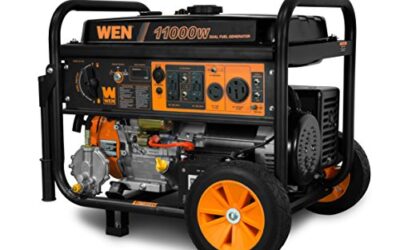
WEN 4,750-Watt Dual Fuel Portable Generator (DF475T)
The DF475T’s dual-fuel flexibility is its calling card: run it on gasoline for maximum power or propane for cleaner storage between jobs. With 4,750 starting watts, electric start, and a wheel kit, it is a versatile mid-size option for a small crew that values fuel choice and easy transport.
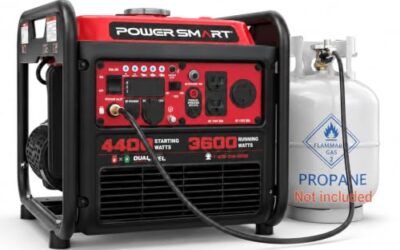
PowerSmart 3600 Watt Portable Inverter Generator
Quiet and comparatively light, the PowerSmart 3600W inverter suits finish trades and smaller sites where noise ordinances or close neighbors matter. It delivers clean power with a long runtime, making it a practical daily driver for a one- or two-person operation that does not need heavy surge capacity.
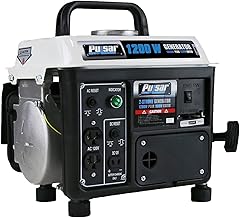
Pulsar 1,200W Portable Generator (PG1202SA)
Sometimes you just need to keep cordless batteries charged and a work light running. The compact 1,200W Pulsar is the grab-and-go option, light enough to carry in one hand up a ladder or into a remote corner of the site where hauling a full-size unit makes no sense.
Frequently Asked Questions
How many watts do I need for power tools?
It depends on the tool. A circular saw may run at 1,400 watts but surge to 2,300 at startup, while a compressor can spike higher still. For a single trade, 3,000-4,000 starting watts is a safe floor; multi-tool crews should aim for 6,500 or more.
Do I need GFCI outlets on a job site?
Yes. OSHA and most local codes require GFCI protection for temporary power on construction sites to protect workers from ground faults, especially in wet conditions. Choose a generator with GFCI outlets built into the panel rather than relying on adapters.
Is a dual-fuel generator worth it for work?
Often, yes. Propane stores indefinitely and burns cleaner, which is handy for a unit that sits between jobs, while gasoline gives you maximum power when you need it. Dual-fuel units like the WEN DF475T let you keep working whichever fuel you can get.
Can one generator run a whole crew?
A large 8,000-plus watt unit like the DeWalt can support several tools running together, but be realistic about simultaneous loads. Stagger high-surge tools and prioritize the panel so you do not overload the generator during peak demand.
Final Thoughts
For heavy multi-trade work, the DeWalt 8,750-watt generator is the workhorse that keeps a crew moving, while the Westinghouse 5000W inverter is the pick when clean power for electronics matters. The WEN DF475T offers fuel flexibility for smaller crews, the PowerSmart 3600W keeps noise down, and the Pulsar 1,200W handles grab-and-go duty. Buy for your peak surge load, insist on GFCI protection, and choose the durability features that survive daily site abuse.
Top picks from this guide
 PowerSmartPowerSmart 4000 Watt Portable Inverter Generator for Camping or Home…$360 \xc2\xb7 99/100
 Aceup EnergyAceup Energy 1,200W Gas Powered Generator, Small Portable Generator for…$160 \xc2\xb7 99/100
 WestinghouseWestinghouse 5000 Peak Watt Super Quiet Portable Inverter Generator, Remote…$849 \xc2\xb7 96/100
 WENWEN 4,750-Watt 120V/240V Dual Fuel Portable Generator with Wheel Kit…$465 \xc2\xb7 95/100
Write Your Review
No reviews yet. Be the first to share your experience!