
🛒 Best Price Today on Amazon
Prime members get fast, free shipping on everything above, plus member-only deals. New members get a 30-day free trial — cancel anytime.
Work around a generator involves round, threaded metal: fuel line unions, exhaust flanges and flex sections, drain fittings, and standby-install nipples. Ordinary flat-jaw tools skate across that round stock. A pipe wrench is built for it. Its hook and heel jaws carry hardened teeth that bite into the pipe wall: the harder you pull, the deeper they dig and the tighter the grip.

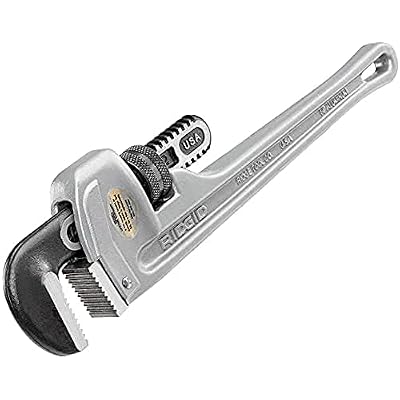
Three sizes cover nearly every job in this niche. A 10 inch wrench handles small fuel fittings in tight engine bays, a 14 inch is the everyday tool for unions and exhaust hardware, and an 18 inch adds leverage for corroded joints. Handles come in cast iron, which shrugs off abuse and adds helpful mass, or aluminum, which cuts weight by roughly forty percent. One honest caution: gas piping is regulated in many areas, and gas line installs or repairs often need a licensed fitter by law. A wrench does not change that: use these freely on fuel, exhaust, air, and water plumbing, and leave gas-side work to the rules.
As an Amazon Associate, we earn from qualifying purchases.
Quick answer
- Best compact pick: RIDGID 31010 Model 10, a 10 inch cast iron wrench for small fittings and tight spaces.
- Best everyday wrench: RIDGID 31095 Model 814, a 14 inch aluminum wrench with a 2 inch pipe capacity.
- Best for leverage: RIDGID 31100 Model 818, an 18 inch aluminum wrench that turns stubborn unions.
- Best heavy iron option: RIDGID 31030 Model 24, a 24 inch cast iron wrench with a 3 inch capacity.
- Best for the worst seizures: RIDGID 31110 Model 836, a 36 inch aluminum wrench with a 5 inch capacity.
RIDGID 31010 Model 10 Straight Pipe Wrench
The Model 10 is the small wrench that lives in the top of the toolbox. At 10 inches long with a 1-1/2 inch pipe capacity, it fits the fuel fittings, drain plugs, and small threaded adapters clustered around a generator engine, where longer handles foul on the frame. The cast iron I-beam handle is slim but rigid, and the floating forged hook jaw resets quickly between pulls.
RIDGID builds it like the big ones: self-cleaning threads on the adjustment nut and replaceable hook and heel jaws, so dull teeth mean a jaw swap, not a new tool.
Specs
- Length: 10 in
- Pipe capacity: 1-1/2 in
- Handle: cast iron I-beam
- Weight: 1-3/4 lb
- Jaws: replaceable hook and heel jaws
- Adjustment: knurled nut with self-cleaning threads
RIDGID 31095 Model 814 Aluminum Pipe Wrench
If you buy one pipe wrench for generator work, make it a 14 inch, and the Model 814 is its aluminum form. Its 2 inch jaw capacity covers most fuel unions, exhaust fittings, and threaded pipe on home standby and portable units. The aluminum handle cuts weight to about 2-1/2 pounds, roughly forty percent lighter than the iron 14 inch, which matters overhead and at arm’s length behind a unit.
The working end is not lightened: jaws, pins, and adjustment parts match the heavy-duty iron line, with the same self-tightening teeth. It is the balanced pick: full working capacity, half the fatigue.
Specs
- Length: 14 in
- Pipe capacity: 2 in
- Handle: aluminum I-beam
- Weight: 2-1/2 lb
- Jaws: replaceable hook and heel jaws, same as the iron line
- Build: nearly 40 percent lighter than comparable cast iron
RIDGID 31100 Model 818 Aluminum Pipe Wrench

The Model 818 stretches the same formula to 18 inches and a 2-1/2 inch pipe capacity. That extra length breaks loose exhaust unions heat-cycled for years and fuel fittings sealed by old thread compound. Leverage does what arm strength cannot, and the aluminum handle keeps weight near 3-3/4 pounds, so one hand can place the jaws while you pull.
It shares the 814’s heavy-duty jaw set, with threads that shed dirt instead of packing with it. Choose it when the 14 inch has slipped your grip twice, or for 2 inch threaded pipe on larger standby installs.
Specs
- Length: 18 in
- Pipe capacity: 2-1/2 in
- Handle: aluminum I-beam
- Weight: 3-3/4 lb
- Jaws: replaceable hook and heel jaws
- Adjustment: knurled nut with self-cleaning threads
RIDGID 31030 Model 24 Straight Pipe Wrench

The Model 24 is the cast iron heavyweight of this group: 24 inches of handle, a 3 inch pipe capacity, and close to ten pounds of iron. That mass is a feature on big, rusted unions: the weight seats the teeth on the first pull, and the handle multiplies force enough to move fittings untouched for a decade. Around commercial standby units and older steel fuel plumbing, this is the wrench that ends arguments.
Cast iron tolerates rough handling: drops on concrete, hammer taps, years of oily storage. The jaws are replaceable, the threads clean themselves as the nut turns, and the handle keeps its shape under two-hand loads. Too much wrench for small fittings, which is why it pairs with a 14 inch.
Specs
- Length: 24 in
- Pipe capacity: 3 in
- Handle: cast iron I-beam
- Weight: 9-3/4 lb
- Jaws: replaceable hook and heel jaws
- Adjustment: knurled nut with self-cleaning threads
RIDGID 31110 Model 836 Aluminum Pipe Wrench

The Model 836 is the specialist for the largest, most seized fittings: 36 inches of handle and a 5 inch pipe capacity, in an aluminum build that weighs about 11 pounds. The cast iron version weighs roughly 19 pounds; the aluminum build is one a single person can position and pull with control. On large commercial pipe runs, that control matters as much as raw force.
Use it with respect: a 36 inch handle can crush thin-wall pipe or snap a weakened fitting, so back up the joint with a second wrench when the connected equipment should not take the twist. The jaw set is the line’s replaceable, self-tightening design, scaled up. Rarely needed; impossible to substitute when it is.
Specs
- Length: 36 in
- Pipe capacity: 5 in
- Handle: aluminum I-beam
- Weight: 11 lb
- Jaws: replaceable hook and heel jaws
- Build: nearly 40 percent lighter than the cast iron equivalent
How to choose
Begin with pipe capacity, not handle length. The jaws must open past the outside diameter of your largest fitting, and the capacity figures above already account for that. Most home generator plumbing tops out at 2 inches, which is why the 14 inch wrench is the default buy. Move up a size when fittings are corroded or large, because leverage frees joints that grip alone cannot.
Then pick a handle material. Cast iron suits a wrench that lives in the shop, where weight adds bite and durability is everything. Aluminum suits anyone carrying the tool to the unit, working overhead, or holding position on exhaust parts. Either way, look for replaceable jaws and a floating hook jaw; they decide how long the wrench stays useful.
Two usage rules matter more than brand. First, work in pairs on connected equipment: one wrench turns the fitting while a second holds the pipe or manifold still, so the twist does not travel into the generator. Second, keep pipe wrenches off hex nuts and bolt heads. On flat hex faces the teeth chew the corners and ruin the fastener.
FAQ
Can I use a pipe wrench on a hex nut in a pinch?
It will grip, but the teeth dig into the flat faces and round the corners, often ruining the nut for later removal. Keep a smooth-jaw adjustable wrench in the same toolbox for hex hardware.
Which size should I buy first for generator work?
The 14 inch: its 2 inch capacity covers most fuel and exhaust fittings on home units, with real leverage and no engine-bay clumsiness. Add the 10 inch later for tight spots.
Can I use these wrenches on the gas line feeding a standby generator?
The tools suit threaded steel pipe, but gas work is regulated in many areas and often requires a licensed fitter for installation and repair. Check your local rules, and leave regulated gas connections to a licensed professional.
Do the teeth damage pipe?
Yes, by design: the grip comes from the teeth sinking in slightly. Use them on pipe bodies and round fittings where marks do not matter, never on polished, plated, or sealing surfaces.
Verdict
For most owners, the RIDGID 31095 Model 814 is the right single purchase: full 2 inch capacity, real leverage, and an aluminum handle light enough for overhead exhaust work. Pair it with the compact 31010 for tight engine-bay fittings. When corrosion and size stack the odds, step up to the 818, the iron 31030, or the 836 when nothing smaller will move the joint. Buy the size your fittings demand, and these five will handle every round fitting a generator can present.
Write Your Review
No reviews yet. Be the first to share your experience!