
- Top Pick: Champion Power Equipment 4000-Watt Dual Fuel RV Ready Portable Inverter Generator with Quiet Technology and Free 3-Year Warranty
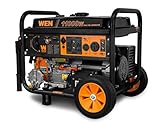
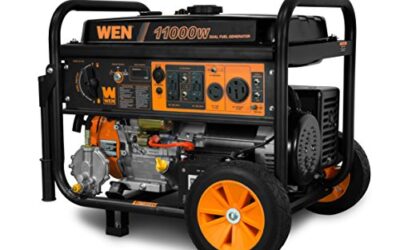
- Best Value: WEN 11,000-Watt 120V/240V Dual Fuel Portable Generator with Wheel Kit and Electric Start (DF1100T)
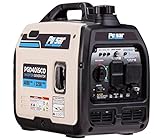
- Premium Choice: Pulsar PGD40ISCO Ultra Light Quiet 4000W Portable Gas Inverter Generator, white
A microwave seems like a small appliance, but it is one of the trickier loads to power with a portable generator. The reason is a mismatch between the number on the door and the wattage it actually pulls from the wall: a microwave rated at 1,000 watts of cooking power typically draws 1,500 to 1,700 watts of electrical input, and it demands that clean, steady power the instant you press start. Undersize your generator and you will get a stalling engine, a tripped breaker, or a microwave that resets mid-reheat.
Whether you want hot food on a camping trip, at a tailgate, or during a home outage, the generators below all have the output and clean power delivery to run a microwave without drama. We prioritized inverter units for their electronics-safe output, but included a few larger conventional and dual-fuel options for those who need to run a microwave alongside everything else. Here are our picks and the numbers behind them.
As an Amazon Associate we earn from qualifying purchases at no extra cost to you.



⚡ Save on Your Next PC — Amazon Prime
Prime members get fast free shipping on the systems above, plus early access to Prime Day & Black Friday PC deals. New members get a 30-day free trial.
Watch: Best Portable Generators for Running a Microwave — Video Review
How to Choose
- Match input watts, not cooking watts: A “1,000-watt” microwave draws about 1,500-1,700 watts of input. Size your generator to that real figure plus surge headroom, never to the label on the door.
- Prioritize clean sine wave power: Microwaves have electronic control boards; an inverter generator’s low harmonic distortion prevents erratic behavior and protects the electronics.
- Leave surge headroom: The magnetron and turntable motor create a brief startup spike. A 2,000W-plus continuous rating comfortably absorbs a mid-size microwave’s demand.
- Consider what else runs: If the microwave shares the generator with a fridge or lights, add their loads together and size up accordingly.
- Weigh fuel and runtime: Dual-fuel and larger tanks matter if you need to run the microwave repeatedly over a long outage rather than a single quick reheat.
The Best Picks Reviewed
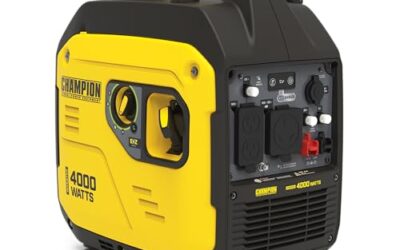
Champion 4000-Watt Dual Fuel RV Ready Inverter Generator
This Champion inverter delivers 4,000 starting watts of clean power with quiet technology, easily covering a microwave with plenty of headroom for a fridge and lights too. Its dual-fuel design lets you run on propane or gasoline, and the free three-year warranty makes it one of the most reassuring mid-size picks for both camping and backup duty.
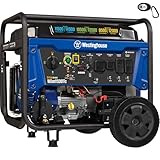
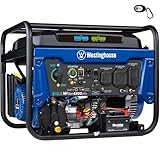
Westinghouse 6600 Watt Dual Fuel Home Backup Generator
When you need to run a microwave as just one item on a long list, the Westinghouse 6600W dual-fuel unit has the muscle. With remote electric start, a CO sensor, and transfer-switch and RV readiness, it powers kitchen appliances alongside fridges and pumps during an outage, making it a genuine home-backup workhorse.
Oxseryn 2800-Watt Portable Inverter Generator
At just 39 pounds with a fuel shutoff and super-quiet operation, the Oxseryn 2800W is the lightweight pick for tailgates and campsites where a quick reheat is all you need. Its 2,800-watt ceiling clears a mid-size microwave, and the low weight makes it easy to carry from the truck to the table.
Pulsar PGD40ISCO 4000W Gas Inverter Generator
Ultra-light for its class, the Pulsar 4000W inverter pairs quiet operation with clean power that a microwave’s control board will appreciate. It is a strong choice for RVers who want to reheat leftovers and still power sensitive electronics without the noise of a conventional open-frame unit.
WEN 5600-Watt Portable Generator (GN5600)
For those who prefer conventional power at a value price, the transfer-switch and RV-ready WEN GN5600 offers 5,600 watts, ample for a microwave plus other essentials. It is not an inverter, so pair sensitive gear with a surge protector, but for straightforward appliance duty it delivers a lot of watts per dollar.
Frequently Asked Questions
How many watts does a microwave really use?
Multiply the cooking wattage by roughly 1.5 to 1.7 to estimate electrical input. A 1,000-watt microwave typically pulls 1,500-1,700 watts from the outlet, so you need a generator that can supply at least that continuously with surge headroom.
Do I need an inverter generator for a microwave?
It is strongly recommended. Microwaves rely on electronic control boards that can misbehave on the “dirty” power of a conventional generator. An inverter’s clean sine wave output keeps the microwave running normally and protects its electronics.
Can a 2,000-watt generator run a microwave?
A small microwave, sometimes, but it is cutting it close. A compact 700-watt microwave may draw around 1,100 watts of input, which a 2,000W inverter can handle alone. For a standard mid-size microwave, a 2,800W or larger unit is safer.
Can I run a microwave and a fridge at the same time?
Yes, if the generator is sized for the combined load. A fridge adds roughly 150-250 running watts plus its own surge, so a 4,000W-plus unit like the Champion comfortably runs both, while a 2,800W unit is better dedicated to the microwave alone.
Final Thoughts
For most people who want reliable microwave power plus room to spare, the Champion 4000W dual-fuel inverter is the balanced top pick, quiet, clean, and flexible on fuel. Choose the Westinghouse 6600W when the microwave is one appliance among many during an outage, the Oxseryn 2800W for lightweight portability, and the WEN GN5600 for maximum watts on a budget. Size to the microwave’s real input wattage, favor clean inverter power, and hot food is never more than a start button away.
Top picks from this guide
 WENWEN 11,000-Watt 120V/240V Dual Fuel Portable Generator with Wheel Kit…$903 \xc2\xb7 99/100
 PulsarPulsar PGD40ISCO Ultra Light Quiet 4000W Portable Gas Inverter Generator,…$450 \xc2\xb7 98/100
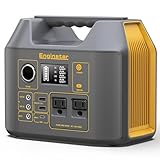
 EnginStarEnginStar 296Wh Portable Solar Generator, Pure Sine Wave Power Station$134 \xc2\xb7 98/100
 WestinghouseWestinghouse 6600 Watt Dual Fuel Home Backup Portable Generator, Remote…$649 \xc2\xb7 98/100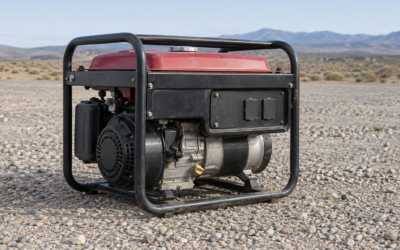

Write Your Review
No reviews yet. Be the first to share your experience!