
🛒 Best Price Today on Amazon
Prime members get fast, free shipping on everything above, plus member-only deals. New members get a 30-day free trial — cancel anytime.
Van life means living on the energy you carry and generate, and a portable power station is a popular, install-free alternative to a wired campervan electrical system. This guide explains how to size a station for van life, what it powers, and when a built-in system makes more sense.
Van life energy needs
Typical van loads are a 12V fridge, lights, fans, water pump, laptops, phones, and sometimes a small induction cooktop or projector. Heating and cooking are usually propane or diesel to save electricity. Most vanlifers use 1-2.5 kWh per day, which guides station and solar sizing.

Jackery Explorer 300 Portable Power Station,292Wh
Included for 'Best Portable Power Station for Van Life: Powering Your Mobile Home' because the listing specifies 292Wh, details this guide uses to compare options.
View on Amazon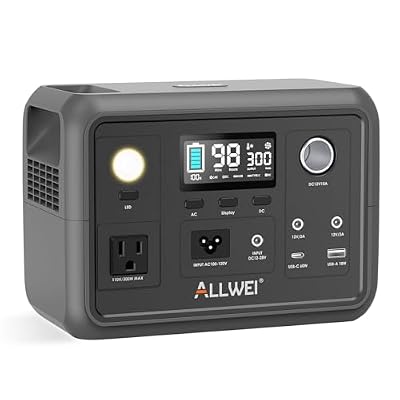
ALLWEI Portable Power Station 300W, 256Wh Solar Generator LiFePO4 Battery
Included for 'Best Portable Power Station for Van Life: Powering Your Mobile Home' because the listing specifies 256Wh Solar Generator LiFePO4 Battery, details this guide uses to compare options.
View on Amazon
VTOMAN FlashSpeed 300 Portable Power Station, 300W 230Wh LiFePO4 Battery
Included for 'Best Portable Power Station for Van Life: Powering Your Mobile Home' because the listing specifies 300W 230Wh LiFePO4 Battery, details this guide uses to compare options.
View on Amazon
GRECELL 999Wh Portable Power Station 1000W for Outdoor & Home Backup
Included for 'Best Portable Power Station for Van Life: Powering Your Mobile Home' as a relevant option in this category; details come from the product listing.
View on AmazonDaily energy planning
| Load | Daily energy |
|---|---|
| 12V compressor fridge | 0.4-0.8 kWh |
| Fans + lights + water pump | 0.2-0.5 kWh |
| Laptops, phones, camera gear | 0.3-0.6 kWh |
| Induction cooktop (bursts) | 0.3-0.8 kWh |
Features that matter for van life
Solar acceptance
Solar is your main renewable source on the road, so high solar input and an efficient MPPT controller matter most. Roof-mounted or portable panels of 200-600W keep a station topped for most setups.
Capacity and expandability
A 1-2kWh station suits minimalist vanlifers; a 2-3kWh expandable unit supports fridges, cooking bursts, and remote work. Expandability lets you grow as your needs change.
Weight, size, and efficiency
Space and weight are premium in a van, so balance capacity against footprint. LiFePO4 is essential for daily cycling and heat tolerance during summer travel.
Portable station versus built-in system
A portable station needs no installation, moves between vehicles, and doubles as home backup, ideal for renters, new builds, or those who value flexibility. A hardwired system with a dedicated battery, inverter, and alternator charging is more integrated and can charge while driving, better for full-time, high-consumption living. Many start portable and add a built-in system later.
FAQ
Can I charge a power station while driving?
Yes, via a 12V car socket or a higher-power alternator charging setup, though car-socket charging is slow. Solar remains the primary renewable source; some vanlifers add a DC-to-DC charger for faster driving top-ups.
Is a portable station or a built-in system better for van life?
A portable station is simpler, movable, and doubles as home backup, great for part-timers and renters. A built-in system suits full-time, high-consumption living with alternator charging. Choose based on how much power you use and how permanent your build is.
Living well on stored energy
Van life thrives on efficiency. Every LED bulb, DC appliance, and USB-C charge reduces the draw on your battery, letting a modest station and panel array sustain you indefinitely. Prioritize a DC compressor fridge, run a roof fan instead of AC when possible, and keep cooking and heating on propane or diesel. These choices shrink your daily kWh so solar can keep pace even on cloudy days.
Charging while you travel
The road itself is a power source. A DC-to-DC charger tied to your alternator refills the station while driving, complementing solar for days when you cover distance under cloudy skies. Combined with roof or portable panels, this gives you two independent renewable inputs, so you are rarely dependent on campground hookups or a slow 12V socket.
Managing heat and battery health
Summer travel exposes a station to high cabin temperatures, so choose LFP chemistry for its heat tolerance and park to keep the unit out of direct sun. Ventilation around the station helps it run cool, preserving both capacity and lifespan. In winter, keep it from freezing and rely on low-temperature charge protection to avoid cold-charging damage.
Portable now, built-in later
A portable station is the perfect starting point: no installation, movable between vehicles, and doubling as home backup. As your travels lengthen and loads grow, you can graduate to a hardwired system with alternator charging and a larger inverter. Many full-timers keep the portable unit even then, as a backup and for outdoor use away from the van.
Bottom line
For van life, size a LiFePO4 station to your daily kWh, usually 1-3kWh, and pair it with 200-600W of solar and an MPPT controller. Prioritize solar acceptance, capacity for your loads, and a footprint that fits your build. A portable station offers install-free flexibility; step up to a wired system only for full-time, heavy use.





Write Your Review
No reviews yet. Be the first to share your experience!