
🛒 Best Price Today on Amazon
Prime members get fast, free shipping on everything above, plus member-only deals. New members get a 30-day free trial — cancel anytime.
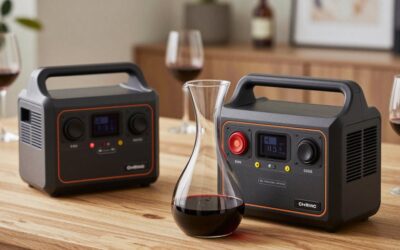
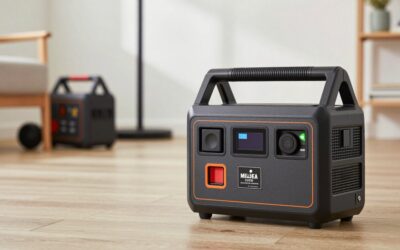
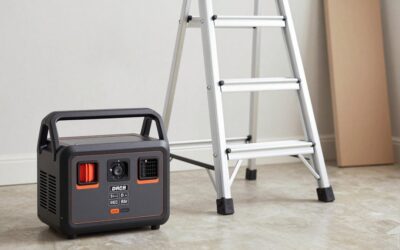
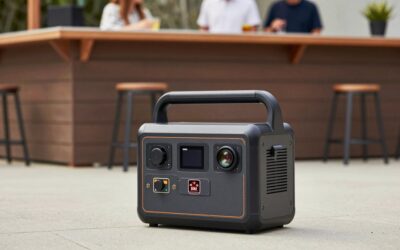
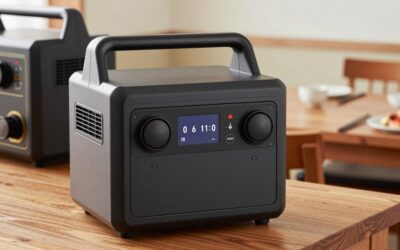
For anyone who sleeps with a CPAP, a power outage is not an inconvenience; it is a night of broken sleep or worse. The Bluetti AC70 is a comfortable fit for this job. A CPAP draws a small fraction of the AC70’s 1,000W inverter capacity, and its roughly 768Wh battery can cover several nights. How many depends almost entirely on one setting: the heated humidifier. This guide breaks down real-world draw, compares AC and DC connections, and covers a few settings that matter for bedside use.
A quick note first: this is general power guidance, not medical advice. Ask your sleep physician or equipment supplier before changing humidifier or pressure settings, and confirm your machine’s power requirements in its manual.
How much power does a CPAP actually use?
The motor itself is modest. Most current machines draw about 30 to 60W while running at typical pressures without humidification. Turn on a heated humidifier and a heated hose and the draw can climb to 80 to 110W or more, because heating water is energy-intensive. The power brick’s label shows a maximum rating, often 65 to 90W, which is a ceiling rather than the average draw.
AC70 runtime by configuration
The AC70 is sold as roughly 768Wh of LiFePO4 storage; confirm the exact rating against Bluetti’s current spec sheet. On AC, expect around 85% efficiency after inverter losses. Using a DC cable from the manufacturer or a DC-DC converter avoids the inverter and can reclaim 10 to 15% of the energy.
| Setup (8-hour night) | Average draw | Energy per night | Nights on AC70 (AC outlet) | Nights via DC adapter |
|---|---|---|---|---|
| CPAP, no humidifier, 8-10 cmH2O | ~35W | ~280Wh | ~2.3 | ~2.6 |
| CPAP, humidifier low | ~55W | ~440Wh | ~1.5 | ~1.7 |
| CPAP, humidifier + heated tube | ~90W | ~720Wh | ~0.9 | ~1.0 |
| BiPAP at higher pressure, no humidifier | ~50W | ~400Wh | ~1.6 | ~1.8 |
Idle draw of the power station itself also counts. Leaving the AC inverter on all night adds several watts on top of the CPAP load, which is another reason the DC path usually wins.
Settings that make the biggest difference
Humidifier strategy
If your clinician agrees, you can run the humidifier chamber without heat (passover humidification) during an outage, which still adds some moisture but uses a fraction of the energy. That single change can take the AC70 from one night to two or more.
Charging and UPS behavior
The AC70 can pass through power while plugged into the wall, and Bluetti advertises a UPS switchover in the tens of milliseconds. Many CPAPs ride through that gap fine, but not all do, so test it. Plug the CPAP into the AC70, plug the AC70 into the wall, start the machine, then pull the wall plug. If the CPAP keeps running without an alarm, you have a seamless bedside backup.
Noise and placement
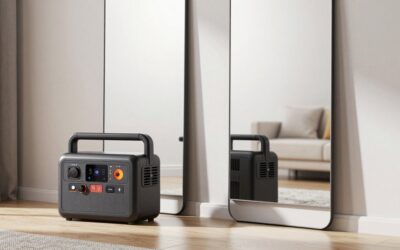
At a CPAP-level load the AC70’s fans are usually quiet or off, but they may spin up while the unit is charging. Set the charging mode to a silent or standard speed overnight, and keep the unit on the floor rather than the nightstand to reduce any hum.
Extending coverage for a multi-night outage
- Add storage: an expansion battery around 800Wh roughly doubles the nights available.
- Solar by day: even a single 100 to 200W panel can replace one night of non-humidified CPAP use on a clear day.
- Charge from a vehicle: car charging is slow but useful. Never idle a car in an attached garage to do it; carbon monoxide can seep into the house within minutes.
- Generator recharging: run any gas generator outdoors at least 20 feet from the house, away from the bedroom window, never in a garage or on a porch, and keep CO alarms near sleeping areas.
Keep the AC70 in the bedroom rather than the garage. LiFePO4 batteries do best between roughly 50 and 90°F and should not be charged below freezing.
FAQ
Can I just plug my CPAP’s regular power brick into the AC70?
Yes. The AC outlets provide pure sine wave power, which CPAPs handle well. It is simply less efficient than a DC connection, so you trade some runtime for convenience.
Is it safe to leave the AC70 running unattended overnight?
LiFePO4 chemistry is among the more stable lithium types, and a CPAP is a light load. Keep the unit on a hard, ventilated surface, away from bedding and water from the humidifier chamber, and do not cover its vents.
Bottom line
The Bluetti AC70 can power a CPAP for roughly one to two and a half nights, depending mostly on humidifier use. Use a DC adapter, test the UPS switchover in advance and add solar or an expansion battery for longer outages, and it becomes a reliable bedside backup.
Write Your Review
No reviews yet. Be the first to share your experience!