
🛒 Best Price Today on Amazon
Prime members get fast, free shipping on everything above, plus member-only deals. New members get a 30-day free trial — cancel anytime.
When the power is out, a generator’s hourly cost barely registers. After two or three days, the fuel receipts start adding up, and many owners are surprised by how much a mid-size portable burns running around the clock. The daily cost depends on four things: generator type, how much load you put on it, fuel price, and how many hours you actually run it. This guide walks through the math with realistic ranges so you can estimate your own daily cost before the next outage, and shows the easiest ways to cut it.
The basic formula
Daily cost = fuel burned per hour × hours run per day × price per unit of fuel. Add a small allowance for oil if you run long enough to hit an oil change interval. Everything interesting happens in the first term, because fuel burn varies enormously with load and generator design.
Why load matters so much
A generator does not burn fuel in direct proportion to output. At no load, a conventional generator still spins at 3,600 RPM and burns a meaningful amount. Inverter generators throttle down at light load, which is why their fuel use at 25 percent load can be a fraction of a conventional unit’s. Running a big generator to power a fridge and a few lights is one of the most expensive things you can do.
Typical fuel use and daily cost
The table uses gasoline at an illustrative $3.50 per gallon and 24 hours of continuous running. Consumption ranges are typical of the class; your specific model’s spec sheet lists run time at 25 and 50 percent load, which is the best source.
| Generator type | Typical load | Gallons per hour | Gallons per 24 h | Daily fuel cost at $3.50/gal |
|---|---|---|---|---|
| 2,000–2,500 W inverter | 25% (fridge, lights, phones) | ~0.10–0.15 | ~2.4–3.6 | ~$8–13 |
| 3,500–4,500 W inverter | ~40% | ~0.20–0.30 | ~4.8–7.2 | ~$17–25 |
| 5,000–7,500 W conventional | ~50% | ~0.45–0.65 | ~10.8–15.6 | ~$38–55 |
| 8,000–10,000 W conventional | ~50% | ~0.65–0.90 | ~15.6–21.6 | ~$55–76 |
| 20–24 kW standby on natural gas | ~50% | ~200–260 cu ft/h | ~48–62 therms | ~$60–120+ at $1.25–2/therm |
Worked example: a typical suburban outage
Suppose you run a 7,000 watt conventional generator to power a refrigerator, a chest freezer, a gas furnace blower, a few lights, a TV and phone chargers. Average load might be around 1,500 to 2,500 watts, with spikes when motors start. That is roughly 25 to 35 percent of rated output, where a conventional unit might burn around 0.40 to 0.50 gallons per hour. Over 24 hours, that is about 10 to 12 gallons, or $35 to $42 at $3.50. Swap in a 3,500 watt inverter that can handle the same essentials by staggering motor starts, and consumption might drop to 5 or 6 gallons, roughly halving the daily bill.
Propane and diesel daily costs
Propane
Propane contains less energy per gallon, so a dual-fuel generator on propane burns more gallons for the same load, often 20 to 40 percent more by volume. A 20 lb cylinder holds about 4.6 gallons. If your generator burns 0.6 gallons of propane per hour, a cylinder lasts under 8 hours, and running 24 hours takes three or more cylinder swaps. Exchange cylinders commonly cost $20 to $30 each, which can make propane noticeably pricier per day than gasoline. Bulk tank fills are usually much cheaper per gallon.
Diesel
Diesel generators tend to use less fuel per kilowatt-hour than gasoline, especially under heavier load, which offsets diesel’s often higher pump price. They make the most sense for long daily run times.
Five ways to cut the daily cost
- Do not run 24/7. A full fridge holds temperature for about 4 hours closed; a full chest freezer for a day or more. Running 2 to 3 hours on, 3 to 4 hours off can cut fuel use by 40 to 60 percent.
- Right-size the generator. Match the generator to your essential load rather than your whole house.
- Use an inverter generator for light loads. Eco-throttle modes can halve consumption at low load.
- Stagger motor starts. Starting the fridge and freezer at different times lets a smaller unit cope.
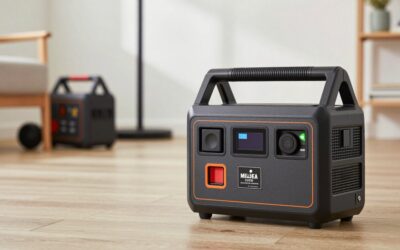
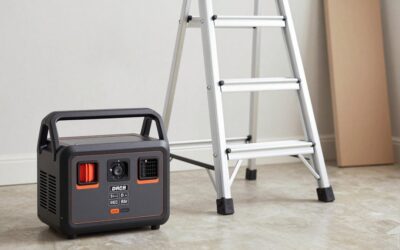
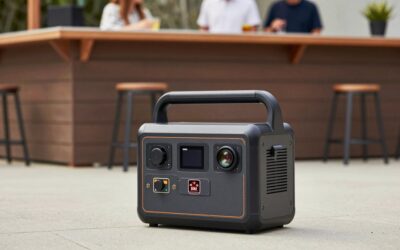
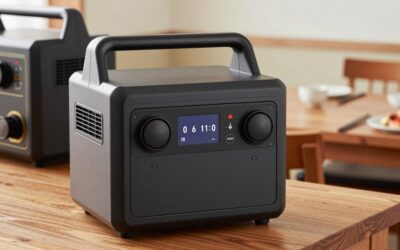
- Pair with a power station. Run the generator a few hours to charge a battery, then run quiet overnight on battery.
Do not save money on safety
Whatever you run, keep the generator outdoors, at least 20 feet from the house with exhaust pointed away from windows and doors, never in a garage or on a porch. Use CO alarms indoors. Connect to house circuits only through a transfer switch or interlock installed by a licensed electrician. Refuel only after the engine cools for several minutes to avoid igniting spilled gasoline on a hot muffler.
FAQ
Is it cheaper to run a generator or buy a power station?
For short outages, a power station has no fuel cost if you charge it before the storm, but its energy is limited. For multi-day outages, a generator is almost always cheaper per kilowatt-hour delivered. Many households use both.
Does running a generator at low load waste fuel?
Yes, especially with conventional units that cannot throttle down. Fuel burned per kilowatt-hour delivered is highest at light load and best around 50 to 75 percent of rated output.
Bottom line
Expect roughly $8 to $25 per day for a small or mid-size inverter generator and $35 to $75 or more for a large conventional portable running around the clock at gasoline prices near $3.50. Cycling the generator, right-sizing it, and choosing an inverter model for light loads are the biggest levers. Plug your own generator’s published consumption and local fuel prices into the formula above before the next storm, and you will know what an outage really costs.





Write Your Review
No reviews yet. Be the first to share your experience!