
🛒 Best Price Today on Amazon
Prime members get fast, free shipping on everything above, plus member-only deals. New members get a 30-day free trial — cancel anytime.
Sticker price is the least interesting number when comparing a gasoline generator with a battery power station. A $700 inverter generator and a $1,200 power station may look like an easy call until you add fuel, oil, stabilizer, repairs, solar panels and the years each will last. This comparison builds a ten-year total cost of ownership for both, for two very different users: a household that needs occasional storm backup and one that needs regular off-grid power. The results are not what most shoppers expect.
What goes into total cost of ownership
Generator
- Purchase price
- Fuel for actual use, plus fuel that goes stale and must be replaced
- Fuel stabilizer, oil, spark plugs, air filters
- Carburetor cleaning or repair after storage problems
- Exercise runs to keep it healthy, which burn fuel even without an outage
- Accessories: transfer switch or interlock installation, heavy cords, cover
Power station
- Purchase price
- Electricity to charge it, usually trivial
- Solar panels if you want off-grid recharging
- Battery replacement or new unit when capacity fades too far
- Accessories: transfer switch or home backup kit if connecting to circuits
Scenario 1: storm backup, a few outages a year
Assume three outages a year totaling about 30 hours, an average load of 800 W, and a ten-year horizon. Prices are illustrative.

Jackery Explorer 300 Portable Power Station,292Wh
Included for 'Generator vs Power Station: Total Cost of Ownership Compared' because the listing specifies 292Wh, details this guide uses to compare options.
View on Amazon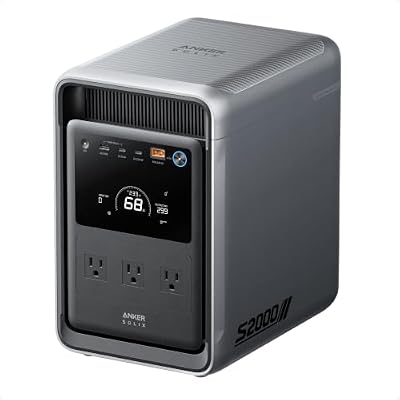
Anker SOLIX S2000 Portable Power Station, 2,010Wh, 1,500W
Included for 'Generator vs Power Station: Total Cost of Ownership Compared' because the listing specifies 010Wh and 500W, details this guide uses to compare options.
View on Amazon
BLUETTI Portable Power Station AC180, 1152Wh LiFePO4 Battery Backup w/ 2 1800W (2700W peak) AC Outlets, 0-80% in 45Min, Solar Generator for Camping, Off-grid, Power Outage
Included for 'Generator vs Power Station: Total Cost of Ownership Compared' because the listing specifies 0-80% in 45Min and Solar Generator for Camping, details this guide uses to compare options.
View on Amazon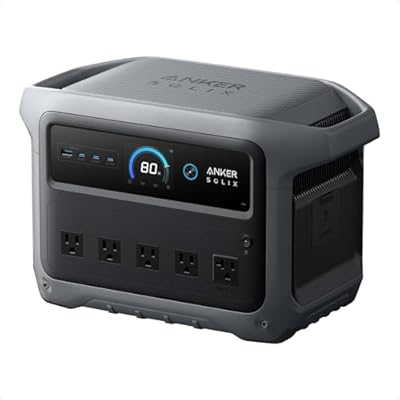
Anker SOLIX C1000 Gen 2 Portable Power Station
Included for 'Generator vs Power Station: Total Cost of Ownership Compared' as a relevant option in this category; details come from the product listing.
View on Amazon| Cost item (10 years) | 3,500–4,500 W inverter generator | ~2 kWh LiFePO4 power station + 400 W solar |
|---|---|---|
| Purchase | ~$700–1,200 | ~$1,200–1,900 (station) + ~$500–900 (panels) |
| Fuel for outages | ~$250–400 | ~$0 (charged beforehand, solar during) |
| Monthly exercise runs + stale fuel replacement | ~$200–350 | $0 (quarterly top-up only) |
| Oil, plugs, filters, stabilizer | ~$150–250 | $0 |
| Carb cleaning or repair (likely once) | ~$75–200 | $0 |
| Grid charging electricity | $0 | ~$10–30 |
| Estimated 10-year total | ~$1,375–2,400 | ~$1,710–2,830 |
For light backup duty, the totals land surprisingly close. The generator is cheaper up front; the power station wins on maintenance and hassle. The deciding factor is often capability: the generator can run a window AC or well pump for days, while a 2 kWh station covers the fridge, lights, CPAP and Wi-Fi for roughly a day before needing sun or a wall.
Scenario 2: regular off-grid use
Now assume a cabin or RV user drawing about 3 kWh a day, 100 days a year. That is 300 kWh a year, or 3,000 kWh over ten years.
Generator path
A mid-size inverter delivering 3 kWh a day might burn roughly 0.4 to 0.6 gallons per kWh at light load, so about 1,200 to 1,800 gallons over ten years. At $3.50 a gallon, that is $4,200 to $6,300 in fuel alone, plus roughly 1,000 to 1,500 run hours of oil changes and parts, and likely a major repair or replacement before year ten.
Power station path
A 3 to 4 kWh station with 800 W to 1.2 kW of solar might cost roughly $3,000 to $5,500 together. Fuel cost is near zero in sunny locations. At 100 cycles a year, a LiFePO4 pack rated for 3,000+ cycles will not wear out from cycling in ten years, though calendar aging still reduces capacity. You may want a small backup generator for cloudy stretches, which adds cost but runs far fewer hours.
In heavy-use scenarios, the power station plus solar usually wins by a wide margin over a decade.
Lifespan and resale
A well-maintained inverter generator can last 10 to 20 years or several thousand hours. A neglected one can be dead in three. LiFePO4 stations are commonly rated for 3,000 to 4,000 cycles to 70 to 80 percent capacity, and warranties around five years are common on current lines. Electronics can fail independently of cells, and replacement parts availability varies by brand. Generators hold resale value well if they run; used power stations sell at a steeper discount because buyers worry about battery health.
Costs that do not show up on receipts
A generator must run outdoors, at least 20 feet from the house with exhaust pointed away from openings, never in a garage or on a porch. That means refueling in the rain, noise complaints, and real carbon monoxide risk if someone gets careless. A power station runs indoors silently. Both need a transfer switch or interlock kit installed by a licensed electrician if you connect them to house circuits; never backfeed through an outlet.
FAQ
Which is cheaper for a first-time backup buyer?
Up front, a generator. Over ten years of occasional use, the two are close, and the right answer depends on whether you need high-wattage loads like well pumps and AC or mainly want quiet, maintenance-free essentials.
Should I buy both?
Many households do. A small generator recharges a mid-size power station during the day, and the station runs silently overnight. That hybrid often costs less in fuel than running a larger generator around the clock.
Bottom line
For occasional storm backup, a generator and a power station end up within a few hundred dollars of each other over ten years once maintenance and stale fuel are counted. For regular off-grid use, a power station with solar usually costs far less over a decade. Choose based on the loads you must run and how often, not on the price tag in the store.



Write Your Review
No reviews yet. Be the first to share your experience!