
🛒 Best Price Today on Amazon
Prime members get fast, free shipping on everything above, plus member-only deals. New members get a 30-day free trial — cancel anytime.
Deer camp power has to serve two very different parts of the trip. At camp, you need lights, maybe a fridge or freezer for meat, charging for phones, radios, and headlamps, and sometimes game processing equipment. In the field, you want silence and no unnatural scents that could put deer on alert. Add cold mornings, remote locations, and several days without resupply, and the choice between a generator and a power station becomes a question of which jobs each one handles best.
Deer camp loads
| Load | Running watts | Daily energy (approx.) |
|---|---|---|
| LED camp lights | 20–80W | 100–400Wh |
| Phone, GPS, radio, headlamp charging | 20–80W | 100–300Wh |
| Trail camera and thermal battery charging | 10–40W | 50–200Wh |
| 12V fridge or cooler | 40–60W cycling | 400–800Wh |
| Chest freezer for meat | 60–150W cycling | 0.6–1.5 kWh |
| Vacuum sealer | 110–250W | 20–60Wh per session |
| Electric meat grinder | 400–1,000W | 100–300Wh per batch |
| Coffee maker | 800–1,200W | 100–200Wh |
| Electric heater (wall tent or cabin) | 750–1,500W | 5–15 kWh |
Heat is usually handled by propane or a wood stove at deer camp. Without electric heat, most camps use 1 to 3 kWh per day, rising when a freezer and processing equipment run.

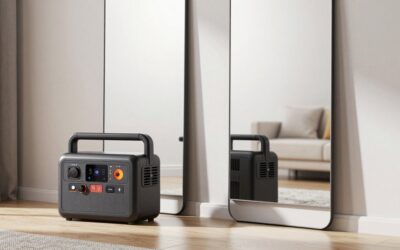
Jackery Explorer 300 Portable Power Station,292Wh
Included for 'Best Power Solution for Deer Camp And Hunting: Generator or Power Station?' because the listing specifies 292Wh, details this guide uses to compare options.
View on Amazon
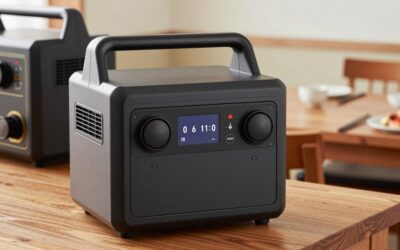
Oxseryn 2800-Watts Portable Inverter Generator, Gas Generators for Home Use, Camping, Super Quiet Emergency Home Backup, with Fuel Shut Off, 1.1Gal Fuel Tank, 39Lbs, EPA Compliant
Included for 'Best Power Solution for Deer Camp And Hunting: Generator or Power Station?' because the listing specifies Gas Generators for Home Use and Camping, details this guide uses to compare options.
View on Amazon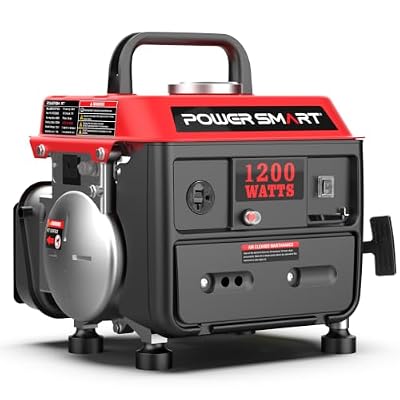
PowerSmart 1200 Watt Portable Generator for Camping
Included for 'Best Power Solution for Deer Camp And Hunting: Generator or Power Station?' as a relevant option in this category; details come from the product listing.
View on Amazon
GRECELL Portable Power Station 330W 288Wh Solar Generator for Camping
Included for 'Best Power Solution for Deer Camp And Hunting: Generator or Power Station?' as a relevant option in this category; details come from the product listing.
View on AmazonThe case for a power station
Quiet at camp, quiet in the woods
A running generator can be heard a long way through quiet timber in the early morning, and engine exhaust carries scent. A power station lets you charge gear, run lights before dawn, and brew coffee without broadcasting your presence. For camps that sit close to hunting areas, this is a real advantage.
Charging electronics
Modern hunting relies on GPS units, rangefinders, thermal optics, radios, and trail camera batteries. A 500 to 1,000Wh station recharges all of them every night for several days.
Cold-weather caveats
Lithium batteries lose capacity in cold, and most stations cannot charge below about 32 degrees Fahrenheit. Keep the station inside the heated cabin or wall tent, not in the truck overnight. A station stored at 20 degrees may deliver 15 to 30 percent less than its rated capacity.
The case for a generator
Meat preservation and processing
A successful hunt changes the power budget. A chest freezer running for days, a grinder, and a vacuum sealer add several kilowatt-hours. A 2,000 to 3,500W inverter generator handles all of it, including the grinder’s motor start, on a gallon or two of fuel per day.
Keeping meat safe in warm spells
Early-season hunts often hit afternoons in the 50s or 60s, when hanging a deer is risky. A freezer or a converted chest cooler kept at safe temperatures by a generator protects the harvest until you can get it to a processor, and that alone justifies bringing one for many camps.
Long, remote stays
For week-long camps, especially late season with short days and weak sun, solar recharging is limited. A generator running a couple of hours midday, when hunters are in the stands or out of earshot, can recharge a power station and keep the freezer cold.
Comparison for a five-day deer camp
| Factor | Power station (1,000–2,000Wh) + solar | Inverter generator (2,000–3,500W) |
|---|---|---|
| Noise near hunting areas | Silent | 50–60 dBA, audible in quiet woods |
| Scent from exhaust | None | Yes |
| Runs chest freezer for days | Only with good sun and large capacity | Yes |
| Meat grinder and processing | Short batches | Yes |
| Cold-weather reliability | Reduced capacity, keep warm | Needs fresh fuel, cold-start care |
| Fuel to haul | None | 5–10 gallons |
A layered deer camp plan
Many camps settle on both. The power station sits in the cabin or tent for lights, charging, CPAP, and coffee. A 100 to 200W folding panel set out on a clear day adds 300 to 700Wh in early-season sun, though November light in northern states often cuts that roughly in half. The generator stays at the far side of camp and runs midday while hunters are out, cooling the freezer, charging the station, and powering processing sessions after a harvest. This keeps mornings and evenings silent when deer are moving.
FAQ
Will a generator spook deer?
Deer can become accustomed to regular sounds, but an engine starting at dawn near a hunting area is a new, unnatural noise and scent. Run generators midday and as far from stands as practical.
How long does a power station run a chest freezer?
A small chest freezer averaging about 50 to 70W runs roughly 24 to 30 hours on a 2,000Wh station. Pre-chilled meat and ice packs help it last longer.
Bottom line
For deer camp, a power station is the best choice for charging gear, lights, and quiet mornings. Add a small inverter generator if you plan to freeze and process meat in camp or stay for a week in low sun, and run it midday, far from the stands.
Write Your Review
No reviews yet. Be the first to share your experience!