
🛒 Best Price Today on Amazon
Prime members get fast, free shipping on everything above, plus member-only deals. New members get a 30-day free trial — cancel anytime.
The 1kWh class is the most crowded shelf in portable power, and that crowding helps buyers: prices have fallen, LiFePO4 is now standard, and most units recharge from the wall in about an hour. The Explorer 1000 v2 is Jackery’s entry in this fight, positioned around 1kWh of storage, roughly 1,500W of AC output, and a weight in the low 20-pound range. The question is whether it offers enough over rivals and over a small gas inverter to be your first real backup purchase.
Why the 1kWh class is the default first buy
At roughly 1kWh, you can run a refrigerator overnight, keep a router and phones alive for a couple of days, or power a CPAP for several nights, and you can still lift the unit with one hand. Going smaller forces compromises on fridge coverage; going larger doubles weight.

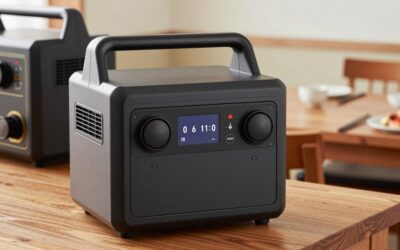
Jackery Explorer 1000 v2 Portable Power Station,1070Wh,1500W
Included for 'Jackery Explorer 1000 v2 Review: Is It Worth Buying in 2026?' because the listing specifies 1070Wh and 1500W, details this guide uses to compare options.
View on Amazon
Jackery Explorer 1000 v2 Portable Power Station,1070Wh,1500W (Dune White)
Included for 'Jackery Explorer 1000 v2 Review: Is It Worth Buying in 2026?' because the listing specifies 1070Wh and 1500W (Dune White), details this guide uses to compare options.
View on Amazon
Jackery Explorer 1000 v2 Portable Power Station, 2024 New, Renewed
Included for 'Jackery Explorer 1000 v2 Review: Is It Worth Buying in 2026?' because the listing specifies 2024 New and Renewed, details this guide uses to compare options.
View on Amazon
Jackery Explorer 2000 v2 Portable Power Station, 2042Wh, 2200W AC Output
Included for 'Jackery Explorer 1000 v2 Review: Is It Worth Buying in 2026?' because the listing specifies 2042Wh and 2200W AC Output, details this guide uses to compare options.
View on AmazonUsable energy for planning
Plan around 900Wh usable after inverter losses. The table shows common outage and camping scenarios.
| Scenario | Average draw | Runtime estimate |
|---|---|---|
| Full-size fridge (cycling) | 60-80W | ~11-15 hours |
| CPAP without humidifier | 40W | ~22 hours (about 3 nights) |
| Router + modem + 2 LED lamps | 35W | ~25 hours |
| Box fan on medium | 45W | ~20 hours |
| Laptop + monitor workday | 90W | ~10 hours |
| Portable induction burner on low | 800W | ~65 minutes |
Explorer 1000 v2 versus a 2,200W gas inverter
A 2,200W inverter generator runs a fridge indefinitely as long as you add fuel, and costs about the same or less. But it must run outdoors at least 20 feet from doors and windows, needs oil changes and fuel stabilizer, and produces 50 to 60 dBA. The Explorer 1000 v2 runs silently indoors, needs no maintenance, and is ready after months in a closet. For apartment dwellers or people who cannot safely place a generator outside, the battery wins.
Where the generator still wins
If outages regularly exceed 24 hours without sun, a battery alone runs dry. Many households end up with both: a 1kWh station for overnight quiet and a small generator to refill it during the day.
Comparing it to other 1kWh stations
When cross-shopping, weigh these details more than headline capacity:
- AC charge speed: about an hour from empty is now common; slower units are harder to top up in brief restoration windows.
- UPS switchover: sub-20ms switchover can protect desktop PCs and CPAPs; slower switching can reboot devices.
- Solar input: 200 to 400W is typical; higher input shortens solar refills.
- Weight: 22 to 30 pounds separates easy carry from two-handed lifting.
- Warranty: 3 to 5 years is common in this class.
Solar refill math
A 200W panel under 5 peak-sun hours delivers about 700 to 750Wh after losses, roughly 80 percent of this unit’s usable capacity. Two 200W panels, within the input limit, can refill it in a single good day, which is what turns a 1kWh battery into a multi-day tool.
Lifespan and storage
LiFePO4 cells in this class are commonly rated for 3,000-plus cycles to 70 or 80 percent capacity. Even cycling it twice a week, calendar aging will matter before cycle count. Store it at 50 to 80 percent, check it every three months, and keep it out of hot attics and cars in summer.
A first-outage checklist
The first real outage is where many owners discover gaps. Before storm season, run a two-hour rehearsal: unplug the fridge from the wall, plug it into the station, and watch the display to learn your fridge’s real average draw rather than guessing. Note how long the compressor runs per cycle and how often it kicks on. Then plug in the router and modem to confirm your internet actually comes back on battery power, since some fiber setups need the ONT box powered as well. Label a short, heavy-gauge 14-gauge extension cord for the fridge, keep a power strip for small electronics, and store the solar cable with the unit. A 20-minute test now avoids an hour of fumbling in the dark.
FAQ
Will the Explorer 1000 v2 run a microwave?
Most compact microwaves draw 900 to 1,300W from the wall and will run on a 1,500W inverter. Each 5-minute use costs roughly 100Wh, so budget microwave use carefully in a long outage.
How long does it take to charge from a car?
At typical 12V outputs of 100 to 120W, a full charge takes about 8 to 10 hours of driving, so car charging is best for topping off rather than full recovery.
Bottom line
The Explorer 1000 v2 is worth buying as a first backup battery for most households, especially renters and anyone who cannot run a gas generator safely. It covers overnight fridge runtime and multiple CPAP nights. If you need multi-day coverage, pair it with 200 to 400W of solar rather than jumping straight to a 2kWh unit.

Write Your Review
No reviews yet. Be the first to share your experience!