
🛒 Best Price Today on Amazon
Prime members get fast, free shipping on everything above, plus member-only deals. New members get a 30-day free trial — cancel anytime.
A window air conditioner is one of the most common reasons people buy a generator, and one of the most common reasons they end up disappointed. The unit says 800 watts on the label, the generator says 2,200 watts on the box, and yet the generator bogs down or trips its breaker the moment the compressor kicks on. The problem is almost never the running wattage. It is the start-up surge, the other loads sharing the circuit and the generator’s sustained output in summer heat. This guide explains how to choose a generator that actually keeps a room cool.
How much power a window AC really needs
Window units are rated by BTU, and running wattage scales roughly with that number. The start-up surge from the compressor is the part that catches people out; conventional units can briefly draw two to three times their running watts. Inverter-type window ACs ramp their compressors gradually and have much gentler start-ups.
| AC size | Typical running watts | Typical start-up (conventional compressor) | Generator class that usually works |
|---|---|---|---|
| 5,000–6,000 BTU | 450–600 W | 1,000–1,500 W | 2,000–2,500 W inverter |
| 8,000 BTU | 650–800 W | 1,500–2,000 W | 2,200–3,000 W inverter |
| 10,000 BTU | 850–1,000 W | 2,000–2,600 W | 3,000–3,500 W |
| 12,000 BTU | 1,000–1,250 W | 2,400–3,200 W | 3,500–4,500 W |
| 15,000 BTU (often 120V) | 1,300–1,500 W | 3,000–4,000 W | 4,500 W+ |
These are typical ranges, not specs for any particular model. Check your AC’s nameplate for running amps, and multiply by 120 to estimate running watts. Some nameplates also list LRA (locked rotor amps), which hints at start-up current.
Inverter generator or conventional?
Inverter generators
Inverter generators produce clean, stable power, run quieter and throttle down at light loads, which saves fuel over a long night. They are the better choice for most window AC use, especially near bedrooms and neighbors. Their weakness is that surge capacity is often only modestly above their running rating, so size them with margin.
Conventional open-frame generators
Open-frame models deliver more watts per dollar and often more surge headroom, which helps with stubborn compressors. They are louder and burn more fuel at light loads. For a 12,000 BTU or larger unit plus a fridge, a conventional 5,000 to 7,500 W generator is often the most economical choice.
Sizing for the whole outage, not just the AC
Rarely does someone run only a window AC. Add a refrigerator (150 to 200 W running, up to about 1,200 W at start), a few lights and phone chargers, and perhaps a fan. The practical rule is to add up all running watts, then add the single largest start-up surge. For a 10,000 BTU AC plus fridge and small loads, that lands around 3,500 to 4,000 W, which points to a 4,000 W class generator for comfortable headroom.
Heat derating
Generators lose output at high temperatures and altitude. On a 100°F day, a generator may not deliver its full rated output. Leave 20 to 25% margin rather than running it at the edge.
Soft-start kits: the quiet upgrade
A soft-start device reduces a compressor’s start-up surge, often dramatically. RV owners have used them for years to run rooftop ACs on small generators, and some kits work with window units. Installation may involve opening the AC’s electrical compartment, so follow the kit maker’s instructions or have a qualified technician install it. Done properly, it can let a 2,200 W inverter generator start an AC that would otherwise overwhelm it.
Fuel choices and runtime
- Gasoline: widely available, but it degrades in storage without stabilizer. A 2,000 to 3,000 W inverter at moderate load commonly burns 0.1 to 0.25 gallons per hour.
- Propane: stores for years and is easy to stockpile in tanks. Dual-fuel generators lose some output on propane, often around 10%.
- Tri-fuel (with natural gas): useful if you have a gas line and an installed connection, though output drops further.
Safety: non-negotiable
Carbon monoxide from portable generators kills people every summer outage. Run the generator at least 20 feet from the house, never in a garage, carport, porch, shed or under an open window, even with doors open. Point the exhaust away from the home and neighbors. Install battery-powered CO alarms on every floor and in bedrooms. Remember that a window AC can pull outside air in, so keep the generator far from the AC’s side of the house.
Plug the AC directly into the generator with a heavy-duty outdoor extension cord rated for the load (12-gauge or heavier for longer runs). Never plug the generator into a wall outlet to power the house; backfeeding can electrocute utility workers. If you want to power hardwired circuits, a licensed electrician should install a transfer switch or interlock.
Consider a battery alternative
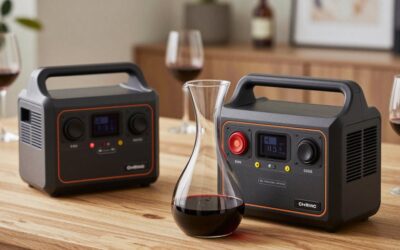
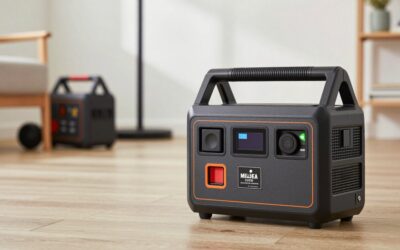
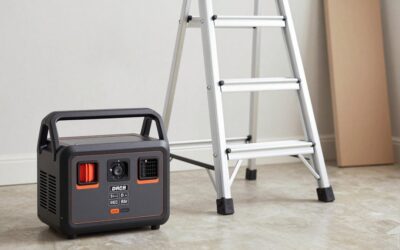
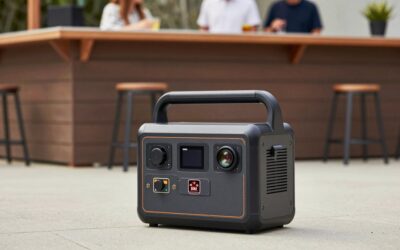
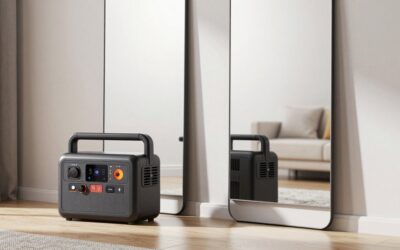
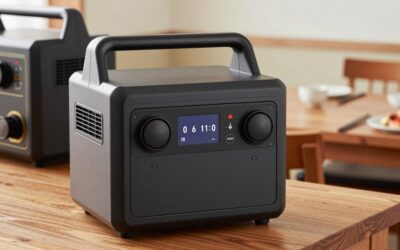
For smaller window ACs, a large power station can run a 5,000 to 8,000 BTU unit for several hours with no fumes or noise, and can sit indoors. It will not match a generator’s endurance, but it can cover nighttime hours while the generator is off.
FAQ
Can a 2,000 W inverter generator run a window AC?
Often yes for 5,000 to 6,000 BTU units and some 8,000 BTU units, especially inverter-type ACs or with a soft-start kit. Larger units usually need 3,000 W or more.
Why does my generator trip when the AC starts?
The compressor’s start-up surge exceeds the generator’s surge capacity. Turn off other loads before starting the AC, try a soft-start device or step up in generator size.
Bottom line
The best generator for running a window AC is one sized for the compressor’s start-up surge plus everything else you plan to run, with 20 to 25% headroom for summer heat. For most 5,000 to 8,000 BTU units, a 2,200 to 3,000 W inverter generator works well; 10,000 to 12,000 BTU units usually need 3,500 to 4,500 W. Always run it outdoors at least 20 feet from the home with CO alarms inside.

Write Your Review
No reviews yet. Be the first to share your experience!