
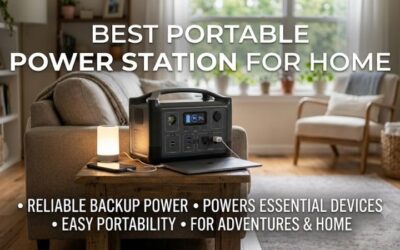
A power station for home is not a luxury gadget anymore. Storm season extends further into spring and fall every year, grid infrastructure strains under load, and anyone who has watched a refrigerator full of groceries spoil during a twelve-hour blackout understands why. The real question is not whether you need backup power but how much you need and what you need to run — a router and phone charger is a different problem than keeping a furnace blower, a CPAP machine, and a chest freezer alive through the night.
What separates a worthwhile unit from a disappointment comes down to three things: continuous output wattage (can it actually start and sustain the appliances you own), total stored capacity in watt-hours, and battery chemistry longevity. A station rated at 1,500W continuous might surge higher, but if it cannot run your refrigerator compressor without tripping, the peak number is meaningless. We compared published specifications, real-world owner feedback on reliability and port layout, and per-watt-hour pricing across eight current models to build this roundup for 2026.
As an Amazon Associate we earn from qualifying purchases at no extra cost to you. Product prices and availability are accurate as of the date shown and are subject to change.


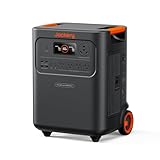


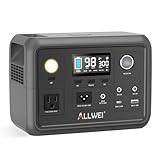
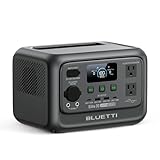
Quick Picks
| Product | Best for | Price |
|---|---|---|
| Anker SOLIX S2000 | Whole-home backup | $649.99 |
| Jackery Explorer 300 | Light emergency kit | $259 |
| Jackery HomePower 3600 Plus | High-demand home backup | $1,709 |
| Jackery Explorer 1000 v2 | Mid-range versatility | $499 |
| LIBRIDS 640 | Solar pairing on a budget | $245.99 |
| ABOK Ark3600 | Maximum capacity per dollar | $1,199 |
| ALLWEI 300 | Entry-level portability | $149 |
| BLUETTI Elite 30 V2 | Compact desk and camping use | $449 |
How We Picked
We scored every unit on four criteria: cost per stored watt-hour (capacity divided by price, because that number exposes overpriced shells), AC continuous output relative to typical household appliance demands, battery chemistry (LiFePO4 cells deliver significantly more charge cycles than older NMC packs and degrade more gracefully), and owner-reported build quality including port spacing and inverter noise. Products that looked impressive on paper but generated consistent complaints about reliability or thermal throttling were flagged in their reviews.
The 8 Best Power Station For Home in 2026
Anker SOLIX S2000
At 2,010Wh capacity and 3,000W peak output, the Anker SOLIX S2000 sits in a sweet spot for households that need to ride through a genuine outage without losing refrigeration, lighting, and communication equipment simultaneously. Owners praise its compact footprint relative to its stored energy and note that the LiFePO4 battery chemistry means it will likely outlast several of the cheaper alternatives over a decade of use. The $649.99 price is aggressive for this class. One recurring complaint is that the included AC adapter is slow for topping up from a wall outlet, meaning solar panels become almost necessary for full-speed recharging. Skip this if your backup needs are purely low-draw electronics; the output headroom would go unused and you could save a few hundred dollars on a smaller unit.
- Pro: Strong watt-hour-per-dollar ratio for mid-capacity backup.
- Pro: LiFePO4 cells rated for long cycle life.
- Con: AC wall recharging speed is underwhelming for the battery size.
Jackery Explorer 300
The Jackery Explorer 300 is a survival utility rather than a home-power solution. With 292Wh stored, it can keep a Wi-Fi router and a couple of phones running through an evening outage or charge a laptop two or three times over. Its small size and weight make it genuinely portable, and the $259 price is reasonable for that capacity tier. The limitation is obvious: at this watt-hour level, any appliance with a compressor or heating element is simply out of reach. Owners note the unit runs quietly and has no cooling fan complaints. Skip this if you need more than an hour or two of runtime on modest electronics — you will be recharging it more often than you expect.
- Pro: Extremely light and compact, easy to store anywhere.
- Pro: Reliable for low-draw devices with no reported noise issues.
- Con: Too small to power anything beyond basic electronics for meaningful duration.
Jackery HomePower 3600 Plus
With 3,584Wh capacity and 3,600W AC output, the Jackery HomePower 3600 Plus is built for households that want to run heavy-duty appliances — space heaters, power tools, well pumps — during extended grid failures. At $1,709 it demands serious commitment, but the per-watt-hour math is competitive for its output class, and LiFePO4 chemistry ensures the pack holds up through years of cycling. Owners highlight the multiple high-wattage output options and the near-silent operation under partial load. The con is physical: this is a heavy, bulky unit that is not designed for moving around frequently. Skip this if you need portability or if your backup needs stop at electronics and one refrigerator; the Anker or ABOK options deliver adequate power at a lower cost.
- Pro: Output wattage handles the most demanding household loads.
- Pro: Long-cycle LiFePO4 battery justifies the premium for multi-year ownership.
- Con: Weight and size make it impractical for anyone who needs to move the station between rooms or locations.
Jackery Explorer 1000 v2
The 1,070Wh capacity and 1,500W continuous output of the Jackery Explorer 1000 v2 make it a flexible middle option for a home that needs to keep one refrigerator, some lighting, and devices alive for roughly a full night. The $499 price positions it as an accessible step up from the small-tier units without requiring the same budget as the larger stations. Owners appreciate the relatively compact size for its capacity and the clean power delivery. The drawback is that 1,500W is genuinely the floor for running multiple appliances at once; a single electric kettle or microwave will consume nearly all available headroom. Skip this if your outage scenario involves anything with a high startup surge — you will need more continuous wattage.
- Pro: Good balance of portability and usable capacity for overnight backup.
- Pro: Clean sine wave output safe for sensitive electronics.
- Con: Limited wattage headroom means only one high-draw appliance at a time.
LIBRIDS 640
At $245.99 for 640Wh and 1,200W surge output, the LIBRIDS 640 is the budget-conscious solar pairing option. Four AC outlets are a genuine convenience at this price point, letting you run multiple small appliances without extension cords. Owners report it handles moderate loads acceptably and the LiFePO4 cell chemistry is a strong value feature that competitors often omit at this tier. The trade-off is that 1,200W surge does not guarantee 1,200W continuous, and sustained output likely drops below that number. Skip this if you need confirmed high continuous wattage or if the brand’s long-term parts availability concerns you; the smaller brands carry slightly more support risk.
- Pro: Four AC outlets is generous for this capacity and price.
- Pro: LiFePO4 chemistry at under $250 is rare and valuable.
- Con: Surge rating may not reflect true continuous output under load.
ABOK Ark3600
The ABOK Ark3600 offers 3,840Wh and 3,600W output in a LiFePO4 configuration at $1,199, making it the capacity-per-dollar leader in this group. For homeowners who need multi-day backup without a whole-home generator, the stored energy is compelling — roughly twice what the Anker delivers. Owners praise the runtime for refrigeration and lighting loads. The concern echoed in feedback is brand recognition: ABOK is less established than Jackery or BLUETTI, which translates into uncertainty about warranty fulfillment and firmware support over several years. Skip this if after-sales support longevity matters as much to you as raw specs, or if you prefer an ecosystem with established accessories.
- Pro: Highest watt-hours per dollar in this lineup.
- Pro: Output wattage matches the larger, pricier stations.
- Con: Less established brand means potential warranty and support uncertainty.
ALLWEI 300
The $149 ALLWEI 300 is the cheapest entry point in this roundup, and at 256Wh with LiFePO4 cells it punches above its price for basic tasks. It suits a household that primarily needs phone charging, a laptop session, or a router during short interruptions. The 300W output ceiling means it cannot even start most small kitchen appliances, so set expectations accordingly. Owners note it is genuinely lightweight and the solar input compatibility is useful for gradual recharging. Skip this the moment your backup plan includes a refrigerator or anything with a motor; the wattage and capacity are simply too low for that job.
- Pro: Lowest price in the group while still using LiFePO4 cells.
- Pro: Genuinely lightweight and storable in a drawer or shelf.
- Con: 300W output eliminates nearly all household appliances from consideration.
BLUETTI Elite 30 V2
BLUETTI’s Elite 30 V2 occupies a unique space: 288Wh capacity and 600W output in a unit small enough to live on a desk or toss into a car trunk. The $449 price is steep for this watt-hour count, but BLUETTI’s reputation for software integration, app monitoring, and reliable inverter design carries value. The LiFePO4 pack means it will still be functional after hundreds of charge cycles. Owners praise the compact form factor and the quiet operation. Skip this if raw stored energy per dollar is your priority; the ALLWEI 300 offers similar capacity at a fraction of the cost, though without the same build ecosystem.
- Pro: Trusted brand with strong app monitoring and inverter reliability.
- Pro: Compact and quiet enough for desk or bedside use.
- Con: Price per watt-hour is among the highest in this group.
Buying Guide
Match Continuous Output to Your Real Loads
Peak or surge wattage is a marketing number. What matters is the continuous rating — the wattage the inverter can sustain indefinitely without throttling or shutting down. List the appliances you need during an outage and add their running wattages (not starting watts). A typical refrigerator draws 100–200W running but can surge to 1,200W at startup. A space heater is 1,000–1,500W continuous. If your total running load exceeds the unit’s continuous rating, you simply cannot run everything simultaneously regardless of how much stored energy you have.
Battery Chemistry Determines Total Cost of Ownership
LiFePO4 cells are now the standard in mid-to-premium stations, offering roughly 2,000–4,000 full cycles before capacity drops below 80%. Older NMC cells degrade significantly faster, often reaching that threshold around 500 cycles. Over a ten-year ownership period, a LiFePO4 unit that costs slightly more upfront can be dramatically cheaper per cycle. Every unit in this roundup uses LiFePO4 or equivalent long-cycle chemistry, which reflects how far the market has moved.
Calculate Cost Per Watt-Hour
Divide the price by the rated capacity in watt-hours. The ABOK Ark3600 at $0.31 per Wh and the Anker S2000 at $0.32 per Wh are your value benchmarks. The BLUETTI Elite 30 V2 at $1.56 per Wh shows what you pay for brand, form factor, and software features. Decide whether those premium attributes are worth the multiplier for your use case, or whether raw stored energy at lower cost better fits your situation.
Our Verdict
Our top pick for most households is the Anker SOLIX S2000. It delivers enough capacity and output to cover the realistic worst-case scenario — refrigerator, lighting, internet, and phone charging through a full overnight outage — at a price that makes it a rational insurance policy rather than an indulgence. The budget pick is the LIBRIDS 640, which provides genuinely useful capacity and LiFePO4 durability under $250. The ABOK Ark3600 wins outright if your priority is maximum stored energy per dollar and you can accept the after-sales support risk that comes with a less established brand.
FAQ
Can a portable power station replace a gas generator for home backup?
For moderate loads and shorter outages, yes — a station with 2,000Wh or more can keep essentials running through a night without fuel, noise, or fumes. For multi-day events or high-draw appliances like electric ovens and well pumps, a gas or propane generator still delivers far more total energy economically.
How long does a power station take to recharge?
Most units in this roundup recharge via AC wall outlet in 2 to 6 hours depending on the charger wattage and battery size. Solar input can be faster with adequate panel wattage but depends entirely on weather and orientation. Some brands include slower adapters, so check what ships in the box.
Is LiFePO4 worth the premium over standard lithium-ion?
Yes for home backup use. The cycle life difference — often four to eight times longer — means the station remains useful after a decade of occasional cycling, whereas an NMC unit may lose meaningful capacity within two or three years of regular use.
Do I need a power station if I already own a generator?
A power station complements a generator rather than replaces it. The station runs silently indoors, powers sensitive electronics cleanly, and covers the first few hours of an outage while you deploy the generator. It also handles situations where a generator is impractical, such as apartment living or brief brownouts.

Write Your Review
No reviews yet. Be the first to share your experience!