
🛒 Best Price Today on Amazon
Prime members get fast, free shipping on everything above, plus member-only deals. New members get a 30-day free trial — cancel anytime.
During an outage the garage door becomes a surprising problem. The car is inside, the door weighs a couple of hundred pounds, and the opener is dead. You can always pull the red manual release cord, but if you plan to power the opener from a generator, there are specific sizing and hookup details to get right, and in many cases a battery backup or the manual release is the smarter answer.
How much generator an opener needs
A 1/2 hp AC opener moving a balanced door draws around 450 to 700 watts and may briefly surge to 1,000 to 1,800 watts. A 3/4 hp AC unit can surge to about 2,300 watts. DC openers with soft start rarely exceed 400 to 600 watts. The opener only runs for 10 to 15 seconds per cycle, but the generator still has to supply that surge the instant you press the button.
| Opener | Minimum generator (starting watts) | If fridge and lights also run | Power station surge needed |
|---|---|---|---|
| DC belt drive / jackshaft | 1,000 W inverter | 2,000 W inverter | 600 – 800 W |
| AC 1/3 hp | 1,500 – 2,000 W | 3,000 W | 1,500 W |
| AC 1/2 hp | 2,000 – 2,500 W | 3,000 – 3,500 W | 1,800 – 2,000 W |
| AC 3/4 hp | 2,500 – 3,000 W | 3,500 – 4,500 W | 2,500 W+ |
Treat these as planning ranges. Door balance, cold weather and opener age can raise the surge; check the current spec sheet for your opener’s amp rating and for any generator’s starting watts.
Connecting a generator to the opener
The easy part: it is usually plugged in
Unlike a furnace, most openers plug into a ceiling receptacle. During an outage you can unplug the opener and run a 14 or 12 gauge extension cord from the generator to it. The generator should stay outside at least 20 feet from the garage with the cord routed under a slightly raised door or through a proper inlet. Never run the generator inside the garage, even with the door open; carbon monoxide builds up quickly in that space and seeps into the house.
Through a transfer switch
If you already have a transfer switch or panel interlock, the garage circuit can be one of the selected circuits. That lets the opener work normally from the wall button, along with garage lights, without a cord running across the driveway.
Clean power for opener electronics
Modern openers contain logic boards, radio receivers and photo-eye safety sensors. Rough generator power with high harmonic distortion or voltage swings can confuse the board, causing the door to reverse, the light to flicker or the unit to ignore remote commands. An inverter generator with low THD avoids that. On a conventional generator, keeping some steady load connected helps stabilize voltage.
Why battery backup may beat a generator here
An opener with a built-in or add-on backup battery can run 20 to 50 cycles on its own when the power fails, which covers most outages without any generator involvement. California has required battery backup on new residential openers since 2019, and many retrofit battery kits exist for DC openers. For older AC openers, battery backup is often not available, which is one reason people upgrade during a replacement.
Power stations as a middle ground
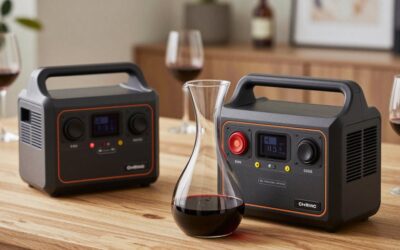
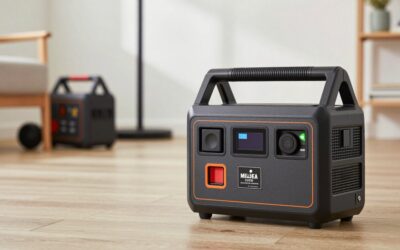
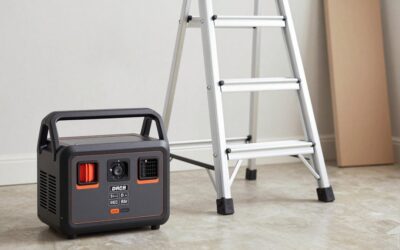
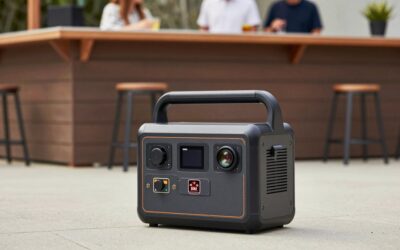
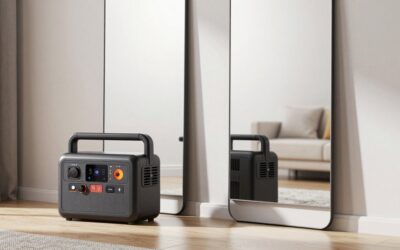
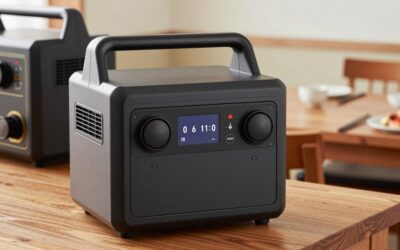
A power station with 1,500 to 2,000 watts of surge can run most DC openers and many 1/3 to 1/2 hp AC openers. Because each cycle uses only about 0.002 to 0.004 kWh, even a 500 Wh station can open the door dozens of times. The limiting factor is surge output, not capacity.
The manual release is always your fallback
Every residential opener has a manual release, typically a red cord hanging from the trolley. Pulling it disconnects the door so you can lift it by hand, which is easy if the springs are in good condition. If the door feels very heavy, the springs may be weak or broken; do not force it, as that can cause injury. Remember to re-engage the trolley once power returns, usually by running the opener until it latches.
FAQ
Can a 2,000-watt inverter generator run a garage door opener?
For DC and most 1/3 to 1/2 hp AC openers, yes, if nothing else is starting at the same moment. A 3/4 hp AC opener on a heavy door may trip it.
Should I leave the opener unplugged during an outage?
Unplugging protects it from surges when power returns. Plug it back in once utility power is stable, or run it from the generator only when you need to move the door.
Bottom line
A DC garage door opener runs on a 1,000-watt inverter, and most AC openers need 2,000 to 3,000 starting watts, more if the fridge shares the generator. Keep the generator well outside the garage, prefer clean inverter power, and consider battery backup or a power station, since each cycle uses almost no energy. The manual release remains the zero-watt fallback.


Write Your Review
No reviews yet. Be the first to share your experience!