
🛒 Best Price Today on Amazon
Prime members get fast, free shipping on everything above, plus member-only deals. New members get a 30-day free trial — cancel anytime.
- Top Pick: PowerSmart 3800 Watt Dual Fuel Inverter Generator for Camping or Home Use
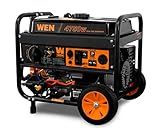
- Best Value: WEN 4,750-Watt 120V/240V Dual Fuel Portable Generator with Wheel Kit and Electric Start (DF475T)
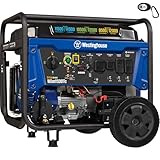
- Premium Choice: Westinghouse 14500 Peak Watt Tri-Fuel Home Backup Portable Generator, Remote Electric Start, Transfer Switch Ready, Gas, Propane, and Natural Gas Powered
Choosing between a dual fuel vs tri fuel generator is less about chasing the highest wattage and more about deciding which fuel sources you can realistically use when the power goes out. A dual-fuel model typically runs on gasoline and propane. A tri-fuel model adds natural gas, usually through a permanent household gas line.
That difference affects installation, storage, runtime, noise, maintenance, and long-term cost. A compact dual-fuel inverter may be ideal for a refrigerator, lights, and electronics, while a larger tri-fuel unit can support a transfer switch and keep essential home circuits running for days. The right choice for your home in 2026 depends on your available fuels, expected outage length, and whether portability matters more than whole-home convenience.
As an Amazon Associate we earn from qualifying purchases at no extra cost to you. Product prices and availability are accurate as of the date shown and are subject to change.


Quick Verdict
Choose a dual-fuel generator if you want a lower upfront price, easy portability, and the ability to switch between gasoline and propane. It is generally the better fit for apartments, camping, occasional outages, and renters who cannot connect equipment to a home gas line.
Choose a tri-fuel generator if your home has reliable natural gas service and you want a convenient backup option for extended outages. Natural gas eliminates the need to store large amounts of gasoline or propane, although it can reduce available power compared with gasoline and requires proper connection by a qualified professional.
In practical terms, dual fuel offers more flexibility for moving the generator and choosing portable fuel. Tri fuel offers the strongest day-to-day convenience for a permanently occupied house.
Side by Side
| Factor | Dual Fuel | Tri Fuel |
|---|---|---|
| Fuel options | Gasoline and propane | Gasoline, propane, and natural gas |
| Comfort | Portable, but refueling and fuel storage add work | Convenient for long outages when connected to natural gas |
| Durability | Comparable when properly maintained; inverter models are often lighter-duty | Often built in larger frames with heavy-duty alternators and wheels |
| Typical price range | About $400-$1,200 | About $1,200-$2,000 or more |
| Maintenance | Requires attention to gasoline, oil, filters, and carburetor storage | Less gasoline storage, but still needs oil, filters, exercise, and gas-line checks |
| Space needed | Roughly 2 by 2 feet for compact models; larger units need about 3 by 2 feet | Often about 3 by 2 feet or larger, plus clearance for connection equipment |
| Look | Compact open-frame or enclosed designs; commonly 50-110 pounds | Large open-frame designs; commonly 200-300 pounds |
| Resale | Broad appeal because gasoline and propane are widely available | Strong appeal in natural-gas-served areas, but a smaller buyer pool |
| Best for | Camping, apartments, renters, and essential-load backup | Long outages, family homes, and transfer-switch installations |
These are typical categories rather than guarantees for every model. Output also varies by fuel: a generator rated for 4,750 watts on gasoline may produce fewer watts on propane and fewer still on natural gas. Always check the manufacturer’s fuel-specific ratings before sizing appliances or a transfer switch.
Where Dual Fuel Wins
Lower purchase cost is the clearest advantage. Entry-level dual-fuel generators are available for about $400-$600. For example, the PowerSmart 3800 Watt Dual Fuel Inverter Generator for Camping or Home Use is listed at $422.99, while the WEN DF475T 4,750-watt dual-fuel portable generator is listed at $464.99. Those prices make dual fuel accessible when you need emergency power without committing to a large home-backup system.
Dual fuel also works well when portability is important. A compact inverter generator may weigh around 50-70 pounds, making it manageable for two adults or a wheeled carrier. Larger open-frame models can weigh 100-150 pounds, but they are still easier to relocate than many tri-fuel home-backup units weighing more than 200 pounds.
Gasoline provides high output and is widely available before or after a storm, while propane stores for much longer when kept in an approved cylinder. Switching fuels can also help when one fuel becomes scarce. However, gasoline should not be stored indefinitely without fuel stabilizer, and local rules may limit how much fuel you can keep at home.
For electronics, an inverter dual-fuel generator may produce cleaner, more stable power than a conventional open-frame unit. That can be useful for sensitive devices, although you should still follow the appliance and generator instructions. The tradeoff is usually lower maximum output and a higher price than a basic conventional generator of similar wattage.
Where Tri Fuel Generator Wins
The major advantage of a tri fuel generator is the ability to use natural gas without storing it in cans or cylinders. If your utility service remains active during an outage, the generator can run from the home gas line for an extended period. That is especially useful during multi-day storms, when gasoline supplies may be limited or propane tanks may be difficult to refill.
Tri-fuel models are also commonly sold in higher-output sizes with 120/240-volt receptacles and transfer-switch readiness. The Westinghouse 13500 Peak Watt Tri-Fuel Home Backup Portable Generator is listed at $1,249, while the 14500 Peak Watt version is listed at $1,499. These units are designed for substantially larger loads than compact camping generators, though “peak” wattage is not the same as continuous running wattage.
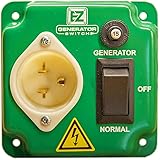
A properly installed transfer switch can send power to selected household circuits, such as a refrigerator, furnace blower, sump pump, lighting, internet equipment, and some kitchen outlets. It does not automatically mean the generator can run every appliance at once. Large electric water heaters, central air conditioners, electric ranges, and dryers can quickly use most of the available capacity.
Natural gas is not perfect. It often produces less power than gasoline, and service can be interrupted during a major disaster. The connection also needs correct sizing, shutoff access, ventilation, and compliance with local codes. Never connect a portable generator directly to a household outlet or attempt an improvised gas connection.
Cost Over 5 Years
A realistic five-year budget includes more than the shelf price. A compact dual-fuel setup might cost $400-$700 for the generator, $50-$150 for initial accessories, and approximately $25-$75 per year for oil, filters, stabilizer, and periodic maintenance. If you use gasoline during several outages, fuel may add $100-$500 over five years, depending on outage frequency and load.
A larger dual-fuel system with a transfer switch can reach $1,000-$2,000 after installation. A tri-fuel generator commonly starts around $1,200 and may exceed $2,000 once a transfer switch, gas fittings, permits, and professional installation are included. A reasonable installation allowance is about $500-$1,500, but local labor and the distance from the gas service panel can change that substantially.
Tri fuel can reduce fuel-storage costs and make long outages easier to manage, but natural gas is not free. The exact operating cost depends on your utility rate and the generator’s consumption at its actual load. For occasional short outages, dual fuel is usually less expensive overall. For repeated outages lasting several days, tri fuel can earn back some of its premium through convenience and reduced reliance on stored fuel.
Which One for Your Home
Small apartment
A compact dual-fuel inverter is usually the practical choice, provided your building allows generator use. It can support a refrigerator, phone chargers, a modem, lights, and perhaps a small medical or cooking device through properly rated extension cords. Never operate a generator indoors, on a balcony, or in an enclosed parking area. If your apartment has no safe outdoor location at least 20 feet from doors, windows, and vents, neither type may be appropriate.
Family with kids and pets
Choose dual fuel for occasional, short outages when portability and a modest budget matter. Choose tri fuel when you own a detached or suitably located home, have natural gas service, and need dependable power for refrigeration, heating controls, sump pumps, or other essential circuits. A transfer switch can reduce cord clutter and keep children and pets away from the operating equipment, but the generator still belongs outdoors behind a barrier with a carbon monoxide alarm inside the home.
Rental
Dual fuel is generally better because it does not require a permanent gas connection or electrical modification. Confirm that your landlord and local regulations permit operation. A wheeled model may be convenient, but it can be heavy, noisy, and difficult to secure. Propane can simplify storage compared with gasoline, though cylinders still require approved outdoor storage.
Long-term home
Tri fuel is the stronger long-term option if you own the property, have dependable natural gas, and expect to remain there for several years. Have an electrician evaluate your essential circuits and a qualified gas professional handle the connection. If your area frequently loses natural gas service, a dual-fuel or tri-fuel model with a substantial propane backup may offer the most resilience.
FAQ
Is tri fuel better than dual fuel?
Not universally. Tri fuel is better for convenient, extended home backup when natural gas is available. Dual fuel is better for lower cost, portability, and locations without a suitable gas line.
Does a tri-fuel generator produce less power on natural gas?
Usually, yes. Natural gas commonly delivers lower output than gasoline, and propane may also have a lower rating. Use the model’s continuous and peak wattage ratings for each fuel rather than assuming the gasoline rating applies to all three.
Can I run a tri-fuel generator without natural gas?
Yes. Most tri-fuel generators can operate on gasoline or propane as well. That flexibility is one of their advantages, although the fuel selector and conversion system must be used exactly as directed.
Do I need a transfer switch?
You need an approved transfer method if you want to power household wiring. A transfer switch prevents dangerous backfeeding into utility lines. For a few individual appliances, use heavy-duty outdoor-rated extension cords connected directly to the generator, following the manufacturer’s load limits.
Ready to decide? Our #1 pick for 2026 is the Fuel options.
Live price & availability on Amazon.



Write Your Review
No reviews yet. Be the first to share your experience!