
🛒 Best Price Today on Amazon
Prime members get fast, free shipping on everything above, plus member-only deals. New members get a 30-day free trial — cancel anytime.
A generator advertised as 7,000 watts is not automatically suitable for a well pump. The correct choice depends on the pump voltage, running demand, motor-starting requirement, other connected loads and a safe connection method. This is a sizing guide, not a tested product ranking.
Can a 7,000-watt generator run your well pump?
Check whether the advertised rating is continuous output or a temporary starting rating. Obtain the pump specifications and the generator manual before comparing them. If either starting demand or electrical compatibility is unknown, ask the pump manufacturer or a qualified electrician rather than assuming the wattage on the box is sufficient.
Build a pump and household load checklist
Start with the pump’s running and starting demand
Before choosing any generator for a well pump, identify the pump’s electrical requirements from its nameplate, manual, or installation paperwork. Look for voltage, running amperage, and any stated starting or locked-rotor demand. A pump motor may draw considerably more power while starting than while running, so a generator that appears adequate during steady operation may still trip its overload protection when the pump kicks on.
Do not use the phrase “7000 watt” as a complete compatibility test. Confirm whether that figure refers to running watts, starting watts, or a marketing maximum. Then compare the generator’s continuous output with the pump’s running requirement and its surge capability with the motor’s startup demand. If the pump is hardwired, also determine how it will be connected safely. A qualified electrician may be needed for a transfer switch or other permanent connection method.
Confirm what kind of generator you actually need
For outage preparation, consider whether the pump is the only critical load or whether you also need refrigeration, lighting, heating controls, a sump pump, or communications equipment. Listing those loads helps prevent accidental overloading. If the pump is the only priority, a properly sized generator may be simpler to manage. If several household circuits are essential, the installation and load-management plan become just as important as the generator’s headline wattage.
Connection and carbon-monoxide safety
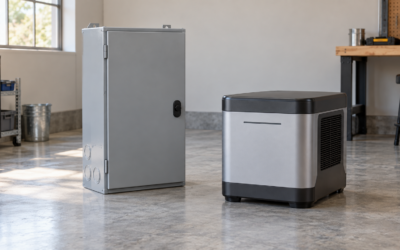
A hardwired pump requires an appropriate installation designed for that circuit. Have a qualified electrician specify and install the transfer equipment, inlet, protection and wiring. Do not connect a generator to a household wall outlet or improvise a backfeed cord.
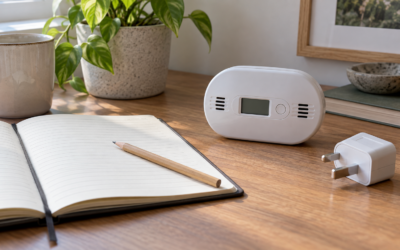
Operate a fuel-burning generator outdoors at least 20 feet from the home, with exhaust directed away from doors, windows and vents. Never operate it in a garage or other enclosed space. Follow the manufacturer’s instructions and any greater required clearance; carbon-monoxide alarms are an additional precaution, not permission to operate indoors.
Questions to resolve before buying
- What voltage and phase does the pump require?
- What are its documented running and starting demands?
- Which other loads must run while the pump starts?
- Do the generator outlet, cord, inlet and transfer equipment match the installation?
- Who will verify grounding, neutral bonding and protective devices?
FAQ
Does a 7,000-watt label guarantee compatibility?
No. Compare continuous and starting output separately, then verify voltage, outlet and installation compatibility.
Can a recoil starter assembly power a pump?
No. A recoil starter is an engine-starting part, not a generator. It is not a substitute for complete backup-power equipment.
What should I do if starting demand is not listed?
Ask the pump manufacturer or a qualified electrician to establish the required starting capacity. Do not select equipment from an unsupported guess.
Sources and review basis
This guide uses general safety guidance, not a hands-on generator test. See OSHA portable-generator safety and CPSC generator placement guidance. Exact pump and generator requirements must come from their manuals.
Write Your Review
No reviews yet. Be the first to share your experience!