
🛒 Best Price Today on Amazon
Prime members get fast, free shipping on everything above, plus member-only deals. New members get a 30-day free trial — cancel anytime.
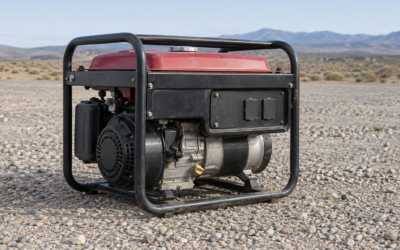
If your portable generator suddenly stops producing power, an overloaded circuit is one of the most common causes. The generator’s circuit breaker may trip to protect the alternator, wiring, outlets, and connected appliances from excessive current. Learning how to reset generator overload protection is usually straightforward, but resetting it without correcting the cause can trip the breaker again—or damage equipment.
Before you begin, turn off and unplug every appliance connected to the generator. Never bypass, tape down, or replace a breaker with a higher-rated part. A reset is appropriate only after the generator has been unloaded and you have checked for obvious problems such as too many appliances, a damaged extension cord, or a tool that draws more power than expected. The steps below apply broadly to portable gasoline, propane, and dual-fuel generators, but your owner’s manual takes priority.
As an Amazon Associate we earn from qualifying purchases at no extra cost to you.


What You Need
| Item | Why | Optional? |
|---|---|---|
| Generator owner’s manual | Shows the correct breaker location, shutdown procedure, outlet ratings, and reset instructions. | No |
| Work gloves and safety glasses | Protect your hands and eyes while inspecting cords, outlets, and the control panel. | Recommended |
| Flashlight | Helps you see melted plastic, loose connections, or damaged insulation. | Yes |
| Wattage labels or a plug-in watt meter | Helps estimate whether connected appliances exceed the generator’s continuous output. | Yes |
| Replacement push-button circuit breaker | Useful only if the existing breaker is confirmed defective and the replacement matches the generator’s specifications exactly. | Yes |
| HUAREW 15 Amp or 25 Amp push-button circuit breaker | Reference examples priced around $10 each. Confirm voltage, amperage, mounting dimensions, terminal style, and manufacturer compatibility before buying. | Yes |
A breaker’s amp rating is not a universal replacement specification. For example, a 15-amp breaker at 120 volts protects a circuit rated for roughly 1,800 watts, while a 25-amp breaker at 120 volts corresponds to about 3,000 watts. Actual generator limits, starting surges, wiring, and outlet configurations may be different. Use the exact rating specified for your model.
Step-by-Step
1. Shut down connected appliances (2–5 minutes)
Turn off every appliance, tool, light, heater, and battery charger connected to the generator. Unplug them from the generator’s outlets, not just from a power strip. If you are using an extension cord, disconnect it at the generator as well.
Pay special attention to high-demand equipment. A portable heater can draw about 1,500 watts, a microwave commonly uses 1,000 to 1,500 watts, and a refrigerator may need several times its running wattage for a few seconds when its compressor starts. Several modest loads can exceed a generator rated at 3,000 or 4,000 running watts.
2. Let the generator cool and stabilize (5–15 minutes)
If the engine is running, switch off the connected loads first, then follow the manual’s shutdown procedure. Let the unit cool for at least five minutes before inspecting it. Keep the generator outdoors, at least 20 feet from doors, windows, and vents, on a firm, level surface. Never troubleshoot it in a garage, basement, shed, or other enclosed space because carbon monoxide can build up quickly.
If the generator has a main output switch, turn it off. Do not touch exposed terminals or remove the control-panel cover while the engine is running.
3. Find the tripped breaker (1–3 minutes)
Look at the control panel for a push-button breaker, rocker-style breaker, or switch labeled “AC breaker,” “circuit breaker,” or “overload.” A tripped breaker may sit between the ON and OFF positions, appear slightly extended, or show a colored indicator.
Some generators have separate breakers for standard 120-volt outlets, a 30-amp recreational-vehicle outlet, or a 240-volt outlet. Reset only the breaker associated with the affected circuit. If the manual says the main breaker must be off before resetting an individual breaker, follow that sequence.
4. Inspect the generator and cords (5–10 minutes)
With the generator off and all loads unplugged, examine the outlets, plugs, and extension cords. Look for cracked insulation, bent blades, blackened areas, melted plastic, loose receptacles, frayed wires, or a hot electrical smell. Check that no plug is wet and that the generator has not been exposed to rain or standing water.
Do not use a damaged cord or appliance. A short circuit can trip the breaker immediately and may create a shock or fire hazard. If you see melted plastic, smoke damage, or a loose outlet, stop and arrange for professional service.
5. Reset the breaker (less than 1 minute)
Press the push-button breaker firmly until it clicks or returns flush with the panel. For a toggle breaker, move it fully to OFF first, then back to ON. Do not repeatedly force a button that will not latch. A breaker that will not reset with all loads disconnected may be defective, or there may be an internal electrical fault.
Keep your hands dry and stand on a dry surface. Do not open the generator housing to reach internal wiring unless you are qualified to work on electrical equipment and the manual specifically permits the repair.
6. Restart and test with one small load (3–5 minutes)
Start the generator according to the manufacturer’s instructions. Let the engine run without a load for about two minutes, then connect one small appliance, such as a lamp under 100 watts or a phone charger. Confirm that it operates normally and that the breaker remains on.
Next, add appliances one at a time. Wait 30 to 60 seconds between additions and keep a running total of their approximate running watts. Stay below the generator’s continuous, or running, wattage rating—not merely its short-term starting-wattage rating. Leave extra capacity for motor startup and fluctuating loads; keeping total demand below about 80 percent of continuous capacity is a practical margin.
7. Recheck if the breaker trips again (5–10 minutes)
If the breaker trips immediately with no appliances connected, turn off the generator and stop testing. If it trips only after adding a particular appliance, unplug that appliance and check its manual for running and starting wattage. Do not keep resetting the breaker to “see if it holds.” Repeated trips indicate an overload, short circuit, failing appliance, damaged cord, or generator problem that needs diagnosis.
Mistakes to Avoid
- Resetting under load: Disconnect appliances before resetting. Restoring power to several motors or heating elements at once can create a large startup surge.
- Using the wrong replacement breaker: A 15-amp or 25-amp part is not interchangeable just because it fits the opening. Match the amperage, voltage, poles, terminals, mounting dimensions, and trip characteristics.
- Installing a larger breaker: A higher rating can allow more current than the generator’s wiring can safely handle, increasing fire risk.
- Ignoring extension cords: Long or undersized cords lose voltage and can overheat. For common 120-volt loads, use a properly rated cord and keep it as short as practical; a 12-gauge cord is often appropriate for heavier 15-amp loads, subject to the manual and cord rating.
- Connecting incompatible loads: Do not connect a 240-volt appliance to a 120-volt outlet or use improvised adapters.
- Backfeeding a home: Never plug a generator into a wall outlet. A transfer switch installed by a qualified electrician is required for safe connection to household circuits.
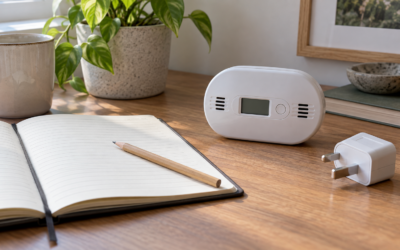
- Ignoring carbon monoxide: Outdoors does not automatically mean safe if the unit is near openings. Use a battery-powered carbon-monoxide alarm inside the home.
How Often
You do not need to reset a breaker on a regular schedule. Reset it only after a trip and only after removing the likely cause. Before each use, inspect cords, verify the fuel and oil levels, and calculate the expected load. Run the generator according to the manufacturer’s maintenance schedule; many portable units call for oil changes after an initial break-in period and then at specified hour intervals.
Once or twice a year, test essential appliances individually and record their approximate running watts. This makes it easier to build a safe load plan during an outage. Exercise the generator only as directed by the manual, usually outdoors and without exceeding its rated output.
When to Call a Pro or Replace
Call a qualified generator technician or electrician if the breaker trips with nothing plugged in, the reset button will not latch, the generator produces smoke or a burning odor, an outlet is scorched, or voltage is unstable. Professional service is also appropriate if the problem returns after you remove a known overload.
Replace a breaker only when testing confirms it is faulty and the correct part is available. A replacement costing roughly $10 to $30 may be reasonable for an accessible, model-compatible breaker, but labor and diagnosis can cost more. Consider replacing the generator when repair costs approach the price of a comparable new unit, the alternator or control board has failed, the frame or fuel system is unsafe, or the unit repeatedly trips despite proper loading and maintenance.
FAQ
Why does my generator overload breaker keep tripping?
The most likely causes are too much running wattage, motor startup surges, a damaged cord, or a failing appliance. It can also indicate an internal generator fault. Remove every load, reset once, and add appliances individually. If it trips with no load, stop using the generator.
Can I reset a generator while it is running?
Some manufacturers permit resetting a breaker while the engine runs, but the connected loads should be switched off and unplugged first. Follow your model’s manual. Never touch exposed wiring or open the panel while the generator is operating.
How do I know whether I need a 15-amp or 25-amp breaker?
Use the rating printed on the original breaker or specified in the service manual. Do not choose based on the appliance load alone. A 15-amp and 25-amp breaker protect different circuits, and installing the wrong one can make the generator unsafe.
Will resetting the breaker fix low generator voltage?
Not necessarily. Low voltage can result from overload, a failing voltage regulator, engine-speed problems, damaged wiring, or a defective outlet. Disconnect all loads and consult the manual. If voltage remains abnormal after a proper restart, have the generator professionally tested.

Write Your Review
No reviews yet. Be the first to share your experience!